
New Delhi
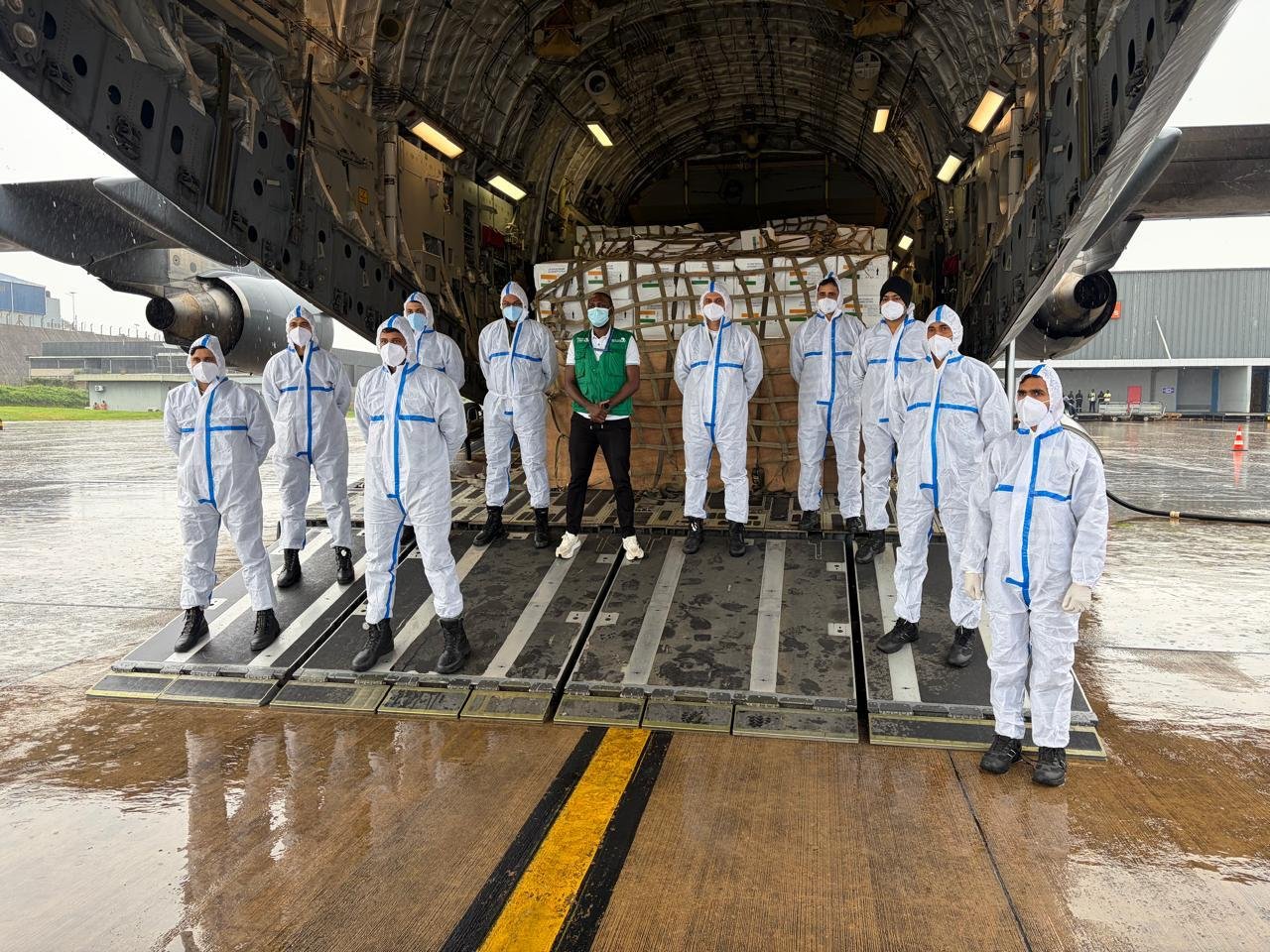
In a swift demonstration of its operational agility and humanitarian commitment, the Indian Air Force (IAF) airlifted a substantial consignment of critical medical supplies to Uganda on June 2, 2026. A C-17 Globemaster-III heavy-lift aircraft departed from New Delhi carrying over 43 tonnes of life-saving material to bolster efforts against the ongoing Ebola virus outbreak in East Africa.
This marks the second major tranche of assistance from India. Following an initial 2.5-tonne shipment dispatched in late May, the latest mission was undertaken at the request of the African Union and Africa CDC. The consignment includes personal protective equipment (PPE), diagnostic kits, essential medicines, infection control supplies, and monitoring devices, vital tools in containing the Bundibugyo strain of Ebola that has affected the Democratic Republic of Congo (DRC) and spilled over into Uganda.
The World Health Organization (WHO) declared the outbreak a Public Health Emergency of International Concern (PHEIC) in mid-May 2026 after reports of confirmed cases, suspected infections, and fatalities, particularly in DRC’s Ituri Province and parts of Uganda. India’s rapid response underscores its growing role as a first responder in global health crises.
The choice of the C-17 Globemaster-III is strategically significant. Renowned for its unmatched payload capacity, intercontinental range, and ability to operate from austere airfields, the aircraft symbolises the IAF’s dual capability, excelling not only in power projection during conflicts but also in Humanitarian Assistance and Disaster Relief (HADR) missions. This operation highlights the maturity of India’s strategic airlift assets and the seamless coordination between the Ministry of Defence, Ministry of External Affairs, and the armed forces.
Beyond immediate relief, the mission reinforces India’s philosophy of ‘Vasudhaiva Kutumbakam’, the world is one family. From earthquake relief in Turkey and Nepal to tsunami aid in the Indian Ocean region and support during the COVID-19 pandemic, Indian defence forces have consistently answered calls for help across continents. Such actions enhance India’s soft power, build trust with Global South nations, and position the country as a responsible global stakeholder.
As Ebola continues to test health systems in Africa, India’s proactive assistance sends a clear message: Indian defence capabilities are not limited to territorial defence but extend to safeguarding human lives worldwide. In an era of transnational threats, this blend of strategic reach and compassion strengthens India’s diplomatic footprint and cements its reputation as a reliable partner in times of crisis.

contact: drrajeshjauhri@gmail.com
Dr Rajesh Jauhri is a Journalist with an experience of over 25 years in Indian and foreign media, a Social Scientist, an Ac-complished Author, a Political & Strategic Analyst, a Marksman (Rifle & Pistol), an Orator, a Thinker and an Educationist. He holds a Ph.D. degree on “Impact of colonial heritage on Indian police”. He runs an NGO dedicated to the social and eco-nomic uplift of tribal communities in MP and two decades back, he established a school in a village of Indore district, providing education and moral values to children belonging to underprivileged and minority families. Has received multiple awards in various fields.