

Mhow
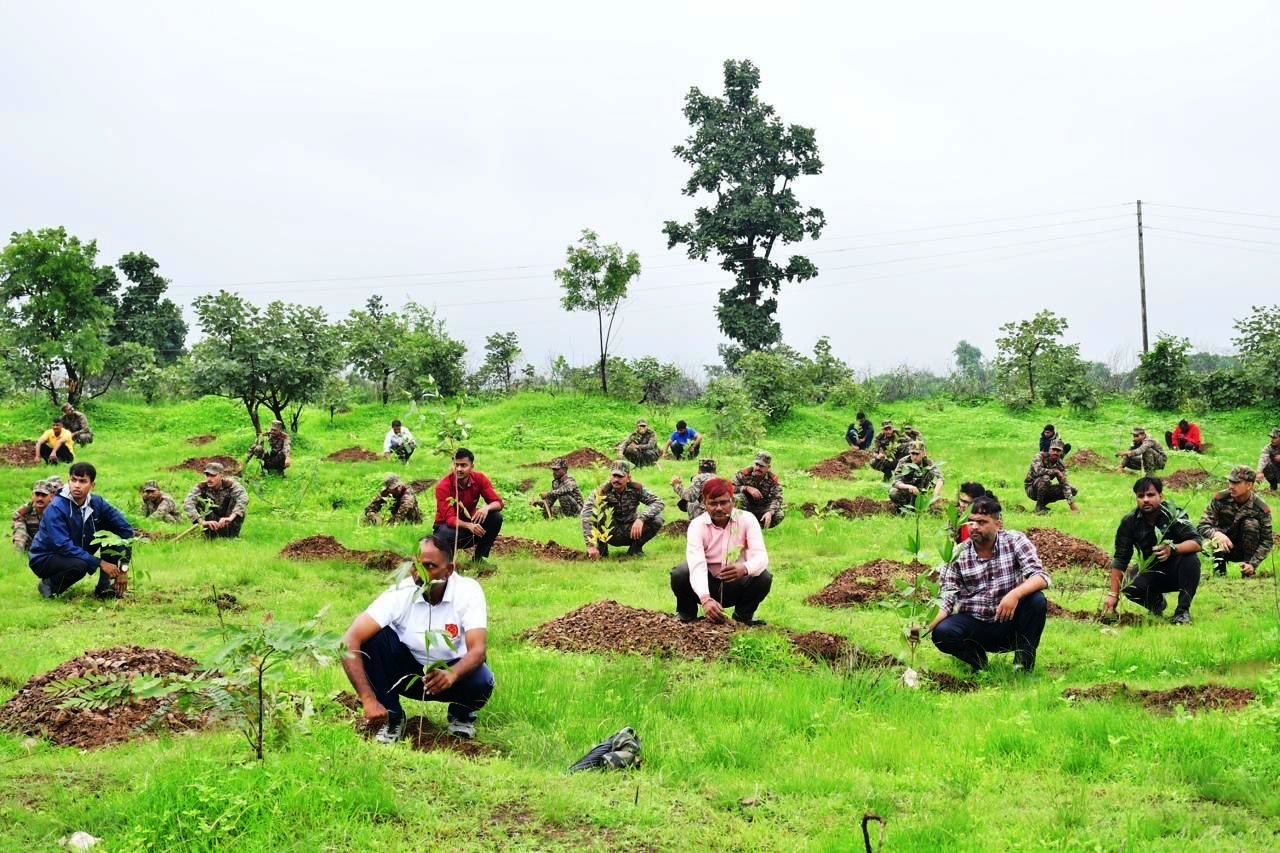
In a meaningful display of civil-military partnership and environmental commitment, the Army War College (AWC), Mhow, joined hands with Badgonda Village under the ‘Jansahbhagidari’ initiative to plant 2,500 saplings. The drive, conducted as a green tribute marking 80 years of India’s Independence, saw enthusiastic participation from villagers, Army personnel, school children and forest officials.
Keywords: Army War College Mhow, Ek Ped Maa Ke Naam, Badgonda Village plantation, Jansahbhagidari tree drive, Indian Army green initiative, 80 years of Independence, environmental stewardship Madhya Pradesh
The plantation promotes the national “Ek Ped Maa Ke Naam” campaign, which links the nurturing role of motherhood with the care of Mother Earth. Officials from the forest department collaborated closely, ensuring the saplings were of suitable local varieties for better survival and ecological benefit in the region around Mhow.
Badgonda, a village panchayat village located about seven kilometres from Mhow in Indore district, has a significant scheduled tribe population and a strong agricultural base. The collective effort underscores Army’s ongoing outreach beyond training and operations, integrating environmental stewardship into community engagement.
The AWC, a premier institution of the Indian Army responsible for higher professional military education and doctrinal development, has consistently organised plantation and conservation activities in recent years. This latest drive being carried out under the able leadership of Commandant Lt Gen Ajay Chandpuria aligns with broader national goals of increasing green cover, combating climate challenges and fostering a culture of public participation in nation-building.
Every sapling planted carries a dual symbolism: a living memorial to maternal care and a concrete pledge towards a sustainable future for the nation. Participants worked side by side, turning the occasion into a practical demonstration of shared responsibility.
As India approaches eight decades of Independence, such grassroots initiatives by institutions like the Army War College reinforce that true national progress rests on both security preparedness and ecological resilience. The event stands as a quiet yet powerful affirmation that the armed forces remain active partners in building a greener, more self-reliant India.

contact: drrajeshjauhri@gmail.com
Dr Rajesh Jauhri is a Journalist with an experience of over 25 years in Indian and foreign media, a Social Scientist, an Ac-complished Author, a Political & Strategic Analyst, a Marksman (Rifle & Pistol), an Orator, a Thinker and an Educationist. He holds a Ph.D. degree on “Impact of colonial heritage on Indian police”. He runs an NGO dedicated to the social and eco-nomic uplift of tribal communities in MP and two decades back, he established a school in a village of Indore district, providing education and moral values to children belonging to underprivileged and minority families. Has received multiple awards in various fields.