

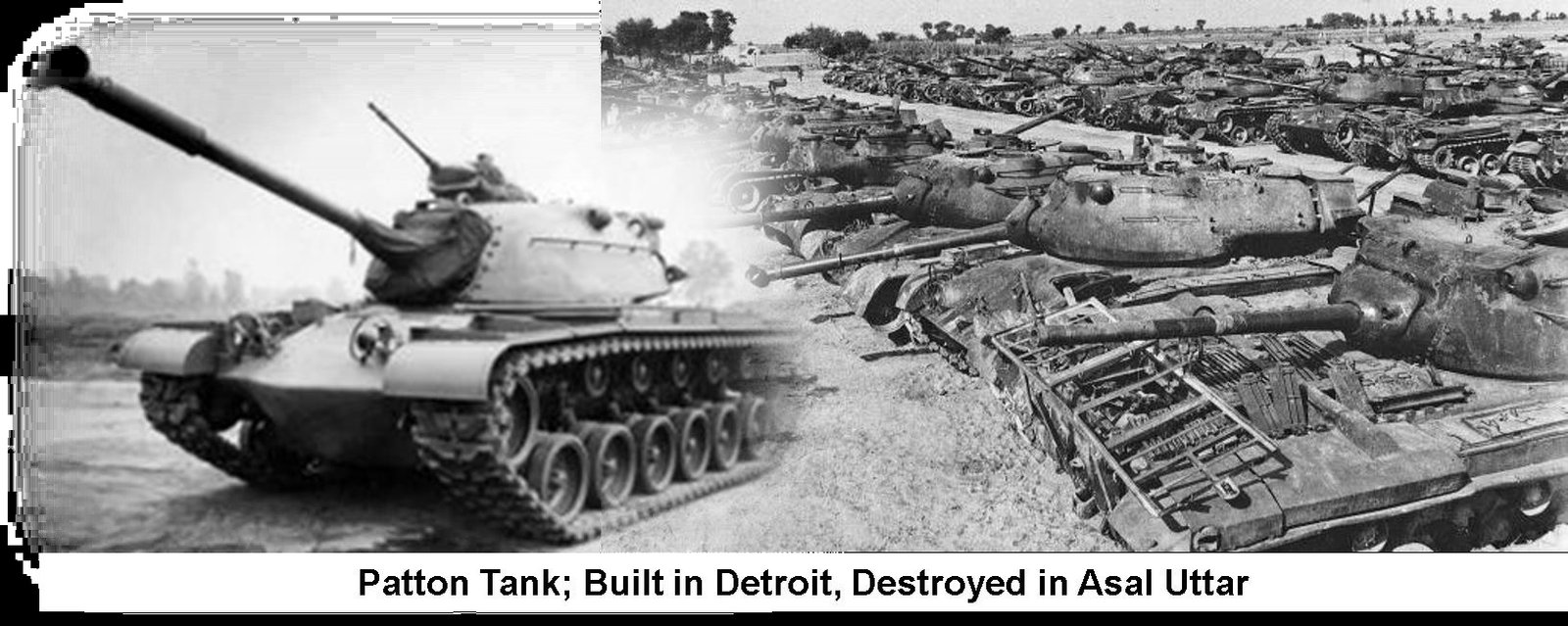
In the sweltering fields of Punjab from September 8 to 10 in 1965, the Indian Army delivered a decisive blow that still resonates as a masterclass in resolve and tactical brilliance. Pakistan’s 1st Armoured Division, equipped with superior American M47 and M48 Patton tanks, advanced with overwhelming numbers, six regiments and roughly 300 tanks against India’s three regiments of 135 tanks. Their plan was ambitious: secure bridgeheads, isolate Indian forces, and cut key road and rail links toward Amritsar and the Beas bridges. Yet at Asal Uttar, near Khem Karan, that pride was shattered.
Keywords: Battle of Asal Uttar, 1965 Indo-Pak War, Abdul Hamid PVC, Patton tanks destroyed, Indian Armoured Corps resilience
After initial setbacks, India’s 4 Mountain Division, supported by 2 Independent Armoured Brigade, dug in. Flat sugarcane fields became a force multiplier. Flooded and transformed into swampy killing grounds, the terrain channelled Pakistani armour into a horseshoe trap. Concealed Indian tanks of 9 Deccan Horse, 3 Cavalry and 8 Cavalry waited behind the tall cane. Pakistani reconnaissance in force on September 8 lost 11 tanks to precise fire. Repeated assaults by Pakistani 4th and 5th Armoured Brigades were beaten back, night after night, by determined infantry including 18 Rajputana Rifles and accurate artillery, some firing in the direct role.
On September 10, the climax arrived. Company Quarter Master Havildar Abdul Hamid of 4 Grenadiers, manning a jeep-mounted recoilless gun, destroyed successive Patton tanks under intense fire before falling in action. He was awarded the Param Vir Chakra posthumously. Nearby, a squadron of 3 Cavalry and Deccan Horse tanks completed the ambush, pulverising a Pakistani combat group in a classic sledge-and-hammer action. A final southern outflanking attempt by Pakistani 4 Cavalry met the same fate inside a carefully prepared semi-circle of fire. Pakistani Divisional Commander Major General Nasir was wounded and his artillery brigade commander killed when their radio signals were intercepted and artillery brought down.
Pakistan lost 97 tanks, including 72 Pattons. Indian losses were comparatively light. Officers such as Lieutenant Colonel A.S. Vaidya, Major General Gurbaksh Singh, Brigadier TK Theogaraj and Lieutenant Colonel Salim Caleb earned the Maha Vir Chakra. The destroyed Pattons were later gathered at “Patton Nagar” near Bhikhiwind as lasting trophies.
The Battle of Asal Uttar remains the largest tank engagement since the Second World War. It demonstrates that superior numbers and technology can be overcome by terrain mastery, disciplined training, individual skill and unyielding spirit. That same spirit, calm under fire, refusal to yield, and quiet determination, continues to inspire service personnel and citizens alike, reminding every generation that courage and clear thinking can rewrite the odds.
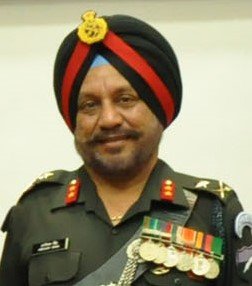
Major General Harvijay Singh is a third-generation officer, his two sons are also army officers.
He holds degree of B.Tech. and Master’s Degree in Management Sciences. He is a Certified Ethical Hacker and Cyber Forensic Investigator.
He is Member and Historian of the Punjab Military Literature Society, Chandigarh.
He has written books on Indo Pak Wars: 1948, 1965, 1971 – ‘Battles That Made History’, ‘Indo Pak War 1947-48’ (for Part D) and ‘Gallant Soldiers: Short Stories of Big Deeds’. He has also written Monographs on Grey Zone Warfare and Lessons Learnt from the Ukraine War. He is a regular contributor to Magazines on Military Strategy and Technology and a speaker on current Global Military events.
He is the winner of ARTRAC Scholar Warrior Badge for writing on Contemporary Military Thinking and Strategy.