

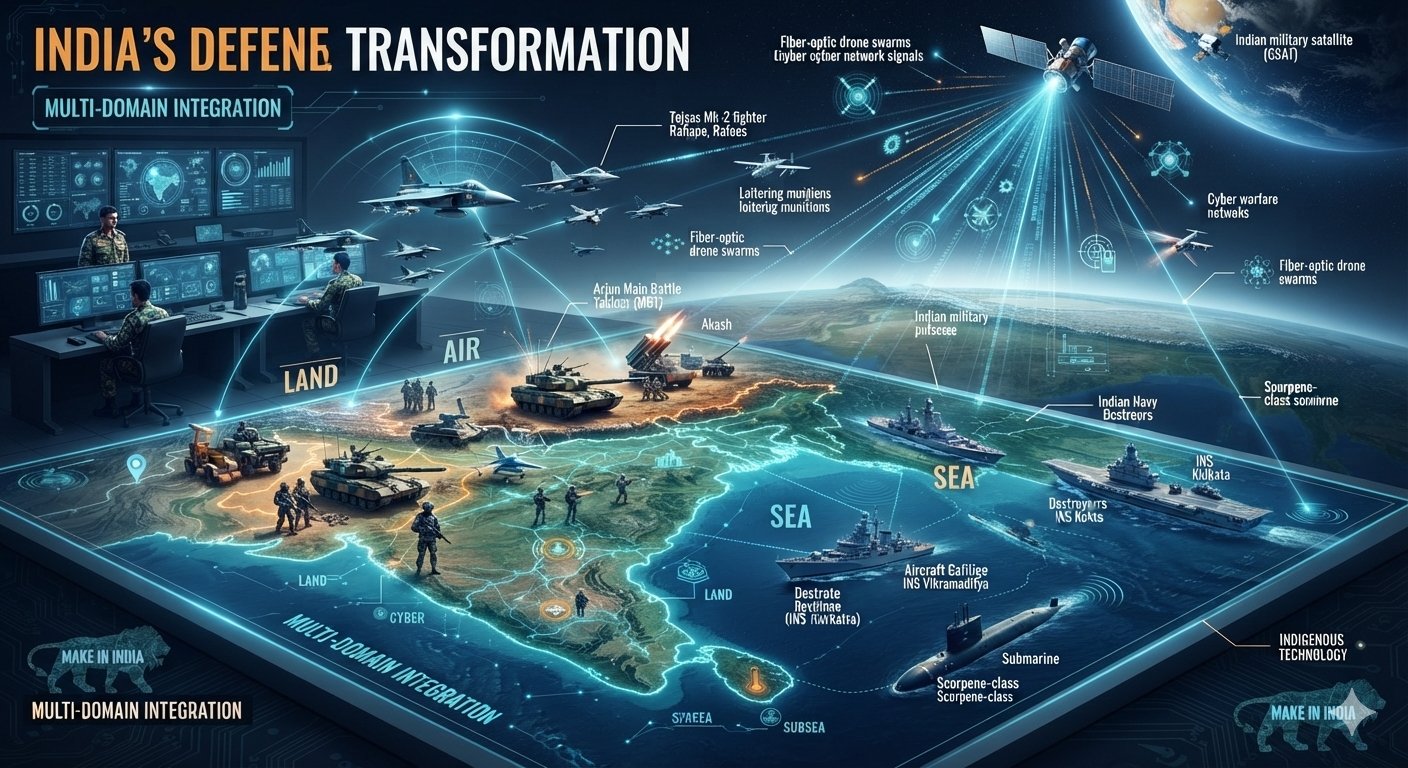
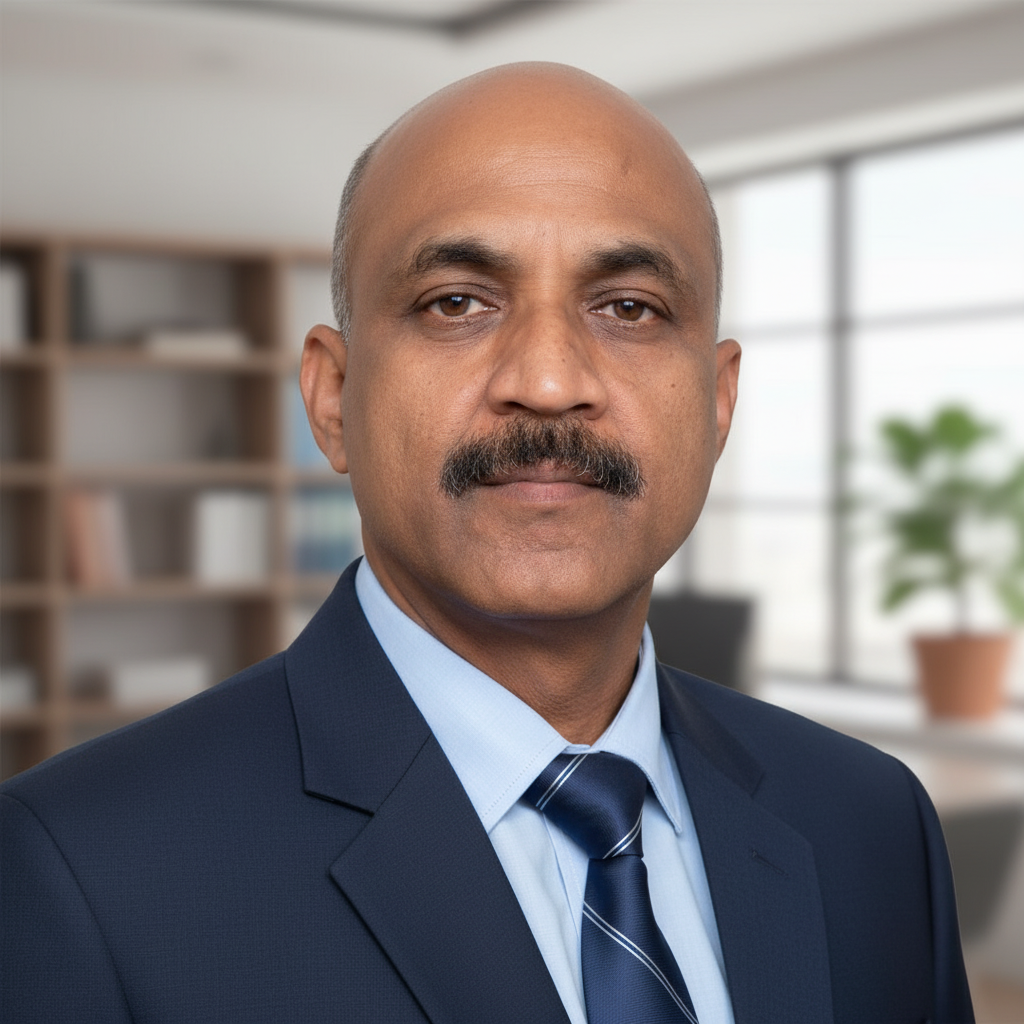
Integrated Theatre Commands are no longer an administrative reform but an operational necessity for the Indian Armed Forces, Chief of Defence Staff General N.S. Raja Subramani declared at the ANI National Security Summit 3.0 on Monday. Citing lessons from Operation Sindoor, he stressed that future conflicts will demand seamless multi-domain operations across land, air, sea, subsea, cyber, electronic warfare, space and cognitive domains.
“These spectrums are not individual. They are shared by all the services, and effects created by one service have an effect on the domain of the other services,” General Subramani said. He dismissed notions of institutional resistance or political deadlock, noting that similar restructuring in the United States and China also took time but accelerated once political will aligned. “Everything has been resolved,” he affirmed, expressing confidence that progress would be evident well before the next summit.
Keywords: Integrated Theatre Commands, CDS General NS Raja Subramani, Air Chief Marshal Ashutosh Dixit, multi-domain operations, Operation Sindoor, Aatmanirbharta defence, drone warfare India
Air Chief Marshal Ashutosh Dixit, speaking in the same session, underscored the stark realities of modern high-intensity warfare. Drawing on independent estimates from the Centre for Strategic and International Studies, he highlighted that the United States has expended roughly two-thirds of its Patriot interceptors in recent West Asian conflicts, with deliveries of only about 172 new systems this fiscal year, meaning full replenishment could stretch to 2030 even for the world’s largest defence industrial base.
The Air Chief pointed to the scale of drone warfare in Ukraine, where Russia launched more than 700 drones in a single night in July 2025, while Ukraine produced at least four million drones last year and aims for seven million this year. “In a crisis, foreign suppliers will have their own priorities,” he warned. India’s preparedness, he argued, must rest on domestic production lines capable of rapid surge, supply chains anchored in the MSME sector, and multiple sources for every critical item. Stockpiles must be sized for a prolonged conflict, not a short engagement.
Adaptation, he identified as the third critical test. When radio-controlled drones were jammed in Ukraine, both sides shifted to fibre-optic guided systems immune to electronic interference; in some Russian units these now constitute a third to half of FPV drones. Experts estimate Ukrainian drone technology is being upgraded roughly every eight weeks. Such speed is impossible, Dixit noted, if source code resides abroad or procurement cycles stretch across years. From concept, design, making, testing and commissioning, everything should be in-house of the country itself, otherwise such rapid transformation is not possible at all.
Together, the remarks signal a clear institutional consensus: theatreisation must proceed without delay, and genuine self-reliance in munitions, drones and critical technologies is now a core operational requirement for the Indian military.
contact: drrajeshjauhri@gmail.com
Dr Rajesh Jauhri is a Journalist with an experience of over 25 years in Indian and foreign media, a Social Scientist, an Ac-complished Author, a Political & Strategic Analyst, a Marksman (Rifle & Pistol), an Orator, a Thinker and an Educationist. He holds a Ph.D. degree on “Impact of colonial heritage on Indian police”. He runs an NGO dedicated to the social and eco-nomic uplift of tribal communities in MP and two decades back, he established a school in a village of Indore district, providing education and moral values to children belonging to underprivileged and minority families. Has received multiple awards in various fields.