
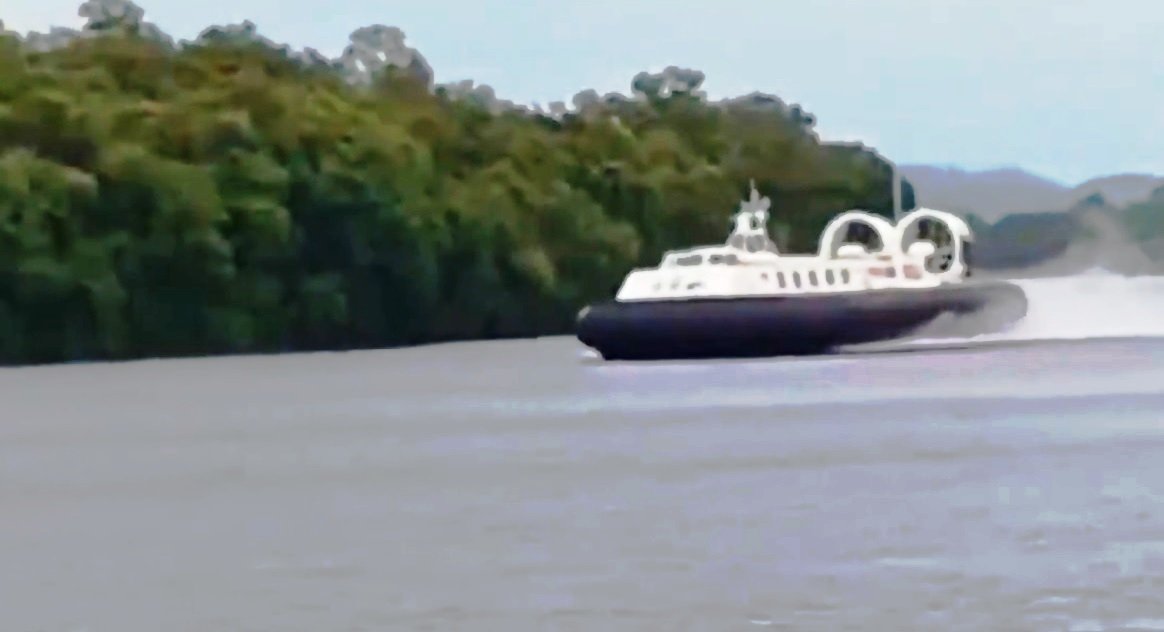
In a significant boost to India’s maritime self-reliance, the Indian Coast Guard (ICG) today inducted H-561, the lead vessel of a six-unit fleet of indigenously built Air Cushion Vehicles (ACVs), at Chowgule & Company Private Limited’s Rassaim shipyard in Goa. This marks the first time India has constructed such advanced hovercraft domestically, representing a landmark achievement under the Aatmanirbhar Bharat and Make in India initiatives.
The ₹387 crore contract, signed with the Ministry of Defence in October 2024, underscores the government’s commitment to enhancing indigenous defence manufacturing capabilities. Built with over 50% indigenous content and based on proven Griffon Hoverwork (now Griffon Marine) designs, H-561 and its sister vessels embody a successful collaboration between international expertise and Indian industrial prowess.
Versatile Operational Edge
Air cushion vehicles, or hovercrafts, offer unique advantages in India’s diverse coastal terrain. Capable of high-speed operations over water, mudflats, marshes, and shallow creeks, H-561 will significantly augment the ICG’s ability to conduct rapid patrols, reconnaissance, search-and-rescue missions, and humanitarian assistance along the country’s expansive 7,600-km coastline. Its amphibious nature provides tactical flexibility where conventional vessels face limitations, proving especially valuable for countering smuggling, responding to natural disasters, and addressing regional maritime security challenges.
Senior ICG officials, including representatives from Regional Headquarters (West), attended the induction ceremony, highlighting the platform’s role in bolstering operational readiness. With five additional units currently under construction at the same yard, the fleet is poised to enter service progressively, further modernising the Coast Guard’s fleet.
Strategic and Economic Impact
This project not only advances technological self-sufficiency but also generates skilled employment and strengthens the domestic shipbuilding ecosystem. Chowgule’s Rassaim facility has demonstrated its capacity through milestones like the girder-laying ceremonies held earlier in 2026, reflecting efficient project execution.
Defence analysts view the induction as a timely step amid evolving threats in the Indian Ocean Region. By reducing dependence on foreign platforms for specialised craft, India reinforces its resolve to safeguard maritime interests through home-grown solutions. As H-561 begins patrols, it symbolises the growing maturity of India’s defence manufacturing sector and its contribution to a more secure and self-reliant maritime future.
contact: drrajeshjauhri@gmail.com
Dr Rajesh Jauhri is a Journalist with an experience of over 25 years in Indian and foreign media, a Social Scientist, an Ac-complished Author, a Political & Strategic Analyst, a Marksman (Rifle & Pistol), an Orator, a Thinker and an Educationist. He holds a Ph.D. degree on “Impact of colonial heritage on Indian police”. He runs an NGO dedicated to the social and eco-nomic uplift of tribal communities in MP and two decades back, he established a school in a village of Indore district, providing education and moral values to children belonging to underprivileged and minority families. Has received multiple awards in various fields.