

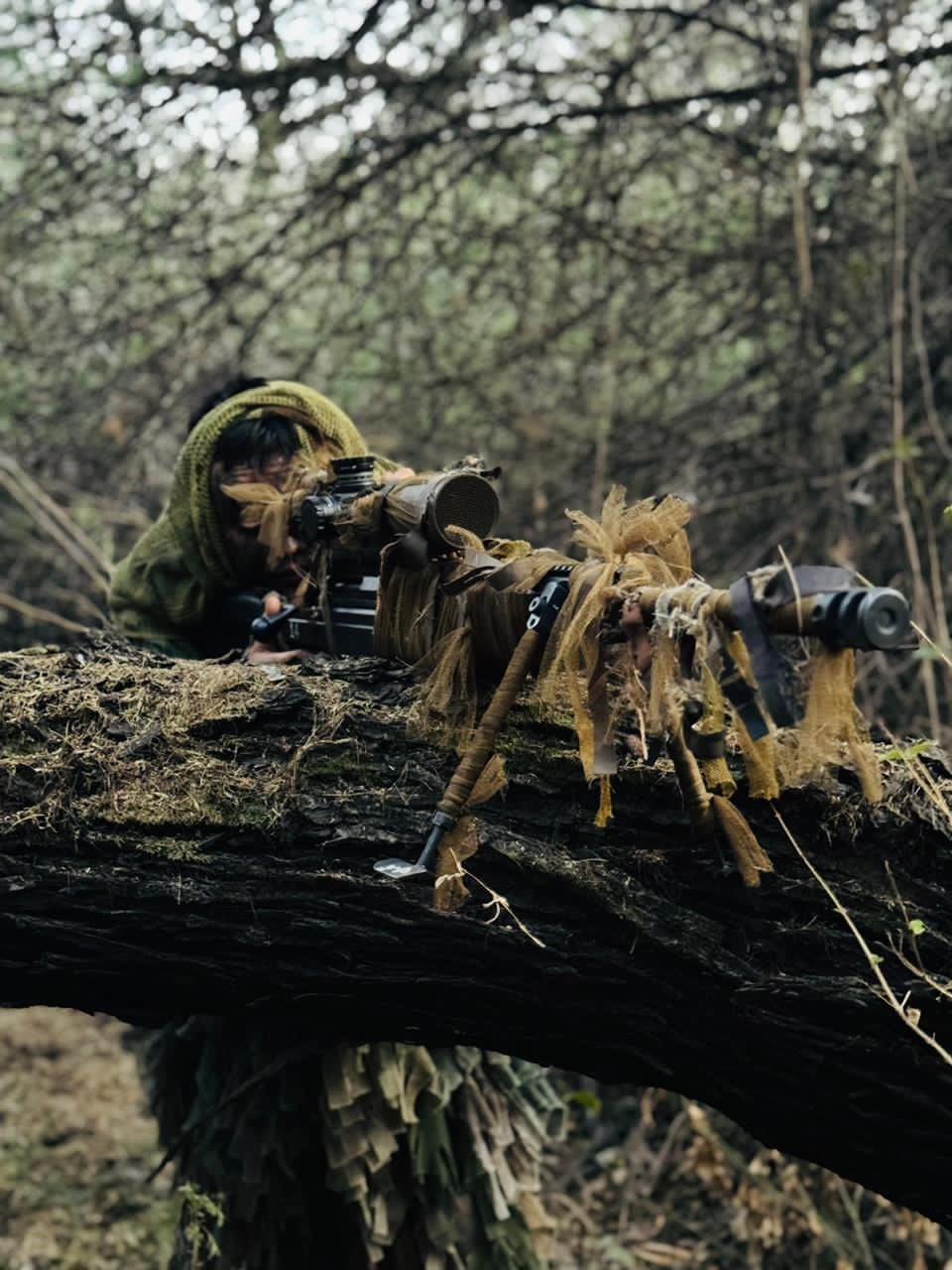
Mhow: In a notable development underscoring the growing military-to-military cooperation between India and the United States, instructors from the Indian Army’s prestigious Infantry School in Mhow are currently engaged in a Subject Matter Expert Exchange (SMEE) with snipers from the US Army’s Bobcat Unit (1st Battalion, 5th Infantry Regiment) under the 11th Airborne Division. The exchange, running from April 21 to 30, 2026, focuses on sharing specialised knowledge in precision warfare and sniper tactics.
The Infantry School, Mhow established as one of the oldest and largest training institutions of the Indian Army, serves as the ideal venue for this initiative. Renowned for its rigorous programmes in infantry tactics, marksmanship, and advanced weaponry, the school has long been the alma mater for Indian infantrymen and a hub for specialised training, including sniper courses and inter-divisional competitions.
According to an official post from the Infantry School, the ongoing exchange involves instructors from both sides pooling their expertise. This collaborative effort is described as “a significant step in deepening operational synergy and professional learning.” It builds directly on the strong foundation laid by Exercise Yudh Abhyas, the flagship annual bilateral training exercise between the Indian and US armies.
Exercise Yudh Abhyas, which translates to “War Training” or “Preparing for War,” has evolved over two decades into a high-complexity engagement alternating between India and the United States. Its most recent edition (the 21st) took place in September 2025 at Fort Wainwright and the Yukon Training Area in Alaska. There, Indian troops from a battalion of the Madras Regiment trained alongside soldiers from the US Army’s 11th Airborne Division—including elements of the “Bobcats”—focusing on interoperability, tactical drills, command post exercises, and specialist skills such as sniper training in challenging sub-arctic conditions.
The current SMEE in Mhow represents a natural progression of that partnership. By facilitating direct instructor-level interaction on precision marksmanship, field craft, target acquisition, and tactical employment of snipers, the programme aims to enhance mutual understanding and operational effectiveness. Officials highlight that it reinforces “mutual trust, knowledge exchange, and excellence in precision warfare.”The 11th Airborne Division, known as the “Arctic Angels,” specialises in expeditionary operations, arctic and mountain warfare, airborne capabilities, and multi-domain operations in the Indo-Pacific theatre. Its inclusion of the Bobcat Unit brings proven expertise from high-intensity training environments to the exchange.
This initiative aligns with the broader trajectory of India-US defence cooperation under the Comprehensive Global Strategic Partnership. Over the years, the two democracies have expanded joint activities through exercises such as Yudh Abhyas, Vajra Prahar (special forces), and various subject matter expert exchanges. These engagements have grown in scale and sophistication, covering areas from counter-terrorism and high-altitude operations to emerging technologies and precision strike capabilities.Defence analysts view such targeted exchanges as force multipliers. They allow militaries to refine doctrines, adapt to modern battlefield challenges, and build personal and professional networks that strengthen interoperability without the logistical demands of large-scale manoeuvres.
The Infantry School’s role in hosting this programme further cements Mhow’s status as a global centre for infantry excellence. The institution regularly conducts advanced courses for Indian officers as well as personnel from friendly foreign countries, underscoring India’s growing contribution as a defence training partner.As the 10-day exchange concludes later this month, both sides are expected to carry forward enhanced tactical insights and a renewed commitment to collaborative professional development. In an era of complex security challenges, initiatives like this SMEE exemplify how sustained, focused engagement between the Indian and US armies contributes to shared goals of regional stability and operational readiness.This development comes at a time when bilateral military ties continue to mature, reflecting the strategic convergence between the world’s two largest democracies.

contact: drrajeshjauhri@gmail.com
Dr Rajesh Jauhri is a Journalist with an experience of over 25 years in Indian and foreign media, a Social Scientist, an Ac-complished Author, a Political & Strategic Analyst, a Marksman (Rifle & Pistol), an Orator, a Thinker and an Educationist. He holds a Ph.D. degree on “Impact of colonial heritage on Indian police”. He runs an NGO dedicated to the social and eco-nomic uplift of tribal communities in MP and two decades back, he established a school in a village of Indore district, providing education and moral values to children belonging to underprivileged and minority families. Has received multiple awards in various fields.
Show More: מספר טלפון שירותי ליווי
татуировка сделать спб сделать тату цена
салон татуировок https://taty-salon-spb.ru