


Defence Chronicle, Mhow
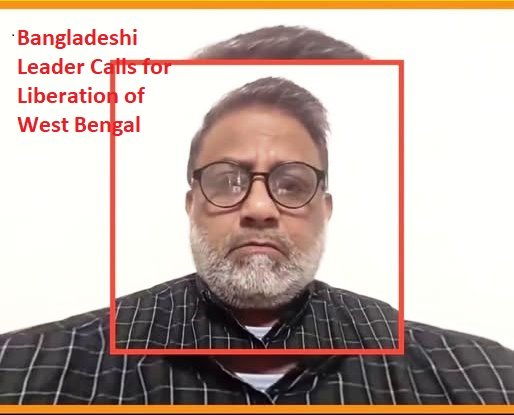
In a provocative statement that has sent ripples across strategic circles in New Delhi, senior Bangladeshi Jamaat-e-Islami leader Md Nurul Huda has urged defeated West Bengal Chief Minister Mamata Banerjee to reject her electoral defeat and declare West Bengal’s independence from India. Huda further called upon Banerjee to ‘Wage War against Delhi,’ claiming that 170 million Muslims in Bangladesh would extend full support to such a move. The remarks, made shortly after Banerjee’s defeat in the recently concluded Assembly elections, have triggered intense debate on social media and raised serious national security concerns. The situation seems to be more critical than anybody could feel when the news about killing of senior BJP leader Shubhendu Adhikari’s PA Chandranath Rath in Madhyagram area of Dakshin 24 Pargana district last night came to fore. Rath was with Adhikari for the last 12 years and his murder at a time when a leader like Amit Shah is supervising the security of the state, is a very dangerous sign. This means that those elements are not at all scared and dare to attack anybody and it also shows that their preparations are very large.
Security analysts view Huda’s intervention as more than mere rhetoric. It underscores the dangerous trajectory that West Bengal has followed over the past two decades under prolonged Left Front rule followed by the Trinamool Congress dispensation. Experts have repeatedly warned that unchecked infiltration from Bangladesh, coupled with political patronage of radical elements, has allowed the state to emerge as a soft underbelly for cross-border threats.
During the Left’s long reign and subsequently under Mamata Banerjee, the state witnessed a sharp deterioration in demographic stability and internal security. Intelligence reports have highlighted the proliferation of fake currency networks, terror modules, and terror harbouring infrastructure across several districts over the last decade. What makes the situation particularly alarming is the paradox of Banerjee’s own political journey. She rose to power on the promise of driving out illegal Bangladeshi infiltrators; yet, over the years, her government has been widely accused of becoming their biggest protector, turning a blind eye to large-scale settlement and radicalisation in exchange for electoral dividends.
Senior defence officials, speaking on condition of anonymity, noted that had the BJP not secured a decisive victory in the elections, the state risked slipping beyond the effective control of the Indian federal government. The deepening nexus between certain political elements in West Bengal and radical Islamist outfits across the border has serious implications for India’s eastern flank. It threatens not only communal harmony but also the integrity of India’s border management with Bangladesh and the overall counter-terrorism architecture in the region.
The Jamaat leader’s open call for secession and confrontation with the Union government has predictably drawn condemnation from strategic commentators. It reinforces long-standing apprehensions about the external radical ecosystem attempting to exploit internal political fault lines. For India’s defence and internal security establishment, the episode serves as a timely reminder of the need for robust border fencing, enhanced intelligence penetration, and firm administrative control in vulnerable border states.
As New Delhi consolidates its position in Kolkata, the priority remains clear: dismantling terror ecosystems and restoring the rule of law. Any tolerance of secessionist or extra-constitutional rhetoric, especially when backed by foreign radical voices, will have to be dealt with firmly to safeguard national unity and territorial integrity.

contact: drrajeshjauhri@gmail.com
Dr Rajesh Jauhri is a Journalist with an experience of over 25 years in Indian and foreign media, a Social Scientist, an Ac-complished Author, a Political & Strategic Analyst, a Marksman (Rifle & Pistol), an Orator, a Thinker and an Educationist. He holds a Ph.D. degree on “Impact of colonial heritage on Indian police”. He runs an NGO dedicated to the social and eco-nomic uplift of tribal communities in MP and two decades back, he established a school in a village of Indore district, providing education and moral values to children belonging to underprivileged and minority families. Has received multiple awards in various fields.
India is too strong to even bother about such silly remarks.
The post election’s violence and noticible divisions in the society can however be a dangerous trend.
Wonder what the CPMFs deployed there are doing. If violence continues in presence of Uniformed personnel, that force erodes it’s own value to the nation.
You are right Sir. Thanks for your valuable comments