



Bengaluru/New Delhi
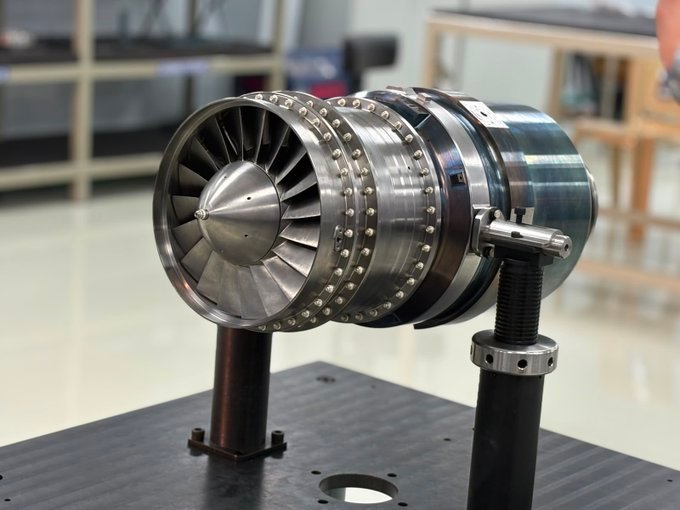
In a significant boost to India’s push for self-reliance in critical defence technologies, the Defence Research and Development Organisation’s (DRDO) Gas Turbine Research Establishment (GTRE) has successfully developed the country’s first indigenous expendable turbojet engine in the 350 kg thrust class. The engine, designated as an Advanced Turbo Gas Generator (ATGG), was fully manufactured and assembled by private industry partner Azad Engineering Limited, marking a historic step in India’s aero-engine capabilities.
Keywords: DRDO GTRE turbojet engine, indigenous expendable turbojet, Azad Engineering DRDO, India Atmanirbhar Bharat defence, 350 kg thrust engine India, cruise missile propulsion, Indian aerospace manufacturing.
The development, announced by the Ministry of Defence today, underscores the maturing synergy between DRDO’s research expertise and India’s burgeoning private defence manufacturing sector. Azad Engineering, which has transitioned from supplying precision components to global giants like Rolls-Royce and GE, executed the project under a contract awarded by GTRE in May 2024. The successful delivery of the first unit to DRDO paves the way for integration into next-generation standoff weapons.
Expendable turbojet engines are vital for powering a range of high-value systems, including cruise missiles, loitering munitions, anti-ship missiles, and stealthy unmanned combat aerial vehicles (UCAVs). By achieving this capability domestically, India reduces dependence on foreign suppliers such as France’s Safran or Russia’s NPO Saturn, enhancing strategic autonomy and supply chain resilience. The engine is expected to support platforms like the Naval Anti-Ship Missile (NASM-MR) and future indigenous drone and missile programs.
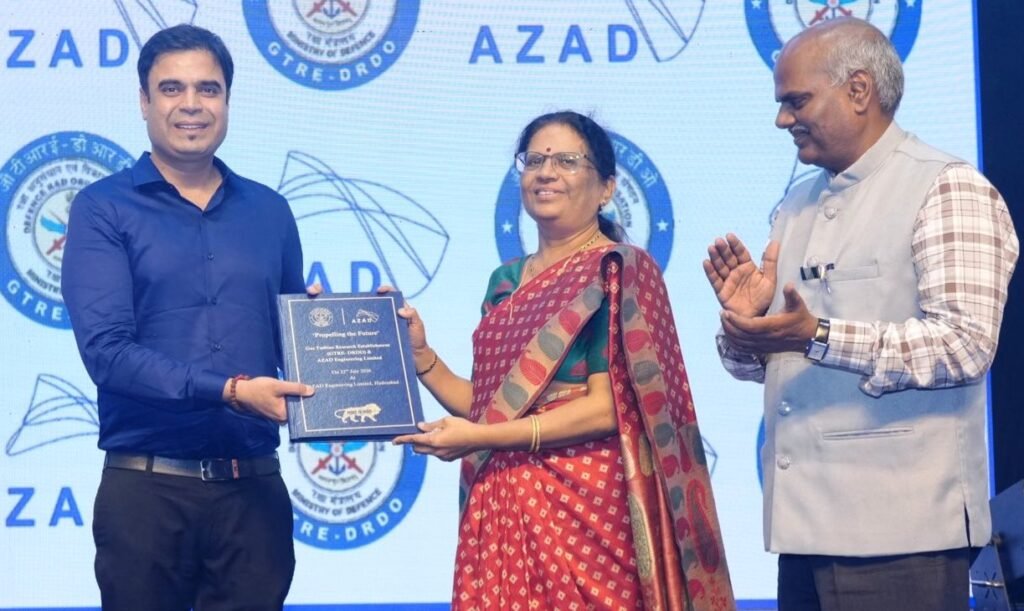
Defence experts view this as a foundational achievement in a domain long dominated by a handful of global players. GTRE’s efforts build on decades of work in gas turbine technology, aligning with the broader Atmanirbhar Bharat initiative. The engine will now undergo rigorous development trials, with plans for additional units to accelerate production scaling.
This milestone not only strengthens India’s defence industrial ecosystem but also signals growing confidence among private players to handle complex, high-precision aerospace manufacturing. As India aims for greater indigenisation in propulsion systems, collaborations like GTRE-Azad Engineering are set to play a pivotal role in future programs, from advanced UAVs to hypersonic technologies.

contact: drrajeshjauhri@gmail.com
Dr Rajesh Jauhri is a Journalist with an experience of over 25 years in Indian and foreign media, a Social Scientist, an Ac-complished Author, a Political & Strategic Analyst, a Marksman (Rifle & Pistol), an Orator, a Thinker and an Educationist. He holds a Ph.D. degree on “Impact of colonial heritage on Indian police”. He runs an NGO dedicated to the social and eco-nomic uplift of tribal communities in MP and two decades back, he established a school in a village of Indore district, providing education and moral values to children belonging to underprivileged and minority families. Has received multiple awards in various fields.