


The narcotics trade has fundamentally mutated in 2026.
We are no longer witnessing the fragmented, opportunistic smuggling rings of the past, what we are confronting is the institutionalization of illicit economies.
These transnational syndicates possess a level of structural maturity that allows them to weaponize globalization, co-opting legitimate supply chains, deploying advanced operational security, and systematically targeting the resilience of our state apparatus.
The boundary between organized crime and asymmetric warfare has become dangerously porous.
The tactical shift towards the domestic industrialization of synthetic narcotics is particularly revealing.
We are seeing a deliberate strategy of localizing production to circumvent border interdiction and supply chain disruptions.
The recent neutralization by the Anti-Narcotics Task Force of a clandestine methamphetamine facility, seamlessly embedded within a Ramanathapuram lathe workshop, is a case in point.[i]
The recovery of critical precursor chemicals like 1.9 kilograms of pseudoephedrine, alongside commercial quantities of red phosphorus and elemental iodine integrated with specialized synthesis equipment, indicates a high degree of technical proficiency.
This is not street-level crime, it is calculated, decentralized manufacturing designed to scale highly potent outputs while minimizing logistical exposure to our security grid.
The logistical ingenuity of these networks further underscores their adaptive capacity, necessitating a highly informed counter-strategy.
We are witnessing evasion protocols that range from the deeply desperate to the highly sophisticated.
At the micro-level, the interception by Kerala Excise of 94 grams of MDMA concealed within a menstrual cup during interstate transit highlights the lengths to which bio-concealment is being utilized.[ii]
In the maritime domain, the interception of 292 kilograms of contraband destined for Sri Lanka revealed an operational security protocol relying on the real-time WhatsApp verification of specific serial numbers on foreign currency prior to mid-sea transshipment.[iii]
Furthermore, the industrial scale of agricultural camouflage, such as the cultivation of 14.3 lakh opium plants weighing 62,000 kilograms, meticulously integrated into a 5.6-acre legitimate maize canopy in Chhattisgarh[iv], or the systematic masking of half-ton consignments beneath bulk agricultural freight in Odisha, demonstrates a logistical footprint that we must systematically dismantle.
We must also address the severe vulnerabilities within the pharmaceutical supply chain.
The diversion of scheduled prescription drugs represents a massive regulatory arbitrage, exploiting legitimate medical manufacturing for illicit export and domestic abuse.
The nine-hundred-crore codeine-syrup syndicate, which orchestrated a dedicated logistical pipeline from wholesale traders in Uttar Pradesh and Madhya Pradesh, through Bihar, and across the international boundary into Bangladesh, exemplifies this systemic exploitation.[v]
The necessity of Interpol Red Corner Notices to apprehend key absconders like Shubham Jaiswal speaks directly to the transnational architecture of these operations.
Concurrently, domestic distribution is failing, the flooding of local markets with diverted stock evidenced by the seizure of 540 Pentazocine ampoules in Gujarat, unsupervised profiteering of Mephentermine in Telangana, and the discovery of warehouses in Bihar stockpiling forty lakh rupees worth of banned syrups and tablets indicates a profound failure in downstream pharmaceutical auditing.
The secondary effects of these illicit capital flows present a direct and severe threat to our institutional integrity.
The financial velocity of the narcotics trade actively seeks to subvert the very mechanisms of the state.
When external pressure regarding a nine-hundred-crore syndicate forces an Allahabad High Court judge to recuse himself on the eve of a final order, we are witnessing a systemic assault on the rule of law.[vi]
This corrupting influence permeates the enforcement apparatus itself, manifesting in the egregious fabrication of evidence, such as a Telangana armed reserve constable planting contraband in a fertilizer shop for personal leverage[vii] or, as global precedents in Liberia demonstrate, the active co-option of senior state actors to secure massive transit corridors.[viii]
Furthermore, the crystallization of drug-debt enforcement into public violence, including the brazen urban abduction of a 24-year-old in Kochi, highlights the dangerous spillover of illicit dispute resolution mechanisms into our civic spaces.[ix]
Neutralizing this complex matrix demands an upgraded, systemic response characterized by legal agility and absolute institutional hygiene.
Law enforcement is aggressively leveraging statutory frameworks like the PIT NDPS Act in states like Meghalaya to execute preventive detentions, preemptively disrupting syndicate command structures, augmented by specialized K-9 interception grids.[x]
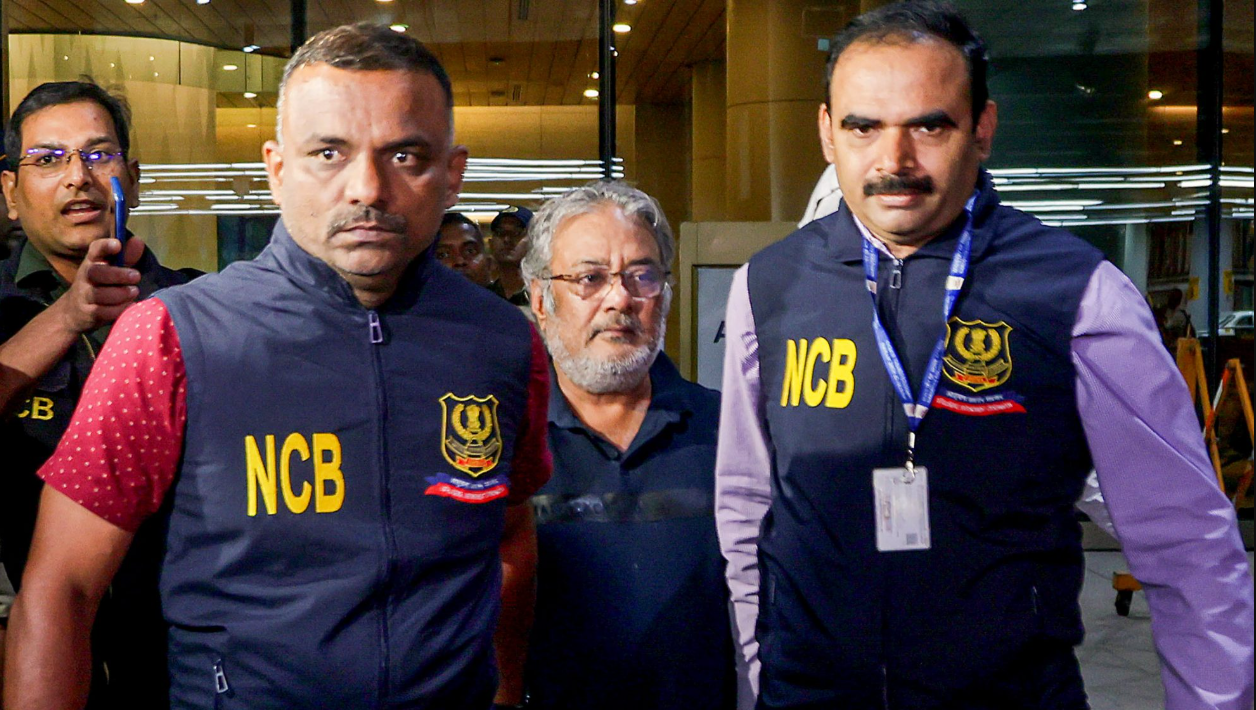
Tactically, the Narcotics Control Bureau is focusing on critical capacity building, deploying Master Trainers to standardize advanced NDPS enforcement protocols across state constabularies, beginning with Maharashtra.
However, technical upgrades must be paired with anti-corruption imperatives.
Initiatives like Kerala’s Project Zero, which mobilizes citizen vigilance frameworks to actively monitor and report bureaucratic graft, are essential.[xi]
We cannot secure our borders or our streets unless we first ensure the uncompromised integrity of the institutions tasked with defending them.
India has undertaken a comprehensive recalibration of its national security and enforcement apparatus.
The strategic pivot culminated in the release of the three-year Vision Document on Narcotics Control (2026–2029) on June 26, 2026.[xii] This roadmap is an operational doctrine anchored in a rigorous whole-of-government and whole-of-society framework.[xiii]
Recognising that institutional fragmentation is the greatest gift to transnational syndicates, the policy systematically dissolves administrative silos, bringing law enforcement, intelligence, border management, chemical regulators, and public health authorities under a unified command structure designed for maximum operational synergy.
At the core of this internal architecture lies a meticulously structured, four-tier Narco-Coordination Centre (NCORD) framework. Operating as a command-and-control platform across the Central ministries, State governments, and specialized enforcement bodies, NCORD ensures seamless policy transmission from New Delhi down to the peripheral districts.[xiv]
This institutional machinery is backed by hard metrics, execution of 9 Apex, 6 Executive, 253 State, and 12,471 District-level NCORD meetings across the nation, alongside the establishment of dedicated Anti-Narcotics Task Forces (ANTFs) in every State and Union Territory to function as local secretariats.[xv]
To tackle complex, multi-jurisdictional cases, particularly those involving narco-terror linkages, Joint Coordination Committees (JCCs) chaired by the Director General of the Narcotics Control Bureau (NCB) now provide dedicated oversight.[xvi]
This institutional overhaul is supported by targeted physical expansion and technological interoperability.
The Narcotics Control Bureau’s operational footprint has been aggressively scaled, expanding its Regional Offices from 3 to 7 headed by Deputy Director Generals in key strategic nodes including Amritsar, Guwahati, Chennai, and Ahmedabad and boosting Zonal Offices from 13 to 30, six additional Zonal offices and ten strategically positioned Field Units have been operationalized in vital corridors such as Bareilly, Ferozepur, Port Blair, Dimapur, and Madurai, bolstered by 568 newly sanctioned officer posts,
On the digital frontier, a specialized task force under the Multi-Agency Centre (MAC) mechanism continuously monitors the dark net and crypto currency channels.
While the National Integrated Database on Arrested Narco-Offenders (NIDAAN) fully integrated with e-Prisons and the Inter-Operable Criminal Justice System (ICJS) now provides real-time access to over 9.50 lakh searchable offender profiles.[xvii]
The true test of a state’s enforcement capacity, however, lies in its ability to project its legal authority beyond its borders and deny safe havens to high-value targets.
The execution of Operation Global-Hunt exemplifies this long-range operational capability.
The target, Mohammad Salim Dola a kingpin who spent over two decades constructing a transnational trafficking syndicate spanning the Middle East, Africa, and Europe had long operated as a primary bulk supplier of Heroin, Charas, Mephedrone, Mandrax, and Methamphetamine into Gujarat and Maharashtra.[xviii]
Following an INTERPOL Red Notice issued in March 2024 and coordinated intelligence operations with Mumbai Police and ATS Gujarat, Indian agencies systematically dismantled his network’s peripheral nodes, leading to the deportation of his son, Tahil Salim Dola, and key associates from the UAE in 2025.[xix]
This multi-year intelligence cycle culminated in Dola’s apprehension in Turkiye and subsequent return to New Delhi’s IGI Airport on April 28, 2026, sending an unequivocal signal that the long arm of Indian law enforcement is both persistent and globally capable.[xx]
On July 6, 2026, India hosted the BRICS Heads of Anti-Drug Agencies meeting in Guwahati, Assam, deliberately driving a shift away from dialogue-centric multilateralism toward structured, action-oriented cooperation on synthetic drugs, New Psychoactive Substances (NPS), and illicit financial flows.[xxi]
This multilateral leadership is reinforced by 27 bilateral agreements, 19 operational MoUs, and deep technical engagements with strategic partners including the United States, Myanmar, Nepal, Singapore, and Thailand.
Through specialized capacity-building initiatives such as advanced training on precursor chemical tracking and clandestine laboratory neutralization conducted in collaboration with the US-DEA, India is building a hardened, network-centric defense.[xxii]
Through precise domestic execution and proactive international diplomacy, India is demonstrating the resolve required to safeguard its national interests in an increasingly complex world.
[ii] https://www.cnbctv18.com/india/trivandrum-woman-smuggling-mdma-hidden-inside-a-menstrual-cup-arrested-19959343.htm
[iii] https://www.thehindu.com/news/cities/Madurai/police-seize-292-kg-of-ganja-headed-for-sri-lanka-arrest-three/article71291085.ece
[iv] https://www.bhaskar.com/g/local/chhattisgarh/durg-bhilai/news/durg-opium-cultivation-case-chargesheet-police-court-accused-138590959.html
[v] https://timesofindia.indiatimes.com/city/indore/interstate-fake-drug-network-operating-out-of-bihar-busted/articleshow/132776095.cms
[vi] https://indianexpress.com/article/legal-news/cough-syrup-racket-case-black-day-allahabad-high-court-judge-bail-pleas-10813109/
[vii] https://www.thehindu.com/news/national/telangana/karimnagar-constable-plants-marijuana-at-friends-house-to-frame-him-lands-in-police-net/article71289671.ece
[viii] https://www.aljazeera.com/video/newsfeed/2026/7/31/31-07-sv-liberia-cocaine-burning-lr
[ix] https://www.thehindu.com/news/national/kerala/youth-reported-abducted-held-with-suspected-mdma-in-kochi/article71291736.ece
[x] https://meghalayatimes.in/meghalaya-to-detain-10-more-drug-traffickers-under-pit-ndps-act/
[xi] https://www.ptinews.com/detail/business/After-Narco-Hunt-Now-Graft-Chennithala-s-Project-Zero-Takes-Aim-at-Systemic-Corruption/3919177
[xii]https://newsonair.gov.in/hm-amit-shah-to-chair-10th-apex-level-meeting-of-ncord-on-26-june-2026/
[xiii] https://www.pib.gov.in/PressReleasePage.aspx?PRID=2287046®=1&lang=1
[xiv]https://www.pib.gov.in/PressReleasePage.aspx?PRID=2290379®=48&lang=2
[xv] https://www.pib.gov.in/PressReleasePage.aspx?PRID=2225855®=1&lang=1
[xvi]https://www.pib.gov.in/PressReleaseDetail.aspx?PRID=2287046®=3&lang=1
[xvii]https://www.pib.gov.in/PressReleasePage.aspx?PRID=2291039®=3&lang=1
[xviii] https://www.thehindu.com/news/national/key-dawood-associate-and-drug-kingpin-salim-dola-deported-to-india-after-arrest-in-istanbul/article70915182.ece
[xix] https://newsonair.gov.in/gangster-dawood-ibrahims-aide-mohammad-salim-dola-brought-to-india-after-deportation-from-turkey/
[xx] https://organiser.org/2026/04/28/350979/bharat/inside-d-company-why-salim-dolas-capture-is-a-turning-point-for-indias-intelligence-war/
[xxi] https://newsonair.gov.in/india-to-host-brics-heads-of-anti-drug-agencies-meeting-in-guwahati/
[xxii] https://www.aninews.in/news/world/asia/india-to-host-brics-heads-of-anti-drug-agencies-meeting-in-guwahati20260705145119/

Punit Shyam Gore (MA Defence and Strategic Studies) is an alumnus of the School of Internal Security, Defence & Strategic Studies of the Rashtriya Raksha University, Gandhinagar (an institution of national importance) under the Ministry of Home Affairs, Government of India.