

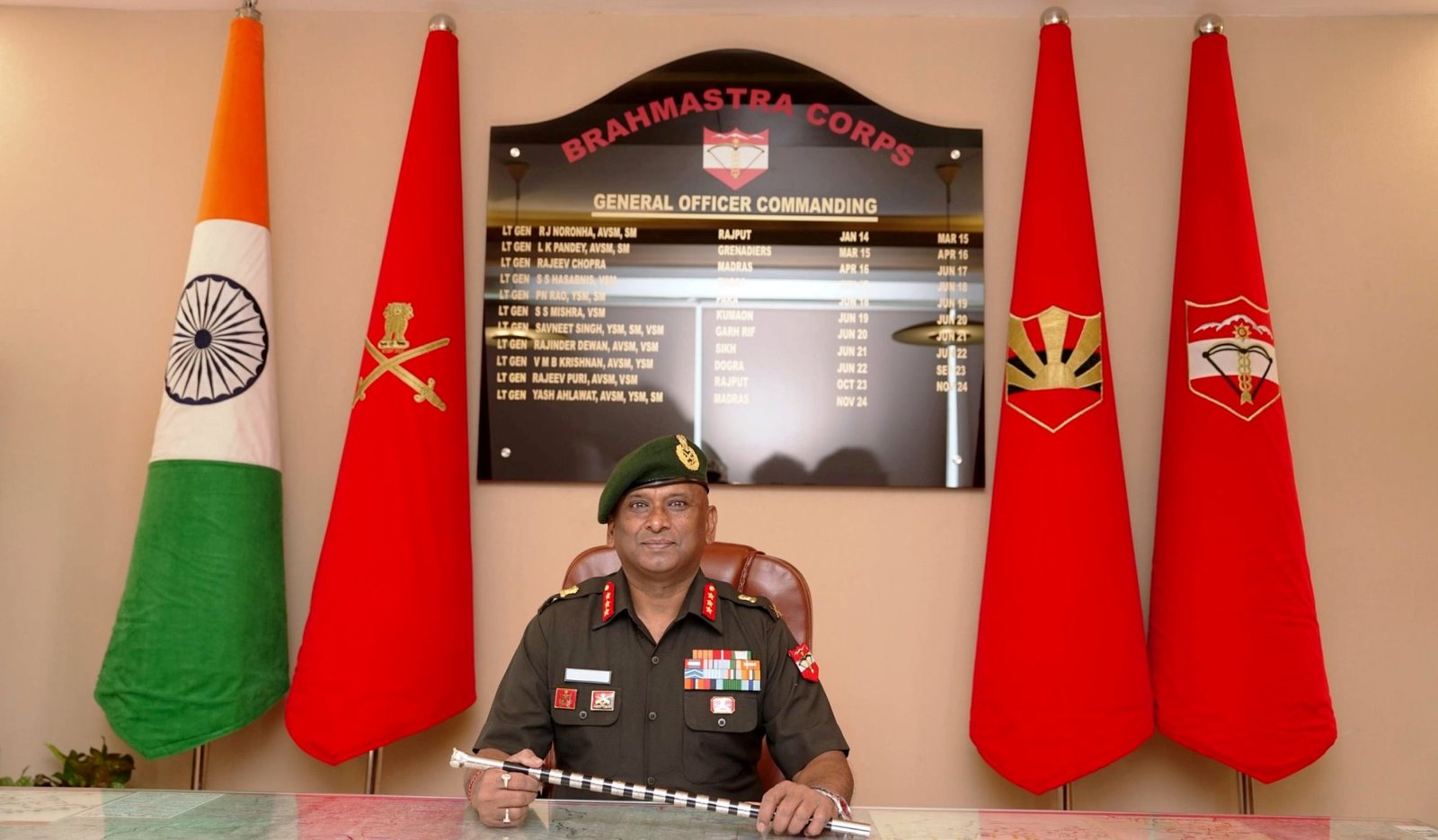
In a significant leadership transition within the Indian Army’s Eastern Command, Lt Gen Yash Ahlawat handed over the reins of the elite XVII Corps, popularly known as the Brahmastra Corps, to Lt Gen SS Kartikeya. The change of command took place at the Corps Headquarters at a place in West Bengal, marking transition in one of the Army’s most critical formations. Before taking over this command, he was the Commander of prestigious Higher Command Wing of the Army War College in Mhow.
Keywords: Brahmastra Corps, Mountain Strike Corps, Indian Army Eastern Command, Lt Gen SS Kartikeya, LAC operational readiness, North-east, Eastern borders, China, Bangladesh
Lt Gen Kartikeya, an officer with a distinguished operational record, previously commanded the Red Shield Division (57 Mountain Division) in Manipur area. His extensive experience in high-altitude and counter-insurgency environments makes him well-suited to lead this specialised formation. Upon assuming command, he was urged by his predecessor to sustain the relentless drive towards greater operational effectiveness and combat readiness while upholding the cherished traditions and ethos of the Indian Army.
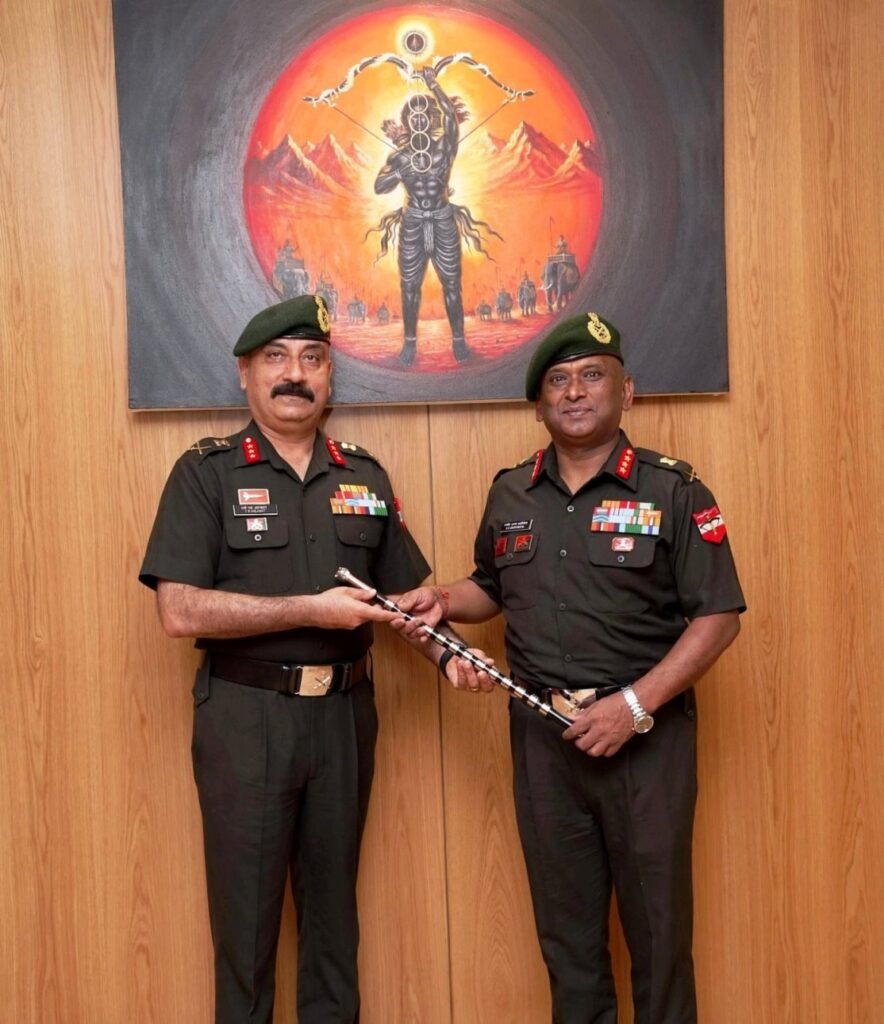
Eastern Army Commander Lt Gen VMB Krishnan congratulated Lt Gen Kartikeya on taking charge and complimented Lt Gen Ahlawat for his exemplary contributions during his tenure.
Raised in 2013 as India’s first dedicated Mountain Strike Corps, the Brahmastra Corps was conceived as a rapid-reaction and counter-offensive force capable of operating along the Line of Actual Control (LAC) with China, particularly in the Sikkim and Arunachal Pradesh sectors. The formation benefits from proximity to the Indian Air Force’s C-130J fleet at Air Force Station Arjan Singh, enabling troops to be airlifted to the high-altitude border within a short timeframe.
Equipped with M777 ultra-light howitzers, the Corps fields Integrated Battle Groups (IBGs) and a Rudra Brigade, serving as a key testbed for the Army’s ongoing structural reforms aimed at creating agile, self-contained combat formations. Over the years, the Brahmastra Corps has steadily enhanced its high-altitude warfare capabilities through rigorous training, technology integration, and joint exercises, reinforcing India’s posture of credible deterrence and rapid response along the northern borders.
The leadership change comes at a time when the Indian Army continues to prioritise combat readiness, multi-domain capability and technological edge. Under Lt Gen Kartikeya’s command, the Brahmastra Corps is expected to further consolidate its role as a decisive instrument of national security in the Eastern Theatre.

contact: drrajeshjauhri@gmail.com
Dr Rajesh Jauhri is a Journalist with an experience of over 25 years in Indian and foreign media, a Social Scientist, an Ac-complished Author, a Political & Strategic Analyst, a Marksman (Rifle & Pistol), an Orator, a Thinker and an Educationist. He holds a Ph.D. degree on “Impact of colonial heritage on Indian police”. He runs an NGO dedicated to the social and eco-nomic uplift of tribal communities in MP and two decades back, he established a school in a village of Indore district, providing education and moral values to children belonging to underprivileged and minority families. Has received multiple awards in various fields.