

Brig PP Singh
“Quad is a constructive and trusted partnership delivering solutions.”
Prime Minister Narendra Modi
The QUAD meeting held in Manila on November 17, 2026, on the sidelines of ASEAN and East Asia Summits, highlights the growing strategic importance of the Indo-Pacific. Ahead of a proposed meeting of the Asia-Pacific Economic Cooperation (APEC) summit in Shenzhen, between US, Chinese and Russian leaders at the APEC summit, the QUAD reaffirmed its commitment to a free, open and stable Indo-Pacific. It opposed changes to the status quo through force or coercion and announced cooperation in maritime security, supply chains, AI, cybersecurity and the economy[ii].
Though China is not explicitly named in the statement, the strategic implications are unmistakable. The QUAD reaffirmed that the future of the Indo-Pacific cannot be determined through unilateral actions or agreements among major powers alone. Countries across the region must retain their sovereignty, freedom of navigation and ability to make independent strategic and economic choices[iii]. The Manila summit, attended by President Trump, Prime Minister Narendra Modi, Australian Prime Minister Anthony Albanese and Japanese Prime Minister Sanae Takaichi, also reinforced the importance of the grouping at a time when global power equations are undergoing considerable change.
Significance of the QUAD
The QUAD comprises four strategically important Indo-Pacific countries. US is the world’s leading military and economic power; Japan, is a major technological and industrial economy; Australia, provides strategic depth in the Pacific; and India is strategically located in the Indian Ocean and is an emerging economic and geopolitical power[iv]. Together, the combined economic, technological, diplomatic and maritime strength gives the group significant influence over the region’s strategic balance[v].
The Indo-Pacific is an interconnected maritime and economic region extending from Africa’s eastern coast and Indian Ocean to the Western Pacific. Vital shipping and energy routes, major manufacturing centres and fast-growing economies are located in this region. A significant share of global trade passes through its waters, making maritime security essential for global economic stability, energy security and supply chains. Concurrently, China’s growing economic, military and diplomatic influence, through its activities in the South and East China Seas, presence in the Indian Ocean, and infrastructure and economic partnerships, has reshaped the regional strategic environment.
The QUAD enables four countries with shared interests to coordinate responses to regional developments. Though, unlike NATO, it is not a formal military alliance and has no treaty-based collective defence obligation. Instead, it is a flexible strategic partnership promoting cooperation in maritime security, technology, economic resilience, counterterrorism and humanitarian assistance. This flexibility allows India to strengthen strategic partnerships while maintaining its independent foreign policy.
Achievements and Shortfalls
The QUAD as a concept originated in December 2004, when India, US, Japan and Australia cooperated in humanitarian assistance and disaster relief post a devastating earthquake off Sumatra and the Indian Ocean tsunami. This cooperation laid the foundation for a strategic dialogue. The first officials’ summit was held in the Philippines in May 2007 but differences in priorities and concerns about antagonising China led Australia to withdraw. It was revived in November 2017 through renewed Indo-Pacific consultations, highlighting shared interests in regional stability, freedom of navigation and a rules-based international order. In 2019, cooperation was upgraded to foreign-minister level[vi]. The first virtual QUAD Leaders’ Summit took place in March 2021, followed by the first in-person meeting in Washington in September 2021. Thereon, its agenda has expanded to vaccines, climate change, infrastructure, maritime domain awareness, critical technologies, cybersecurity and disaster response.
The Manila summit is particularly important because it marks nearly a decade since grouping’s revival and the tenth anniversary of the vision of a Free and Open Indo-Pacific articulated by former Japanese Prime Minister Shinzo Abe in 2016. The evolution of the QUAD demonstrates how an arrangement initially created for humanitarian cooperation has gradually developed into an important instrument of regional strategic coordination.
Key Outcomes of Manila Meeting
The November 2026 QUAD summit is significant as it was held prior to President Trump’s meeting with Xi Jinping and Vladimir Putin in China. This proposed meeting would be the first dedicated trilateral meeting of US, Chinese and Russian leaders. Their enormous economic, military and diplomatic influence can affect global trade, strategic competition, international security and major geopolitical conflicts. For the Indo-Pacific, these negotiations present both opportunities and uncertainties. However, the QUAD summit should not be interpreted as a direct response to the proposed meeting. Its significance lies in reaffirming strategic continuity: regional stability, freedom of navigation and economic security must remain priorities regardless of major-power negotiations.
Amid export restrictions, technological competition and concentrated critical supply chains, the QUAD recognises that economic interdependence can create strategic uncertainties. It thus aims to strengthen members’ resilience against external pressure and promote alternative regional economic and technological cooperation.
Protecting the Indo-Pacific’s Lifelines
A key outcome of the Manila summit was enhancing maritime security. Leaders endorsed the Indo-Pacific Maritime Surveillance Collaboration, launched at the QUAD Foreign Ministers’ Meeting in New Delhi on May 26, 2026, to improve information-sharing and maritime domain awareness. They also announced a 2027 maritime exercise involving P-8 and P-3C patrol aircraft from all four countries. The initiative will strengthen monitoring and information-sharing to protect vital Indo-Pacific shipping routes carrying energy, raw materials and manufactured goods, benefiting both QUAD members and the wider international community.
For India, maritime cooperation is especially significant. Its geographical position gives it a central role in the Indian Ocean, through which a substantial proportion of global energy and commercial traffic passes. Improved maritime awareness and cooperation can strengthen India’s ability to protect its maritime interests and contribute to regional security.
Economic Security and Critical Supply Chains
Another important area of cooperation is security of critical minerals and supply chains. Modern economies depend on minerals and specialised materials required for semiconductors, electric vehicles, batteries, renewable energy systems, telecommunications and advanced manufacturing. The concentration of processing and production capacity in a limited number of countries creates vulnerabilities for the global economy. The QUAD’s emphasis on diversifying critical supply chains reflects a common desire to reduce excessive dependence on individual suppliers.
For India, this is a significant opportunity. It is seeking to expand domestic manufacturing, develop its semiconductor ecosystem, strengthen renewable energy capabilities and attract investment in advanced industries. Greater cooperation with United States, Japan and Australia could provide access to technology, capital, expertise and alternative sources of essential materials[vii]. The strategic objective is not necessarily to eliminate economic engagement with China but to ensure that excessive dependence does not become a source of vulnerability or political pressure.
Artificial Intelligence and the Technology Competition
The Manila summit also reaffirmed support for the Super Intelligence Accelerator, announced earlier by QUAD foreign ministers in Atlanta. The objective is to coordinate and fund AI access, deployment and technical assistance across the Indo-Pacific. AI is transforming healthcare, agriculture, manufacturing, education, financial services and national security, while strong AI ecosystems offer advantages in productivity, innovation and economic competitiveness.
For India, cooperation in this area could support its ambitions to become a major global technology centre. India’s skilled workforce, expanding digital infrastructure and growing technology industry provide a strong foundation for such cooperation. The challenge will be to translate these announcements into actual investment, research partnerships, technology transfer and opportunities for Indian businesses and institutions.
Cybersecurity and Digital Connectivity
The QUAD announced enhanced cybersecurity cooperation to address rising cyber incidents, reaffirming support for an open and secure cyberspace. It welcomed progress under the Quad Partnership for Cable Connectivity and Resilience, which strengthens secure communications infrastructure, including undersea cables, and Australia’s expanded contribution focusing on electricity cables and regional energy connectivity.
Undersea cables support global data traffic and connect financial systems, businesses, governments and individuals; disruptions can have serious consequences. Reliable electricity and resilient energy infrastructure are also vital for industrial growth and technological development. These initiatives show that the Quad’s security agenda extends beyond conventional military concerns.
QUAD Business Leaders’ Forum
The leaders also announced the inaugural QUAD Business Leaders’ Forum, scheduled to be held in early 2027. The forum will bring together business leaders, government representatives and policy experts from the four countries to promote commercial partnerships, investment and greater private-sector cooperation. This is an important development because strategic partnerships cannot be sustained through diplomatic declarations alone. They require strong economic foundations and tangible benefits for businesses and citizens. Greater private-sector engagement could encourage joint ventures, technology partnerships, investment in infrastructure and collaboration across emerging industries.
For India, the initiative could help attract investment, expand export opportunities and strengthen its integration into regional supply chains. It also provides an opportunity to make the Quad more relevant to the economic priorities of countries across the Indo-Pacific.
Implications for China and the Regional Balance of Power
The Manila summit’s key geopolitical message concerns the Indo-Pacific balance of power. Although China is not explicitly named, the QUAD’s opposition to unilateral changes through force or coercion and its emphasis on freedom of navigation and secure supply chains reflect concerns over China’s growing influence. China views the QUAD with suspicion as a potential constraint on its strategic ambitions. However, the four members present it as a partnership for regional stability and public benefit and not as an anti-China alliance. This distinction matters because all four have significant economic ties with China and cannot ignore the consequences of deteriorating regional relations.
The QUAD pursues strategic balancing by strengthening collective capabilities, reducing vulnerabilities and maintaining diplomatic and economic engagement. Its success depends on preserving unity while preventing strategic competition from escalating into confrontation. The summit also reaffirmed ASEAN centrality and unity, recognising that Southeast Asian countries do not want to choose between competing major powers. By supporting ASEAN’s central role, the Quad promotes an inclusive vision of regional stability.
Implications for India
The Manila summit strengthens India’s importance in the Indo-Pacific. India is unique in the Quad as its only member sharing a land border with China and the only one without a formal US treaty alliance, reflecting its balance between strategic cooperation and autonomy[viii]. The QUAD enables India to cooperate with major powers on maritime security, technology, economic resilience and counterterrorism without joining a binding military alliance, while strengthening its diplomatic position as a key Indo-Pacific stakeholder[ix].
Three areas are particularly important for India. First, enhanced maritime cooperation strengthens India’s role in the Indian Ocean and supports its efforts to protect important sea lanes. Second, cooperation on critical minerals, AI and digital infrastructure can contribute to India’s domestic manufacturing and technological ambitions. Third, the QUAD provides India with a platform to influence regional developments and promote a multipolar Indo-Pacific in which smaller and medium-sized countries retain the freedom to make independent choices[x].
However, India must also ensure that the partnership produces concrete economic and technological benefits. Diplomatic alignment alone will not be sufficient. The real value of the Quad will be measured by the extent to which its initiatives translate into investment, innovation, regional connectivity and improved security.
Conclusion
The Manila summit reaffirmed the QUAD’s relevance amid changing geopolitics, highlighting not only opposition to unilateral actions and economic coercion but also expanding cooperation among India, US, Japan and Australia in maritime security, critical supply chains, AI, cybersecurity, energy connectivity and economic resilience. It demonstrated the four countries’ commitment to a shared regional vision despite evolving major-power diplomacy.
For China, the QUAD signals that Indo-Pacific strategic influence must respect other countries’ interests. For the US, it sustains regional partnerships; for Japan and Australia, it provides strategic depth; and for India, it strengthens its position as an independent, influential power. The QUAD’s credibility depends on delivering secure maritime routes, diversified supply chains, technological partnerships and tangible economic benefits. The Manila summit highlights its evolution from a strategic dialogue into a practical partnership shaping the Indo-Pacific’s economic, technological and security architecture. Its aim is not merely to balance China’s rise but to keep the region open, stable, prosperous and free from coercion.
[i] https://ddnews.gov.in/en/quad-is-a-trusted-partnership-delivering-solutions-pm-modi/
[ii] https://www.mea.gov.in/press-releases?dtl/41963/Quad_Leaders_Summit_Joint_Press_Release
[iii] https://www.thehindu.com/news/international/what-is-quad-manila-agenda-why-does-2026-summit-matter/article71710464.ece
[iv] https://www.thehindu.com/news/international/what-is-quad-manila-agenda-why-does-2026-summit-matter/article71710464.ece
[v] https://www.thehindu.com/news/international/what-is-quad-manila-agenda-why-does-2026-summit-matter/article71710464.ece
[vi] https://timesofindia.indiatimes.com/india/pm-modi-sets-quad-agenda-calls-for-concrete-goals-to-ensure-indo-pacific-security/articleshow/135923816.cms
[vii] https://ddnews.gov.in/en/quad-is-a-trusted-partnership-delivering-solutions-pm-modi/
[viii] https://timesofindia.indiatimes.com/toi-blogs/beyond-borders/india-doubles-down-on-quad-security-pivot/articleshow/135980167.cms
[ix] https://timesofindia.indiatimes.com/india/pm-modi-sets-quad-agenda-calls-for-concrete-goals-to-ensure-indo-pacific-security/articleshow/135923816.cms
[x] https://www.republicworld.com/world-news/quad-provides-trusted-solutions-pm-modi-calls-for-concrete-goals-to-strengthen-indo-pacific-cooperation-2026-11-17-141249
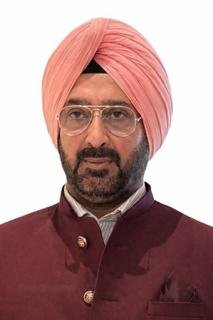
Brigadier (Retd) Preet Pal Singh, AVSM, VSM is an Army veteran with over 35 years of distinguished service. After retirement, he served as a Senior Research Fellow at a leading national think tank focused on defence and strategic affairs. He currently holds a senior corporate leadership role overseeing security architecture and risk management, while also contributing regularly to defence discourse as a speaker and writer.