


Maj Gen Havijay Singh
In the pre-dawn darkness of September 22, 1965, the 3rd Battalion of the Jat Regiment once again stood within striking distance of Lahore. Commanded by Lt Col Desmond Hayde, the battalion launched a determined night assault on the fortified village of Dograi, perched on the eastern bank of the Ichhogil Canal. The objective was clear: seize the town, secure the canal line, and place Indian forces at the very doorsteps of Pakistan’s second-largest city for the second time in the war.
Dograi was held by elements of Pakistan’s 16 Punjab, reinforced by companies from 8 Punjab, 18 Baluch and supporting detachments. The Indian plan was two-phased. 13 Punjab was to capture the Mile 13 area by midnight on 20/21 September to serve as a firm base. When that objective was only partially secured amid stiff resistance, costing 13 Punjab 31 killed and over 100 wounded, 3 JAT pressed ahead regardless. At 1.50 a.m., ‘D’ Company crossed the start line, silenced a pillbox and secured the north-eastern edge of the town. ‘C’ Company then pushed through to the north-west, charging across a minefield under intense fire from 18 Baluch positions along the canal bank. In savage hand-to-hand fighting the Baluch company was wiped out. ‘B’ Company cut through the centre while ‘A’ Company cleared the eastern flank, silenced an MMG post on the Grand Trunk Road and forced the surrender of a troop of 23 Cavalry and remnants of 16 Punjab. A final gallant charge destroyed an 8 Punjab pillbox guarding the southern approach. By 5.30 a.m. Dograi was in Indian hands.
Pakistan responded with four determined counter-attacks. The first, launched under heavy artillery fire around 4.30 a.m., was beaten back and its force commander killed. A second at 7 a.m. saw Pakistani tanks destroyed by recoilless guns and artillery. At 10 a.m. a squadron of tanks attempted to outflank the position; after an intense infantry-tank battle that left six burning hulks, the assault failed, though 1 JAT alone suffered 65 killed. A fourth counter-attack planned for the night was disrupted by a spoiling action. Reinforced by drafts and companies of 13 Punjab, 3 JAT held firm until the ceasefire took effect in the early hours of 23 September.
The price was high. 3 JAT lost five officers and 58 other ranks killed, with six officers and 157 wounded. The battalion earned three Maha Vir Chakras (including Hayde’s), four Vir Chakras, seven Sena Medals and numerous other awards. Pakistani losses were heavier still: hundreds killed, hundreds wounded and over a hundred taken prisoner, including the commanding officer of 16 Punjab.
A Pakistani soldier who had once served with 3 JAT later called across the canal: “Only my old battalion could have done this.” In the annals of the 1965 war, the second Battle of Dograi stands as a testament to leadership, grit and the unyielding spirit of the infantry, bringing Indian troops once more to the gates of Lahore.
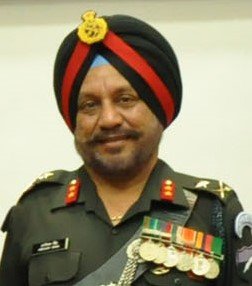
Major General Harvijay Singh is a third-generation officer, his two sons are also army officers.
He holds degree of B.Tech. and Master’s Degree in Management Sciences. He is a Certified Ethical Hacker and Cyber Forensic Investigator.
He is Member and Historian of the Punjab Military Literature Society, Chandigarh.
He has written books on Indo Pak Wars: 1948, 1965, 1971 – ‘Battles That Made History’, ‘Indo Pak War 1947-48’ (for Part D) and ‘Gallant Soldiers: Short Stories of Big Deeds’. He has also written Monographs on Grey Zone Warfare and Lessons Learnt from the Ukraine War. He is a regular contributor to Magazines on Military Strategy and Technology and a speaker on current Global Military events.
He is the winner of ARTRAC Scholar Warrior Badge for writing on Contemporary Military Thinking and Strategy.