Marines from the 1st Marine Aircraft Wing flew CH-53E Super Stallion helicopters over the East China Sea and off the coast of Okinawa recently, as part of Exercise ‘Keen Sword 27’. The heavy-lift helicopters conducted flight operations in support of the large-scale bilateral field training exercise involving U.S. and Japanese forces.
Keywords: Keen Sword 27, U.S.-Japan alliance, CH-53E Super Stallion, East China Sea, Indo-Pacific deterrence
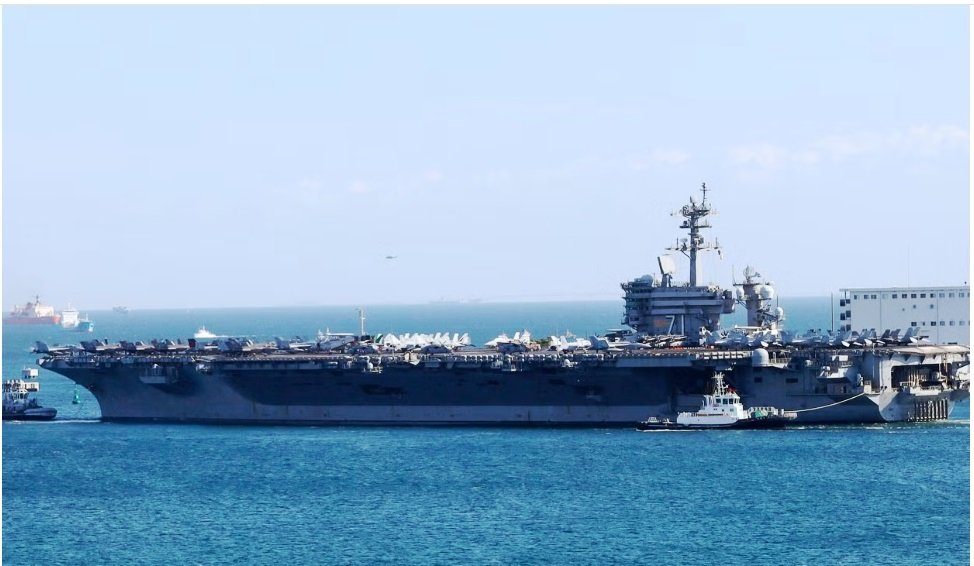
Keen Sword is a routine, biennial exercise designed to enhance readiness and interoperability between the US military and Japan Self-Defence Forces while reinforcing the longstanding US-Japan alliance. This year’s iteration, the 18th of its kind, runs from October 19 to 29 and involves approximately 45,000 Japan Self-Defence Force personnel and around 11,000 to 12,000 US service members. Forces from Australia, Canada, France, Germany, the Netherlands, New Zealand, and the Philippines are also participating, with South Korea and the United Kingdom observing.
The 3rd Marine Expeditionary Force, the Marine Air-Ground Task Force based in Okinawa, plays a central role in the exercise. Training focuses on integrated air and missile defence, maritime operations, ground manoeuvres, logistics, and the defence of Japan’s southwestern islands. Notably, US forces have deployed anti-ship systems such as the Navy-Marine Expeditionary Ship Interdiction System (NMESIS) and air defence systems to islands close to Taiwan, including Yonaguni.
Strategically, ‘Keen Sword 27’ carries clear implications for regional dynamics. The exercise occurs amid heightened tensions in the East China Sea and around Taiwan. Chinese military aircraft, reconnaissance drones, and vessels have monitored the drills, underscoring Beijing’s sensitivity to allied military activity near its periphery. From a U.S. perspective, the exercise reflects a broader recognition that China represents the primary strategic competitor capable of challenging American interests in the Indo-Pacific. Through sustained bilateral and multinational training, Washington and Tokyo aim to strengthen deterrence, improve joint operational capabilities, and complicate any potential aggressive planning by demonstrating credible, coordinated defensive power. Officials emphasize that ‘Keen Sword 27’ remains a defensive exercise focused on alliance readiness rather than provocation. Yet its scale, geographic focus on the first island chain, and integration of advanced anti-ship and air defence capabilities send a measured signal: the US-Japan alliance continues to adapt and strengthen in response to evolving security challenges in the region.

contact: drrajeshjauhri@gmail.com
Dr Rajesh Jauhri is a Journalist with an experience of over 25 years in Indian and foreign media, a Social Scientist, an Ac-complished Author, a Political & Strategic Analyst, a Marksman (Rifle & Pistol), an Orator, a Thinker and an Educationist. He holds a Ph.D. degree on “Impact of colonial heritage on Indian police”. He runs an NGO dedicated to the social and eco-nomic uplift of tribal communities in MP and two decades back, he established a school in a village of Indore district, providing education and moral values to children belonging to underprivileged and minority families. Has received multiple awards in various fields.