

In a major victory for India’s zero-tolerance counter-terrorism policy, national security agencies have dismantled the Shahzad Bhatti Network, a Pakistan-based, ISI-backed terror syndicate. [i]
The massive multi-state crackdown, executed on August 12 ahead of Independence Day, has thwarted plans for coordinated subversive attacks across major urban centres.
According to the Ministry of Home Affairs, the operation resulted in the detention of 253 suspects across 14 states, with more than 200 formal arrests recorded and over 80 First Information Reports registered.[ii]
Union Home Minister Amit Shah announced the breakthrough on X, declaring that security forces had ripped apart the dangerous cross-border syndicate.[iii]

Shah confirmed substantial recoveries from the group, including improvised explosive devices, hand grenades bearing Pakistan Ordnance Factory markings, pistols, live ammunition, and advanced CCTV cameras used for espionage and target reconnaissance.
The Modi government has destroyed the ISI-backed terror group Shahzad Bhatti Network ahead of Independence Day and thwarted its plans for subversive attacks, the Home Minister posted.
The operation was executed utilizing a high-tech, real-time intelligence-sharing system linking central security agencies directly with state police forces, enabling simultaneous raids nationwide.
Uttar Pradesh saw the highest number of detentions with 62 suspects taken into custody, followed by Haryana 52, Delhi 51, and Punjab 44.
Additional suspects were detained in Rajasthan 15, Maharashtra 8, Uttarakhand 5, Gujarat 3, Bihar 3, Karnataka 3, Telangana 2, Himachal Pradesh 2, Jammu and Kashmir 2, and Kerala 2.
Fresh FIRs were registered in Delhi and Karnataka to process the new suspects.
The MHA revealed that the network has been charged under a battery of laws, including the Unlawful Activities Prevention Act, the newly enacted criminal code Bharatiya Nyaya Sanhita, the Arms Act, the Explosive Substances Act, and the Narcotic Drugs and Psychotropic Substances Act.
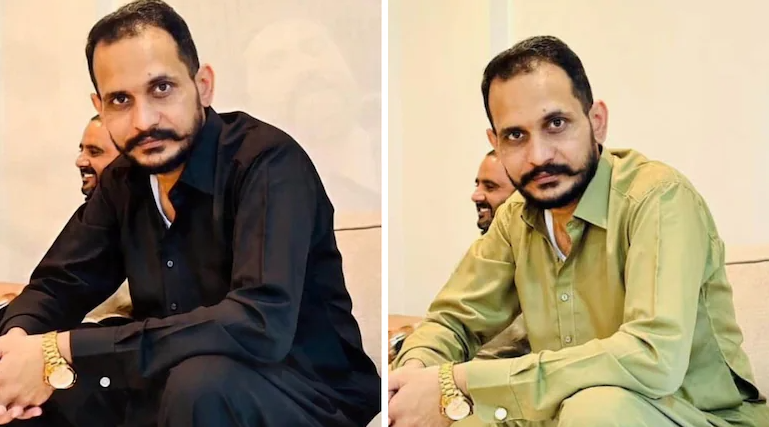
At the apex of this hostile syndicate is Shahzad Bhatti, a Pakistan-based gangster-turned-terrorist operating under the direct patronage of Pakistan’s Inter-Services Intelligence.[iv]
Security officials state that the Bhatti network specializes in smuggling small arms, explosives, and commercial narcotics specifically heroin, known locally as chitta across the international border through Punjab for distribution into Delhi-NCR.[v]
The network’s operational strategy represents a dangerous blend of modern digital recruitment and covert physical logistics.

Intelligence sources reveal that Bhatti and his primary foreign-based associate, Ajmal Gujjar, extensively leveraged popular social media platforms like Instagram and encrypted channels such as WhatsApp and Signal to target and radicalise vulnerable young Indian men.[vi]

By monitoring public likes, comments, and interactions on specific social media accounts, handlers identified potential targets, luring them with monetary inducements, promises of quick wealth, and the glorification of criminal lifestyles.
Once recruited, these individuals were integrated into a highly compartmentalised cell structure.
To maintain physical distance and avoid detection, handlers utilized dead-drop delivery mechanisms covert exchanges of weapons and drugs without in-person contact.
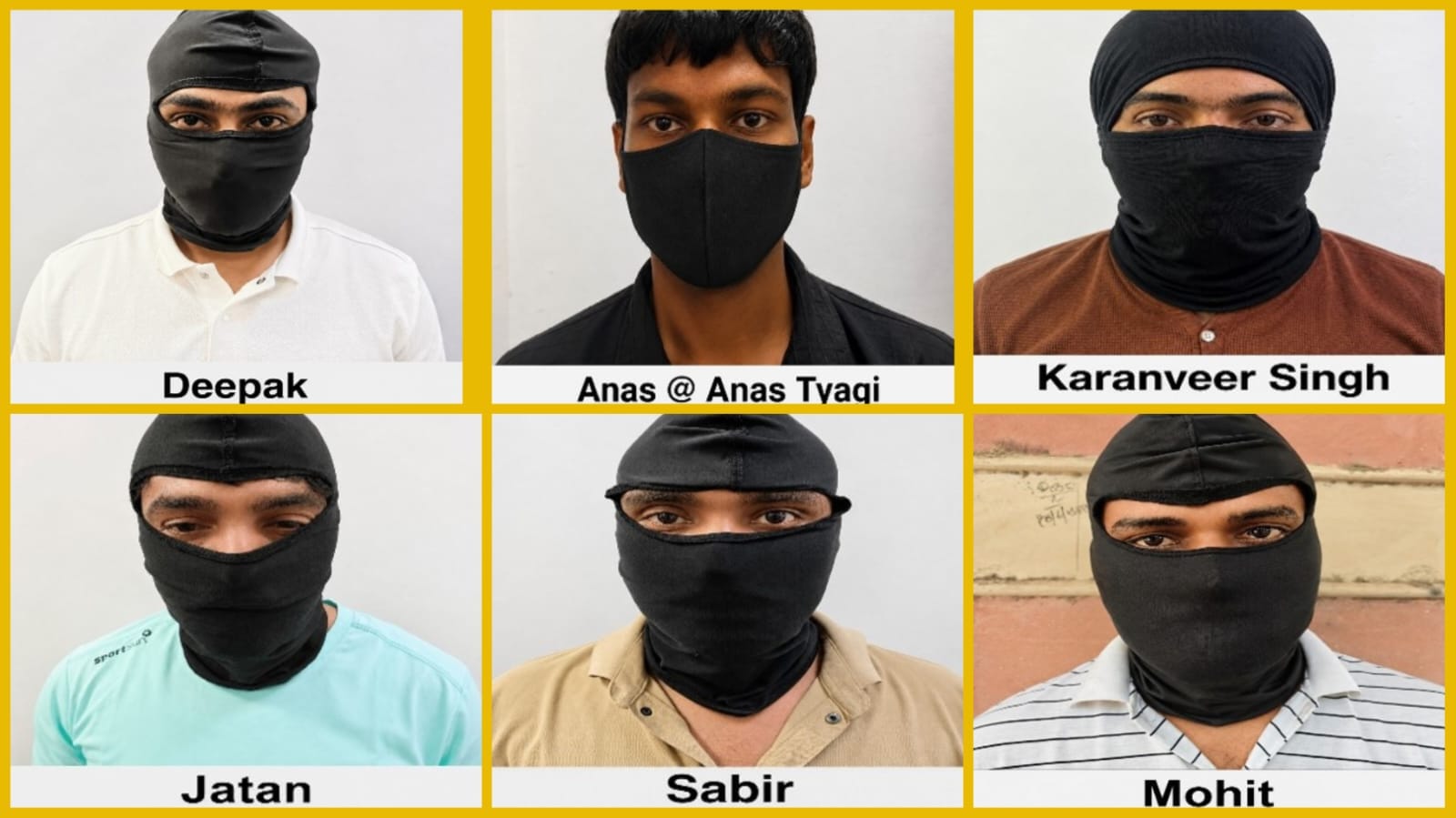
Anas and Karanveer Singh, two operatives arrested in Punjab, were specifically deputed to facilitate these smuggling pipelines.
Financial transactions were executed through scanner-based UPI transfers using anonymous accounts of uninvolved individuals, some of which were traced to Dubai, with funds ultimately reaching local conduits.
The scale of the network’s ambitions is reflected in the diverse tasks assigned to recruits.
Low-level operatives were paid as little as Rs 5,000 to paint graffiti and put up posters of a purported group named Tehreek-e-Taliban Hindustan in Delhi and Faridabad.[vii]
Security agencies believe this group is a pseudo-identity designed to obscure the direct hand of Pakistan-based handlers while claiming responsibility for local attacks, such as a fatal shooting of police officers in Gurdaspur in February.
Sohail, an operative arrested from Ballabgarh, was caught on camera sending video confirmations of these poster campaigns to Bhatti via encrypted apps to claim his payment.
However, the network’s operations quickly escalated to lethal conspiracies.
In June 2026, the Uttar Pradesh Anti-Terrorism Squad (UP ATS) arrested Mohammad Sheikh in Azamgarh.
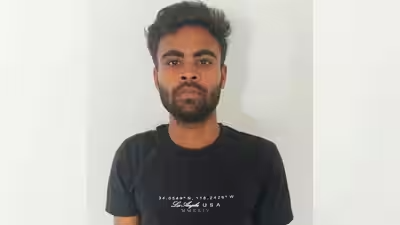
Sheikh, who was handled directly by Bhatti, Ajmal Gujjar, and a Pakistani national named Raza, had been tasked with assassinating a prominent female political leader from another state.[viii]
At the time of his arrest, Sheikh had already procured a 9 mm pistol and live ammunition, and was actively preparing to execute the hit.
In Delhi, the Special Cell arrested 12 operatives across two closely linked operations.
Among those arrested were ordinary citizens including a biryani seller, a ginger vendor, and a local money lender who had been drawn into the terror-crime web.
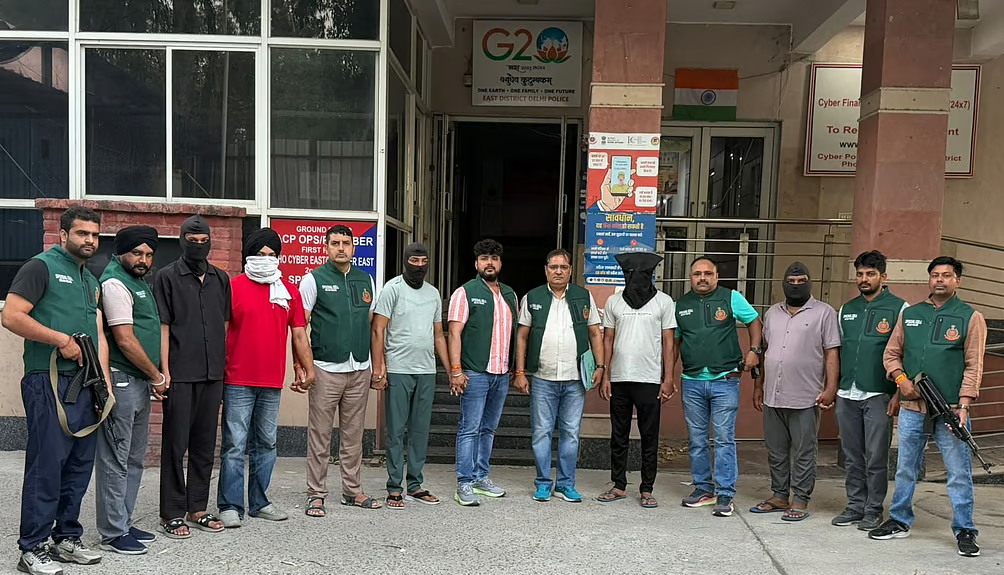
The investigation revealed that another senior operative, Deepak Agrola, a local thug with 23 active criminal cases, had been coordinating operations directly with Bhatti and Gujjar from inside Delhi’s Mandoli jail using a smuggled mobile phone.
The cell was tasked with conducting detailed reconnaissance of crowded eateries, sensitive security establishments, and prominent right-wing figures in Delhi and Ghaziabad.
Operatives like Md Rihan were offered up to Rs 3 lakh by handler Abid Jutt to target and assassinate active police personnel, while others like Md Kaif received instructions from handler Rana Hunain to carry out targeted grenade attacks.
This massive pre-Independence Day breakthrough is a direct outcome of India’s broader, twelve-year transition to a proactive, zero-tolerance security doctrine.
Since 2014, the Indian government has systematically overhauled its counter-terrorism frameworks, moving away from reactive responses toward proactive prevention and structural dismantlement of terror ecosystems.
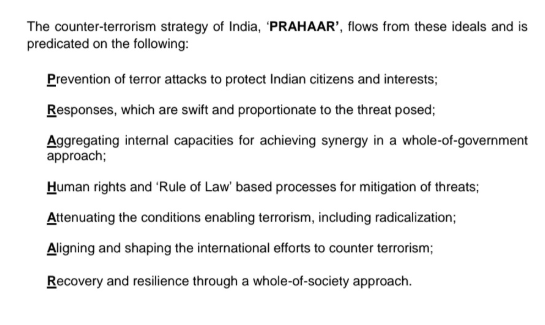
Key to this transformation has been landmark legislative reforms.
The 2019 Unlawful Activities Prevention Amendment Act empowered the government to designate individual actors as terrorists and significantly widened the National Investigation Agency’s operational jurisdiction.[ix]
Furthermore, the implementation of the Bharatiya Nyaya Sanhita in July 2024 has, for the first time, codified and defined terrorist acts under standard penal law, prescribing the death penalty or life imprisonment for acts threatening India’s sovereignty.
This legal empowerment is backed by massive technological investments.
Between 2021 and 2026, over Rs 6,300 crore was allocated to modernise state police forces with advanced weaponry, counter-IED equipment, and digital surveillance platforms.[x]
Real-time intelligence fusion through the Intelligence Bureau’s Multi-Agency Centre and the newly established Cyber Multi-Agency Centre launched in January 2025 has bridged critical communication gaps, allowing information to reach remote operational units instantly.[xi]
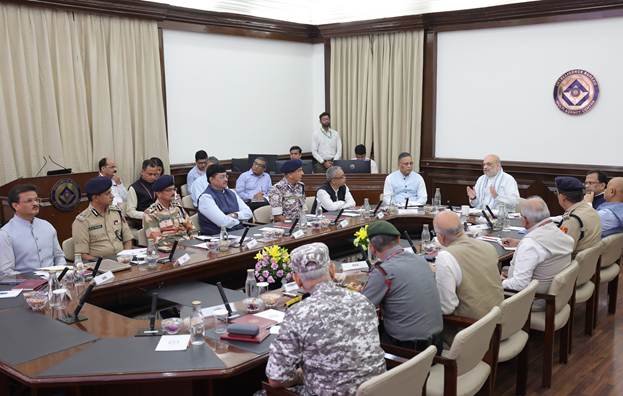
The results of these sustained, doctrine-driven reforms are evident in national safety indicators.
Over the past decade, terrorist incidents in Jammu and Kashmir fell from 7,217 in 2004 -2014 to 2,242 in 2014 – 2024. Security force fatalities in J&K dropped from 91 in 2018 to just 16 in 2025, representing an 82% decline.
Crucially, India’s urban hinterlands have witnessed a near-complete absence of major mass-casualty terrorist attacks since the Hyderabad blasts of 2013, a stabilization attributed to the shift toward intelligence-led pre-emption.[xii]
The successful neutralization of the Shahzad Bhatti Network stands as a testament to this modernized, technology-driven national security posture.
[i] https://www.pib.gov.in/PressReleasePage.aspx?PRID=2300400®=1&lang=1
[ii] https://newsonair.gov.in/another-earthquake-measuring-5-9-hit-indonesia-death-toll-rises-to-54/
[iii] https://x.com/AmitShah/status/2089280063024009216?s=20
[iv] https://www.hindustantimes.com/india-news/who-is-shahzad-bhatti-pakistan-based-terror-group-leaders-network-busted-before-independence-day-101786965349702.html
[v] https://indianexpress.com/article/india/shahzad-bhatti-network-253-detained-14-states-10837117/
[vi] https://theprint.in/india/shahzad-bhattis-north-india-web-how-isi-linked-handlers-radicalise-recruit-all-through-social-media/2963000/
[vii] https://www.deccanchronicle.com/nation/five-more-arrested-in-isi-linked-terror-module-case-1964212
[viii] https://newsonair.gov.in/up-anti-terrorism-squad-arrests-suspect-for-alleged-links-with-shahzad-bhatti-network/
[ix] https://prsindia.org/billtrack/the-unlawful-activities-prevention-amendment-bill-2019
[x] https://www.pib.gov.in/PressReleasePage.aspx?PRID=2275007®=3&lang=1
[xi] https://www.pib.gov.in/PressReleasePage.aspx?PRID=2298336®=3&lang=1
[xii]https://www.pib.gov.in/PressReleaseDetail.aspx?PRID=2275007®=48&lang=2

Punit Shyam Gore (MA Defence and Strategic Studies) is an alumnus of the School of Internal Security, Defence & Strategic Studies of the Rashtriya Raksha University, Gandhinagar (an institution of national importance) under the Ministry of Home Affairs, Government of India.