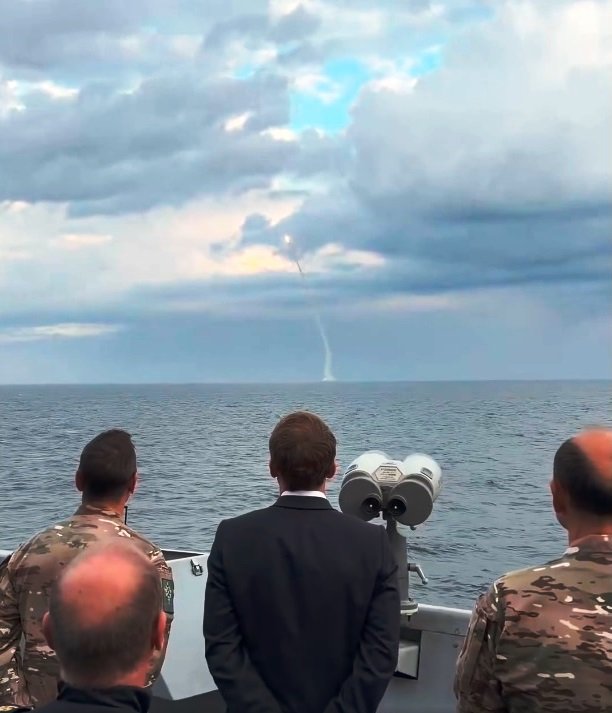
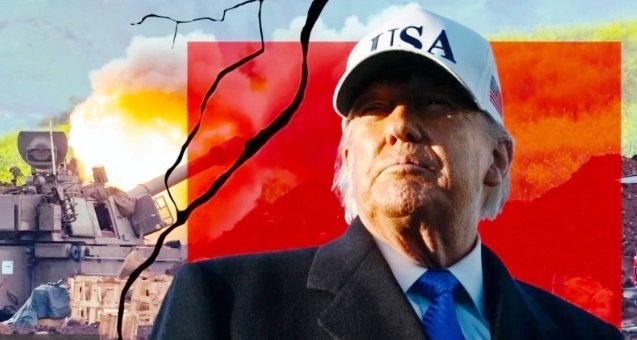
In a significant escalation of the ongoing US-Iran conflict, United States Central Command (CENTCOM) has conducted fresh precision strikes on Iranian military targets, utilizing Tomahawk cruise missiles and fighter aircraft. The operations targeted Islamic Revolutionary Guard Corps (IRGC) command centers, air defense systems, radar installations, and related facilities in southern Iran, including areas near Bandar Abbas, Qeshm Island, Minab, and Sirik, as well as sites approximately 40 miles from Tehran.
President Donald Trump personally oversaw the campaign from the White House Situation Room, joined by Vice President JD Vance. Trump confirmed that 49 Tomahawk missiles were launched alongside airstrikes aimed at degrading Iranian surveillance, communication, and defensive capabilities. The strikes form part of ‘Operation Epic Fury,’ framed by US officials as self-defense measures in response to Iranian aggression, including the downing of a US Apache helicopter near the Strait of Hormuz and stalled nuclear negotiations.
Iran has retaliated by announcing the closure of the Strait of Hormuz, a critical chokepoint for global energy flows, though US officials report continued naval transits and have dismissed the full effectiveness of the blockade. Reports indicate direct communications between Iranian officials and the Trump administration, with Tehran seeking pauses in the bombing amid threats of further US action if a ‘Good Faith’ nuclear deal is not reached.
This latest round underscores Washington’s ‘Maximum Pressure’ approach, leveraging superior air and naval power to neutralize threats from Iran’s missile and proxy networks. Military analysts note the strikes have significantly impaired Iranian air defences and command structures, though the risk of broader regional spill over remains high, including potential involvement of proxies and disruptions to shipping.
Implications for India and the Indian Subcontinent
For India, the world’s third-largest oil importer, the crisis poses immediate and profound challenges to energy security. Approximately 60% of India’s crude oil imports transit the Strait of Hormuz, alongside substantial shares of LNG and LPG. Disruptions have already driven up global oil prices, threatening inflation, fiscal balances, and economic growth. New Delhi has responded by accelerating diversification, ramping up imports from Russia, the US, Brazil, and West Africa, while enhancing strategic reserves and exploring alternative routes.
Strategically, the conflict tests India’s balancing act. Longstanding ties with Iran, including the Chabahar port project, must be weighed against deepening defence and energy partnerships with the US, Israel, and Gulf Arab states. The situation could embolden Pakistan and China to exploit regional volatility, potentially complicating India’s northern and western frontiers.
Defence experts urge accelerated naval presence in the Arabian Sea, investment in maritime domain awareness, and diplomatic engagement to safeguard sea lanes. Long-term, the episode reinforces the need for resilient supply chains, indigenous energy production, and robust QUAD-plus frameworks to mitigate chokepoint vulnerabilities.
As the situation evolves, the US-Iran confrontation serves as a stark reminder of interconnected global security. For India, it highlights the imperative of proactive strategy in an era of great-power competition.

contact: drrajeshjauhri@gmail.com
Dr Rajesh Jauhri is a Journalist with an experience of over 25 years in Indian and foreign media, a Social Scientist, an Ac-complished Author, a Political & Strategic Analyst, a Marksman (Rifle & Pistol), an Orator, a Thinker and an Educationist. He holds a Ph.D. degree on “Impact of colonial heritage on Indian police”. He runs an NGO dedicated to the social and eco-nomic uplift of tribal communities in MP and two decades back, he established a school in a village of Indore district, providing education and moral values to children belonging to underprivileged and minority families. Has received multiple awards in various fields.