


New Delhi: The Government of India’s decision to deny Non-Functional Upgradation (NFU) to armed forces officers has reignited a long-standing debate over parity between military and civilian services, with senior veterans warning of potential implications for morale and institutional fairness.
According to details emerging from official deliberations, an inter-ministerial committee has rejected the extension of NFU benefits to military officers, citing significant implementation challenges, legal complexities, and an estimated annual financial burden ranging between ₹800 crore and ₹1,800 crore. NFU, currently applicable to Group ‘A’ civilian officers, allows automatic pay progression after a stipulated number of years, irrespective of promotion status.
However, the armed forces operate under a markedly different personnel structure. Military’s steep pyramidal hierarchy results in a large number of officers being superseded in their careers, not because of lack of competence, but because of limited vacancies at higher ranks. In contrast, civilian services experience a more gradual career progression, often enabling officers to reach senior pay grades with time-bound financial upgrades.
Veterans, including Lt Gen D P Pandey and Lt Gen Vinod Bhatia, have publicly expressed disappointment over the decision, describing it as a missed opportunity to address a longstanding disparity. They argue that NFU is not a privilege but a necessary mechanism to ensure equitable treatment for military officers who face early stagnation despite operating in high-risk environments.
Critics of the decision emphasize that young and mid-ranking officers form the operational backbone of the armed forces, leading missions in hostile conditions, often earning gallantry awards or sustaining injuries in the line of duty. Many continue to serve with limited prospects for career advancement, underscoring what veterans describe as a gap between responsibility and recognition.
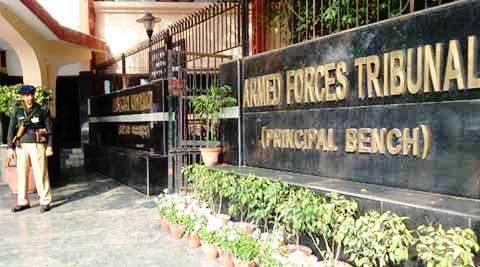
The issue is further complicated by ongoing legal proceedings, with the matter currently under consideration by the Supreme Court. Observers note that the court’s eventual ruling could have far-reaching implications for civil-military parity and compensation frameworks.
While fiscal prudence and administrative feasibility remain central to the government’s stance, defence analysts caution that decisions affecting pay structures must also account for intangible factors such as morale, motivation, and institutional trust.
As the debate continues, the rejection of NFU has become more than a policy decision, it is now a focal point in the broader discourse on how a nation values and compensates those tasked with its security.

contact: drrajeshjauhri@gmail.com
Dr Rajesh Jauhri is a Journalist with an experience of over 25 years in Indian and foreign media, a Social Scientist, an Ac-complished Author, a Political & Strategic Analyst, a Marksman (Rifle & Pistol), an Orator, a Thinker and an Educationist. He holds a Ph.D. degree on “Impact of colonial heritage on Indian police”. He runs an NGO dedicated to the social and eco-nomic uplift of tribal communities in MP and two decades back, he established a school in a village of Indore district, providing education and moral values to children belonging to underprivileged and minority families. Has received multiple awards in various fields.