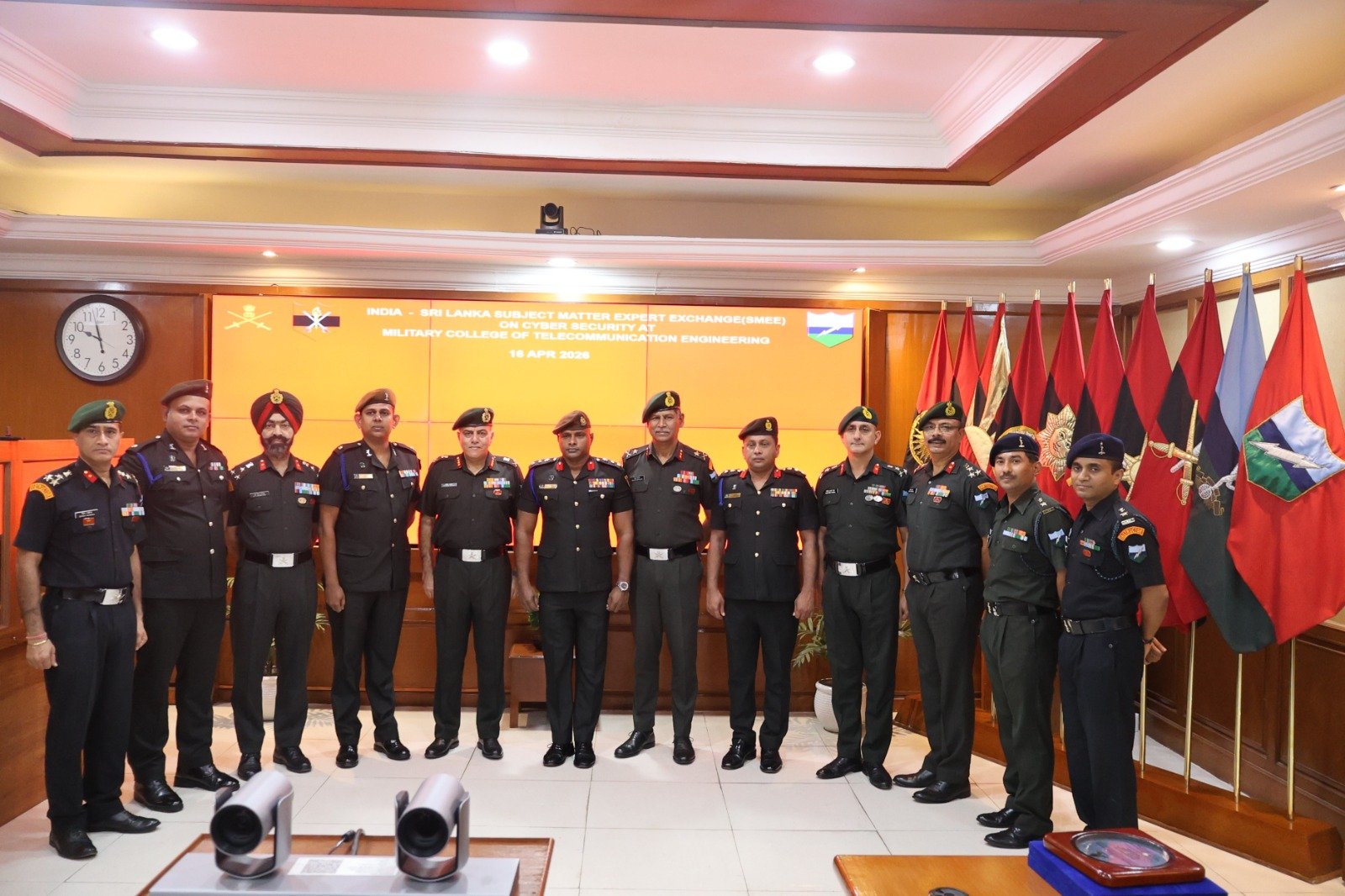
Mhow: In a measured yet significant step toward strengthening regional defence cooperation, the Army Training Command (ARTRAC) facilitated a high-level academic and professional exchange at the Military College of Telecommunication Engineering (MCTE) on Thursday. The institution hosted a four-member delegation from the Sri Lankan Armed Forces, underscoring the growing emphasis on collaborative capacity-building between the two militaries.
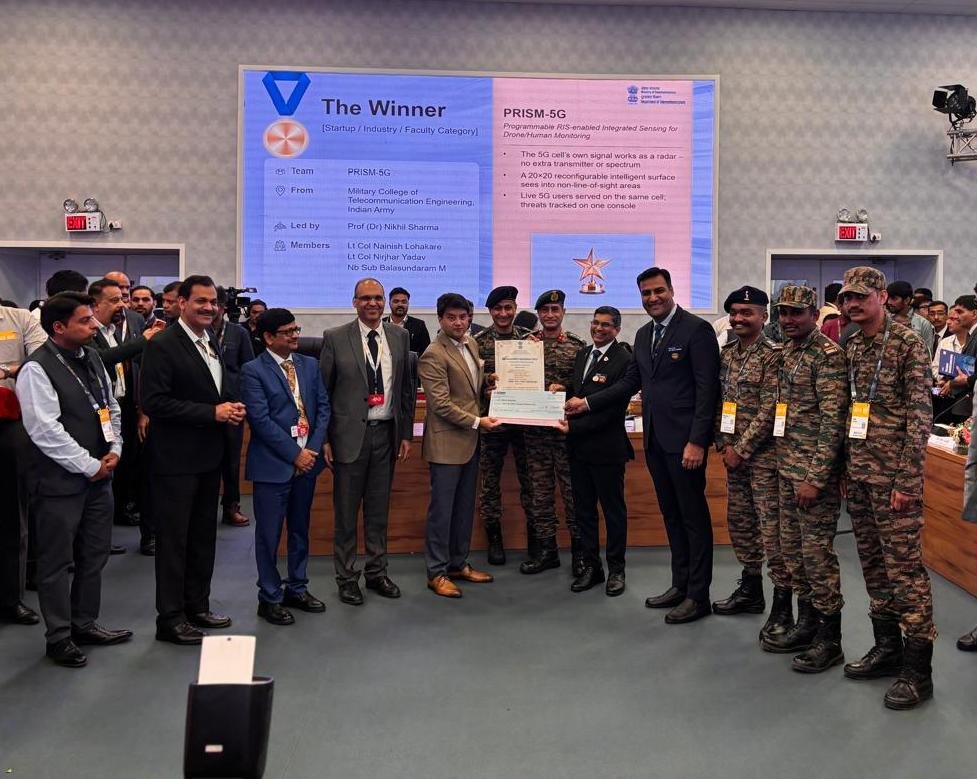
The visit, conducted under the aegis of ARTRAC, focused on exposing the Sri Lankan delegation to emerging domains that are rapidly reshaping the modern battlefield. Key areas of engagement included cyber warfare, artificial intelligence applications in defence, 5G-enabled communications, and a spectrum of advanced military technologies. The structured programme combined academic briefings with hands-on demonstrations, offering delegates a comprehensive view of India’s evolving training ecosystem and operational doctrines.
MCTE, widely regarded as the Indian Army’s premier centre for telecommunications and information systems training, showcased its state-of-the-art infrastructure designed to prepare personnel for multi-domain operations. The delegation’s interactions highlighted the increasing importance of network-centric warfare, secure communications, and data-driven decision-making in contemporary military strategy.
A central feature of the visit was the interaction with MCTE Commandant Lt Gen Praveen Bakshi, Deputy Commandant Maj Gen Gautam Mahajan, BGS Brig MS Randhawa and other senior officers. His engagement with the visiting officers provided a platform for candid discussions on shared security challenges, technological adaptation, and the role of training institutions in future-proofing armed forces. Such dialogues are seen as critical in aligning perspectives and enhancing interoperability between partner nations.
Defence analysts view the visit as part of a broader trend in South Asia, where militaries are increasingly leveraging academic exchanges to complement traditional defence diplomacy. By focusing on knowledge-sharing in high-technology domains, both India and Sri Lanka are seeking to build resilient, future-ready forces capable of addressing hybrid threats.
The engagement at MCTE not only reinforced bilateral ties but also demonstrated India’s commitment to acting as a regional hub for advanced military training. As warfare continues to evolve at the intersection of technology and strategy, such collaborative initiatives are likely to play a pivotal role in shaping the security architecture of the region.
contact: drrajeshjauhri@gmail.com
Dr Rajesh Jauhri is a Journalist with an experience of over 25 years in Indian and foreign media, a Social Scientist, an Ac-complished Author, a Political & Strategic Analyst, a Marksman (Rifle & Pistol), an Orator, a Thinker and an Educationist. He holds a Ph.D. degree on “Impact of colonial heritage on Indian police”. He runs an NGO dedicated to the social and eco-nomic uplift of tribal communities in MP and two decades back, he established a school in a village of Indore district, providing education and moral values to children belonging to underprivileged and minority families. Has received multiple awards in various fields.