
Chennai, India
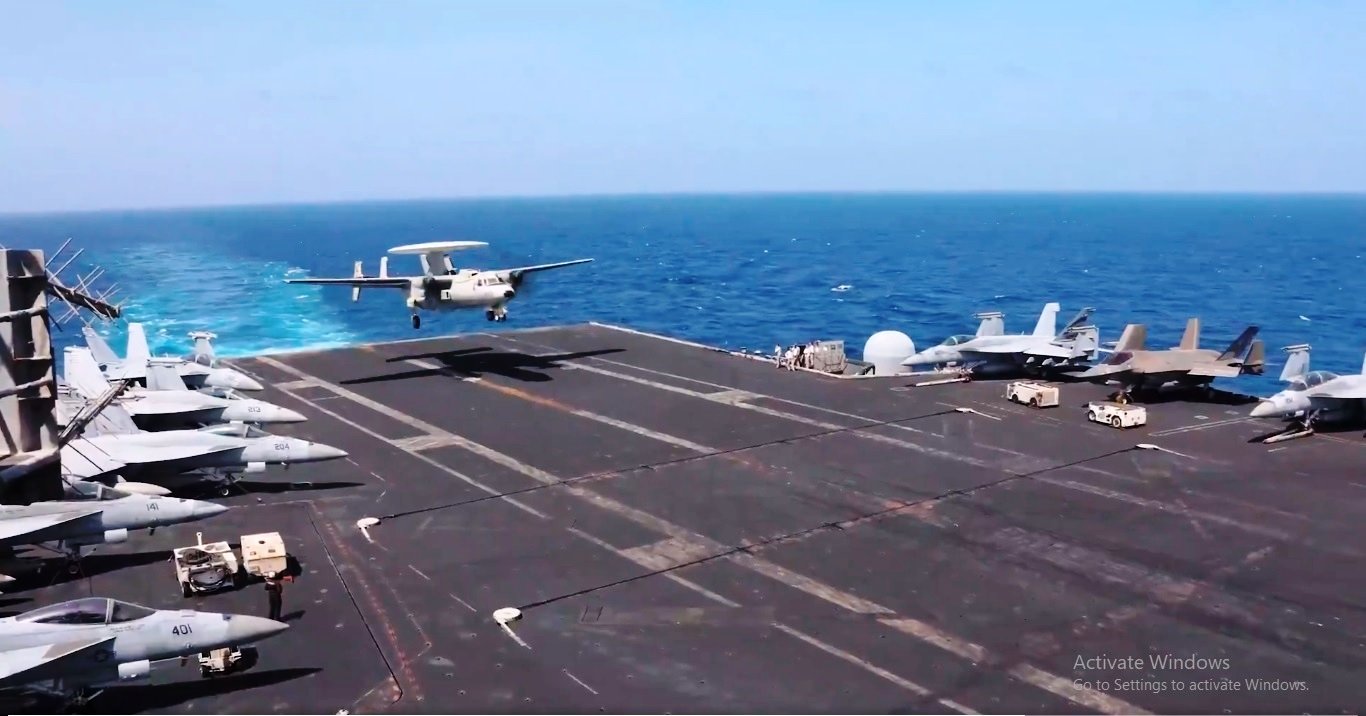
The Nimitz-class aircraft carrier USS Abraham Lincoln (CVN-72) continues to assert a robust US naval presence in the Arabian Sea, conducting routine yet intensive flight operations as part of its extended deployment in the US Central Command area of responsibility.
Recent images and videos released by the US Navy show F/A-18 Super Hornets and other carrier air wing aircraft launching and recovering from the flight deck while the carrier transits this strategically vital waterway. The Abraham Lincoln Carrier Strike Group has been operating in the region since early 2026, initially rerouted from Indo-Pacific commitments to support maritime security operations.
The Arabian Sea serves as a critical maritime chokepoint, flanking key nations including India, Pakistan, Iran, Afghanistan, and Sri Lanka. Home to vital sea lines of communication that carry nearly 40 percent of global seaborne oil trade, the area remains a focal point for great power competition, counter-piracy efforts, and responses to regional instability.
Defence analysts note that the Lincoln’s sustained presence aligns with broader US objectives of maintaining freedom of navigation, deterring potential threats to international shipping, and monitoring tensions involving Iran. The deployment occurs against a backdrop of ongoing security challenges in the Middle East, including responses to Houthi activities and efforts to stabilise critical maritime routes.
For India, which maintains significant strategic and economic stakes in the region through its growing naval footprint in the Indian Ocean and energy imports, the US carrier operations carry layered implications. While New Delhi and Washington continue to deepen defence cooperation under frameworks like the Quad, the visible concentration of US naval power also serves as a reminder of the complex geopolitical dynamics at play. India has consistently advocated for a free, open, and inclusive Indo-Pacific, balancing partnerships while safeguarding its strategic autonomy.
US officials describe the operations as routine and aimed at promoting stability. However, the deployment underscores the persistent volatility of the region and the role of carrier strike groups as flexible instruments of American foreign policy. As the Lincoln maintains its vigil, its activities will continue to be closely watched by regional stakeholders for signals regarding long-term security architecture in the Western Indian Ocean.

contact: drrajeshjauhri@gmail.com
Dr Rajesh Jauhri is a Journalist with an experience of over 25 years in Indian and foreign media, a Social Scientist, an Ac-complished Author, a Political & Strategic Analyst, a Marksman (Rifle & Pistol), an Orator, a Thinker and an Educationist. He holds a Ph.D. degree on “Impact of colonial heritage on Indian police”. He runs an NGO dedicated to the social and eco-nomic uplift of tribal communities in MP and two decades back, he established a school in a village of Indore district, providing education and moral values to children belonging to underprivileged and minority families. Has received multiple awards in various fields.
Read the Extended Version: נערות ליווי אישיות