


Imphal, Manipur
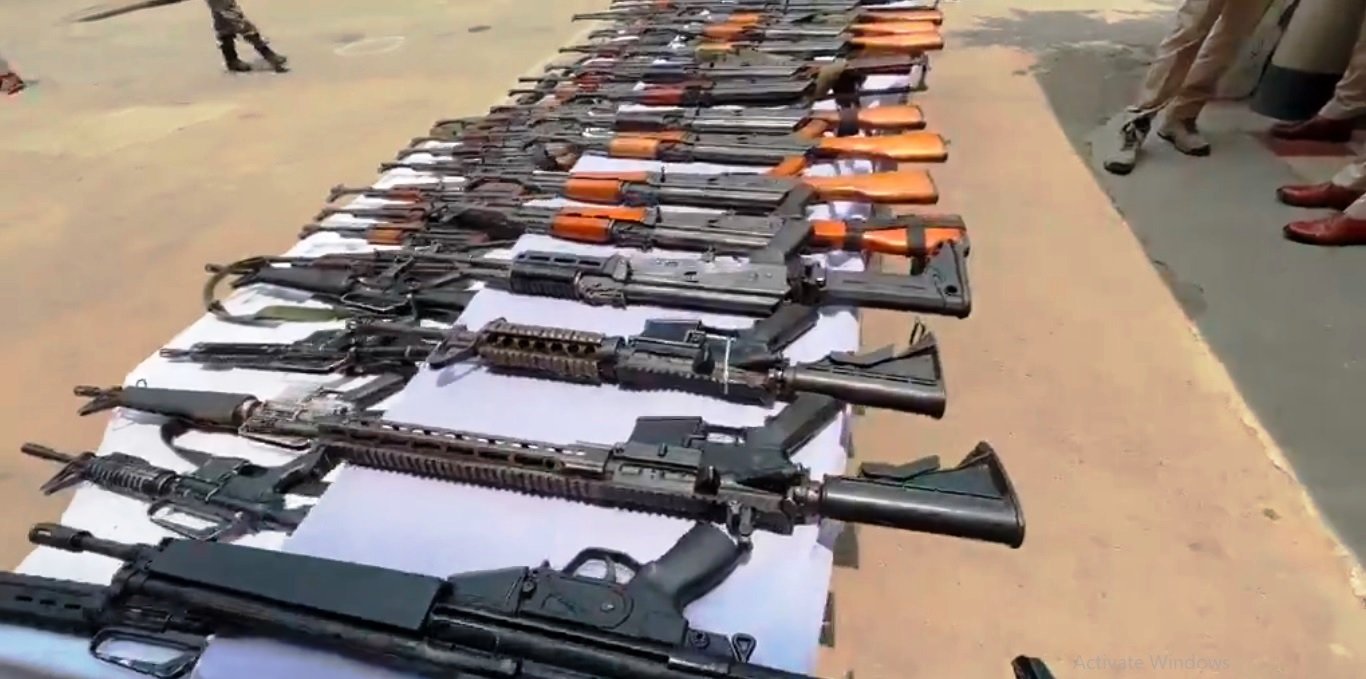
In a significant counter-insurgency operation, Assam Rifles and Manipur Police arrested four militants of the United National Liberation Front (UNLF) and recovered approximately 70 weapons following a brief exchange of fire in the Imphal area. The joint team also seized electronic jammers, drones, and a substantial quantity of Chinese-origin arms and ammunition, which officials believe were intended for a large-scale assault on security forces.
The operation, conducted in Lamdeng under Lamshang Police Station in Imphal West, underscores the persistent challenges to stability in Manipur despite ongoing peace initiatives. Intelligence inputs indicated the UNLF (Pambei faction) cadre was actively planning an escalation amid heightened ethnic tensions. The recovery of sophisticated equipment highlights the evolving tactics and external supply lines sustaining valley-based insurgent groups.
Meitei-Kuki Tensions and Ethnic Fault Lines
Manipur remains deeply polarised by the ethnic conflict between the valley-dwelling Meitei community and the Kuki-Zo tribes inhabiting the surrounding hills. Violence erupted in May 2023, triggered by disputes over land, political representation, and demands for Scheduled Tribe status for Meiteis. The clashes have resulted in significant loss of life, displacement of tens of thousands, and a de facto administrative divide, with buffer zones enforced by security forces. While relative calm has returned in some pockets, underlying grievances and mutual suspicions continue to fuel sporadic violence and militant mobilisation on both sides.
Broader Insurgency Landscape in the Northeast
The region’s porous borders with Myanmar have long enabled cross-border movement of militants and contraband. In Manipur, various insurgent factions, ranging from Meitei groups like UNLF, PLA, and PREPAK in the valley to Kuki and Naga outfits in the hills, maintain varying degrees of influence. Similar dynamics persist in neighbouring states: Naga factions exert sway in parts of Nagaland and Arunachal Pradesh, while ULFA remnants and other groups operate from sanctuaries in Myanmar. These networks thrive on extortion, smuggling, and occasional alliances, complicating efforts toward lasting peace.
External and Internal Dimensions
Analysts point to a complex web of external patronage sustaining Northeast militancy. Chinese-made weaponry frequently surfaces in seizures, raising concerns over Beijing’s strategic interest in destabilising India’s eastern frontier to divert attention from its own border assertiveness. Recebnt Historical links between some insurgent groups and external actors, including past Chinese training and alleged logistical support, continue to draw scrutiny. Speculation also persists regarding possible roles of intelligence agencies from adversarial nations and internal enablers, ranging from corrupt networks to political insiders, who may facilitate arms flows or provide safe passage for vested interests. Such “deep state” elements, if substantiated, exacerbate the hybrid threats facing the region, blending ethnic grievances with geopolitical manoeuvring.
Security agencies remain vigilant, intensifying intelligence-based operations to dismantle networks. While peace accords, including the 2023 UNLF agreement, mark progress, full disarmament and rehabilitation lag. Sustainable resolution demands addressing root causes—development deficits, ethnic aspirations, and border management—through inclusive dialogue backed by robust enforcement. Until then, operations like this recent success remain vital in preventing larger conflagrations.
Arrest of American National Matthew Aaron VanDyke and Associates by NIA
In March 2026, India’s National Investigation Agency (NIA) arrested an American national, Matthew Aaron VanDyke, along with six Ukrainian nationals in connection with an alleged conspiracy involving cross-border activities in India’s Northeast. VanDyke was apprehended in Kolkata on or around March 13, while the Ukrainians were detained at airports in Delhi and Lucknow.
According to NIA investigations, the group entered India on tourist visas, travelled to sensitive border areas in Mizoram (a protected state requiring special permits for foreigners), and allegedly crossed illegally into Myanmar. There, they reportedly established contact with ethnic armed groups (EAGs) and were planning to provide training in drone warfare, assembly, jamming technology, and related military tactics. The case has raised serious concerns over potential drone smuggling and support to insurgent networks linked to the Myanmar conflict, which often spill over into Manipur and other Northeast states.
VanDyke, a figure with a documented history as a mercenary and founder of Sons of Liberty International (which provides training in conflict zones), has been described by Indian media and analysts as a high-risk operative. While Indian authorities have not officially labelled him a “CIA agent,” sections of the Indian press, security commentators, and political discourse have speculated on possible links to Western intelligence agencies, citing his past activities in Libya, Syria, and other hotspots, as well as alleged ties to broader efforts to influence ethnic dynamics in the India-Myanmar border region.
The arrests have intensified scrutiny on foreign interference in the volatile Northeast, particularly amid the ongoing Meitei-Kuki ethnic tensions in Manipur. Investigators are examining potential connections to earlier incidents, including drone use in regional violence. A Delhi court has granted NIA custody for further probe, with the case seen as exposing vulnerabilities in border management and the risks of external actors exploiting local insurgencies.
This development underscores the complex hybrid threats facing India’s eastern frontier, where ethnic grievances, cross-border sanctuaries, and alleged geopolitical manoeuvring converge. The NIA continues to track other potential suspects in the network.
‘Defence Chronicle’ will continue monitoring developments in India’s strategically vital Northeast.
contact: drrajeshjauhri@gmail.com
Dr Rajesh Jauhri is a Journalist with an experience of over 25 years in Indian and foreign media, a Social Scientist, an Ac-complished Author, a Political & Strategic Analyst, a Marksman (Rifle & Pistol), an Orator, a Thinker and an Educationist. He holds a Ph.D. degree on “Impact of colonial heritage on Indian police”. He runs an NGO dedicated to the social and eco-nomic uplift of tribal communities in MP and two decades back, he established a school in a village of Indore district, providing education and moral values to children belonging to underprivileged and minority families. Has received multiple awards in various fields.