
New Delhi
The Indian government has formally inscribed the names of six armed forces personnel who made the ultimate sacrifice during Op Sindoor onto the Roll of Honour at the National War Memorial. This marks the first official public disclosure of military fatalities from the 2025 cross-border counter-terror operation.
Keywords: – Operation Sindoor martyrs National War Memorial, Indian Army casualties Operation Sindoor 2025, Rifleman Sunil Kumar Vir Chakra, Sergeant Surendra Kumar Vayu Medal, Pahalgam attack response Operation Sindoor, National War Memorial Roll of Honour 2025, Indian soldiers killed Operation Sindoor
The personnel include five from the Indian Army, Subedar Major Pawan Kumar, Rifleman Sunil Kumar, Lance Naik Dinesh Kumar, Agniveer Mood Muralinaik, and Havildar Sunil Kumar Singh, along with one from the Indian Air Force, Sergeant Surendra Kumar. Their names now stand etched in granite on Wall 3D under the 2025 section, ensuring their sacrifice remains a permanent part of the nation’s collective memory.
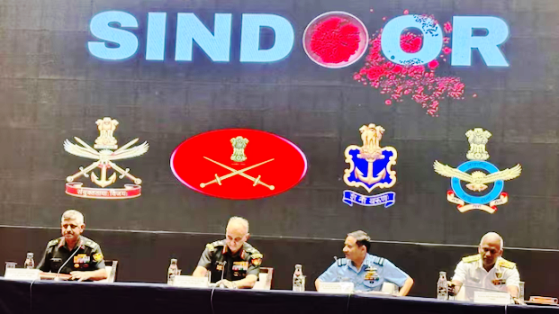
Op Sindoor was launched in the early hours of May 7, 2025 as a calibrated military response to the devastating April 22, 2025 terror attack in Pahalgam, Jammu and Kashmir, which claimed lives of 26 civilians, mostly tourists. Indian forces struck nine terror infrastructure sites linked to Jaish-e-Mohammed and Lashkar-e-Taiba in Pakistan-occupied Kashmir and Punjab province, neutralising over 100 militants according to official assessments.
Two of the fallen were recognised with gallantry awards. Rifleman Sunil Kumar was posthumously awarded the ‘Vir Chakra’, while Sergeant Surendra Kumar received the ‘Vayu Medal’ (also referred to as Vayu Sena Medal). President Droupadi Murmu presented the Vir Chakra to Rifleman Sunil Kumar’s family during the Defence Investiture Ceremony on June 8.
Defence officials have stated that initial non-disclosure of names was maintained for operational security reasons during and immediately after the operation. Families were informed and honoured privately soon after the events, consistent with protocols in sensitive missions. The formal addition to the National War Memorial comes more than a year later, coinciding with renewed focus on commemorating the operation’s first anniversary.
The development has triggered political debate, with opposition voices criticising the timing and alleging lack of transparency in earlier parliamentary statements. Veteran Congress leader Pawan Khera said that it was not appropriate on the Government’s part that they concealed the martyrdom of 6 brave persons for more than a year. Flood of critical comments were seen on the social media, in which the users have criticised the Defence Minister Rajnath Singh’s declaration in the parliament that not a single casualty was there during the whole operation. Many have termed him as a ‘Liar’. Government sources maintain that national security considerations guided the timeline of public disclosure.
In the larger context, Operation Sindoor represented a significant assertion of India’s counter-terror doctrine, signalling zero tolerance for cross-border terrorism. The inclusion of these brave personnel in the National War Memorial serves as a solemn reminder of the human cost of defending the nation and the Armed Forces’ unwavering commitment to protecting India’s sovereignty.

contact: drrajeshjauhri@gmail.com
Dr Rajesh Jauhri is a Journalist with an experience of over 25 years in Indian and foreign media, a Social Scientist, an Ac-complished Author, a Political & Strategic Analyst, a Marksman (Rifle & Pistol), an Orator, a Thinker and an Educationist. He holds a Ph.D. degree on “Impact of colonial heritage on Indian police”. He runs an NGO dedicated to the social and eco-nomic uplift of tribal communities in MP and two decades back, he established a school in a village of Indore district, providing education and moral values to children belonging to underprivileged and minority families. Has received multiple awards in various fields.