
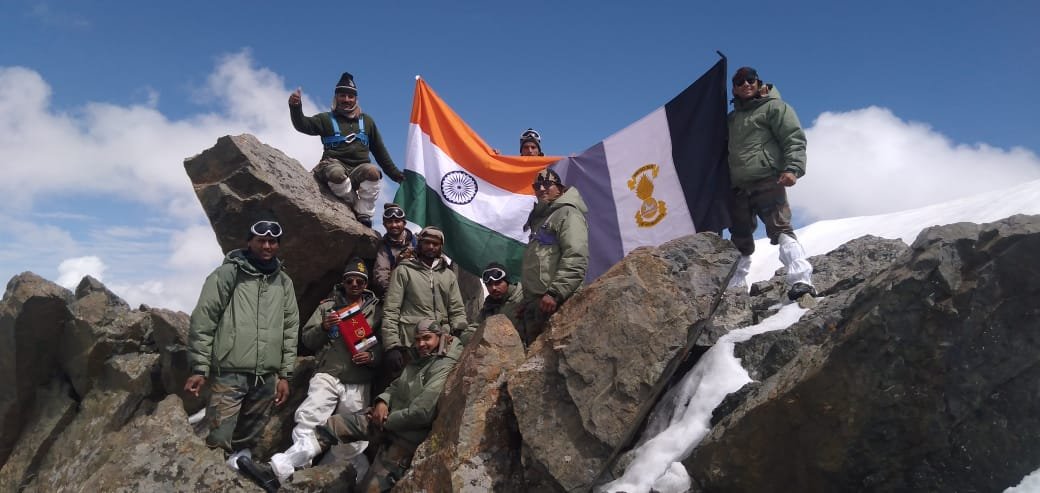
In the annals of modern military history, few operations exemplify raw courage amid extreme adversity as vividly as the Indian Army’s assault on Tiger Hill and Point 4875 during the 1999 Kargil War. On the night of 3-4 July 1999, soldiers from the 18 Grenadiers and 13 Jammu and Kashmir Rifles executed a daring high-altitude offensive that proved decisive in reclaiming strategic peaks from Pakistani intruders, ultimately paving the way for India’s victory by 26 July.
Keywords: Kargil War 1999, Tiger Hill capture, Yogendra Singh Yadav PVC, Sanjay Kumar Param Vir Chakra, Point 4875 battle, General VP Malik Kargil book, Indian Army heroism Kargil
Leading from the front in the 18 Grenadiers’ Ghatak Platoon assault on Tiger Hill (Point 4660), Grenadier Yogendra Singh Yadav, then just 19 years old, volunteered to scale a near-vertical, snow-covered cliff under withering enemy fire. Hit multiple times in the groin and shoulder, Yadav continued his ascent, lobbed a grenade into the first bunker, and neutralised four Pakistani soldiers in close combat. Despite sustaining around 17 bullet wounds, his actions enabled his comrades to secure the position, turning a near-impossible mission into a resounding success. For this extraordinary valour, he was awarded the Param Vir Chakra (PVC), becoming one of India’s youngest recipients of the nation’s highest gallantry award.
Simultaneously, in the Mushkoh Valley, Rifleman Sanjay Kumar of 13 Jammu and Kashmir Rifles demonstrated unparalleled grit while leading the assault on the Flat Top feature of Point 4875. The son of a Delhi cab driver single-handedly charged an enemy bunker, killed three intruders in hand-to-hand combat, and turned their own machine gun against the remaining forces, clearing the path for his unit. His actions were instrumental in securing the complex, earning him the PVC as well.
These feats were part of a broader, meticulously coordinated effort under Operation Vijay. The recapture of these dominating heights not only disrupted Pakistani supply lines and observation posts but also boosted Indian morale at a critical juncture, contributing significantly to the eviction of intruders from Drass and Mushkoh sectors.
Reflecting on the conflict in his authoritative book “Kargil: From Surprise to Victory”, former Army Chief General V.P. Malik underscored a profound truth: “For every single brave deed noticed and recognised, there are many that go unnoticed in the fog of war.” He dedicated the work to those unsung warriors, whose sacrifices often remain veiled, reminding us that wars are won not just by celebrated heroes but by the collective resolve of countless individuals.
More than two decades later, the Kargil saga continues to inspire. It highlights the Indian armed forces’ ability to overcome severe logistical and environmental challenges through superior tactics, leadership, and sheer determination. As India commemorates these victories annually on Kargil Vijay Diwas, the legacy of Yadav, Kumar, and their fallen comrades serves as a timeless testament to the spirit that safeguards the nation’s frontiers.

contact: drrajeshjauhri@gmail.com
Dr Rajesh Jauhri is a Journalist with an experience of over 25 years in Indian and foreign media, a Social Scientist, an Ac-complished Author, a Political & Strategic Analyst, a Marksman (Rifle & Pistol), an Orator, a Thinker and an Educationist. He holds a Ph.D. degree on “Impact of colonial heritage on Indian police”. He runs an NGO dedicated to the social and eco-nomic uplift of tribal communities in MP and two decades back, he established a school in a village of Indore district, providing education and moral values to children belonging to underprivileged and minority families. Has received multiple awards in various fields.