

Maj Gen Harvijay Singh
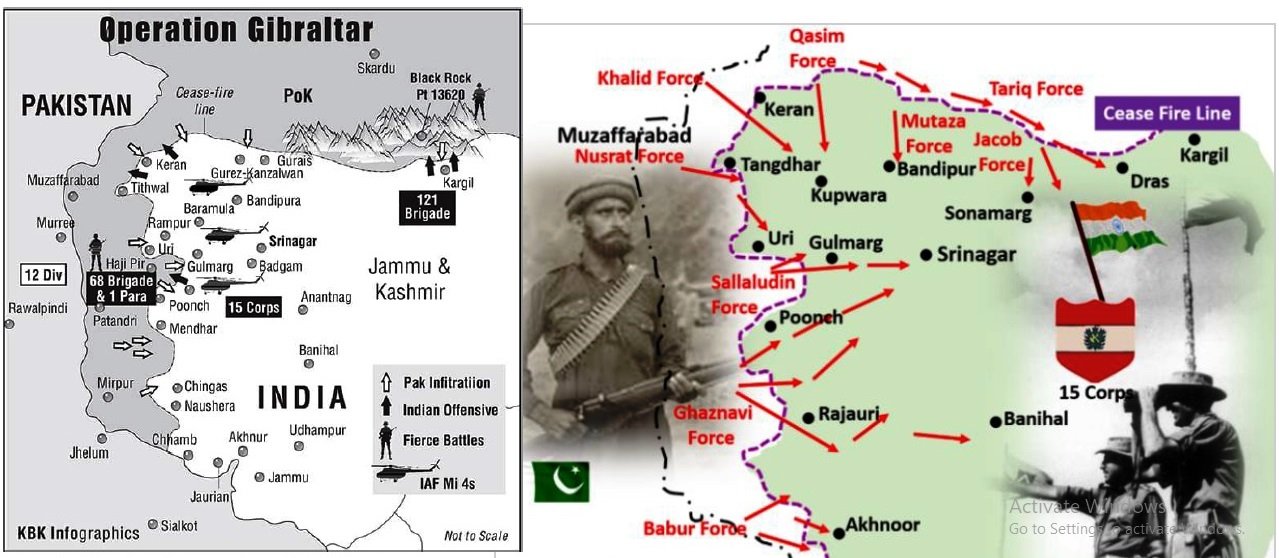
In August 1965, Pakistan launched Operation Gibraltar, a covert campaign designed to seize Jammu and Kashmir through infiltration and induced rebellion. Under President Ayub Khan, thousands of Pakistani soldiers from the Special Services Group, along with irregulars and Razakars, crossed the Cease Fire Line disguised as locals. Organised into forces bearing names such as Salahuddin, Ghaznavi, Tariq, Babur and Khalid, their mission was to sabotage infrastructure, attack military posts and distribute weapons in the hope of sparking a widespread Kashmiri uprising against Indian administration.
Keywords: Operation Gibraltar 1965, Indo-Pak War 1965, Haji Pir Pass capture, Pakistani infiltration Kashmir, Indian Army counter-offensive, Ayub Khan strategy failure
The plan rested on two flawed assumptions: that Kashmiris were poised for revolt, and that India, still recovering from the 1962 Sino-Indian conflict, would not escalate. Neither proved true. Local herdsmen and villagers promptly reported the strangers. Indian forces rapidly identified, isolated and neutralised the infiltrators. Within days the operation collapsed. Captured Pakistani officers, including Captains Ghulam Hussain and Mohammad Sajjad, provided detailed confirmation of the scheme’s scope and intent.
Prime Minister Lal Bahadur Shastri authorised a firm response. Indian troops crossed the Cease Fire Line to seize the launch pads themselves. Critical heights in the Kargil sector were secured, the Kishanganga Bulge was cleared, and, most decisively, 68 Infantry Brigade captured the strategic Haji Pir Pass on 28 August 1965. This single action severed the main infiltration artery linking Pakistan-occupied territory with the Valley and Rajouri-Poonch belt, denying the remaining raiders reinforcement and escape.
Faced with the failure of Gibraltar, Pakistan opened a conventional front with Operation Grand Slam towards Akhnoor on 1 September. India answered by expanding the conflict across the international border. The subsequent war ended in a UN-brokered ceasefire and the Tashkent Agreement, with both sides withdrawing to pre-war positions. Pakistan’s territorial and political aims remained unfulfilled.
Operation Gibraltar stands as a textbook illustration of strategic miscalculation. Overestimation of local support, underestimation of Indian resolve, and the absence of realistic contingency planning turned a limited infiltration into a broader conflict that Pakistan neither sought nor controlled. For the Indian Army it remains a defining episode of professional vigilance, rapid decision-making and the decisive use of offensive action to restore the status quo.
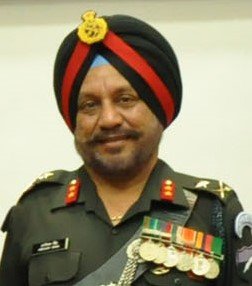
Major General Harvijay Singh is a third-generation officer, his two sons are also army officers.
He holds degree of B.Tech. and Master’s Degree in Management Sciences. He is a Certified Ethical Hacker and Cyber Forensic Investigator.
He is Member and Historian of the Punjab Military Literature Society, Chandigarh.
He has written books on Indo Pak Wars: 1948, 1965, 1971 – ‘Battles That Made History’, ‘Indo Pak War 1947-48’ (for Part D) and ‘Gallant Soldiers: Short Stories of Big Deeds’. He has also written Monographs on Grey Zone Warfare and Lessons Learnt from the Ukraine War. He is a regular contributor to Magazines on Military Strategy and Technology and a speaker on current Global Military events.
He is the winner of ARTRAC Scholar Warrior Badge for writing on Contemporary Military Thinking and Strategy.