
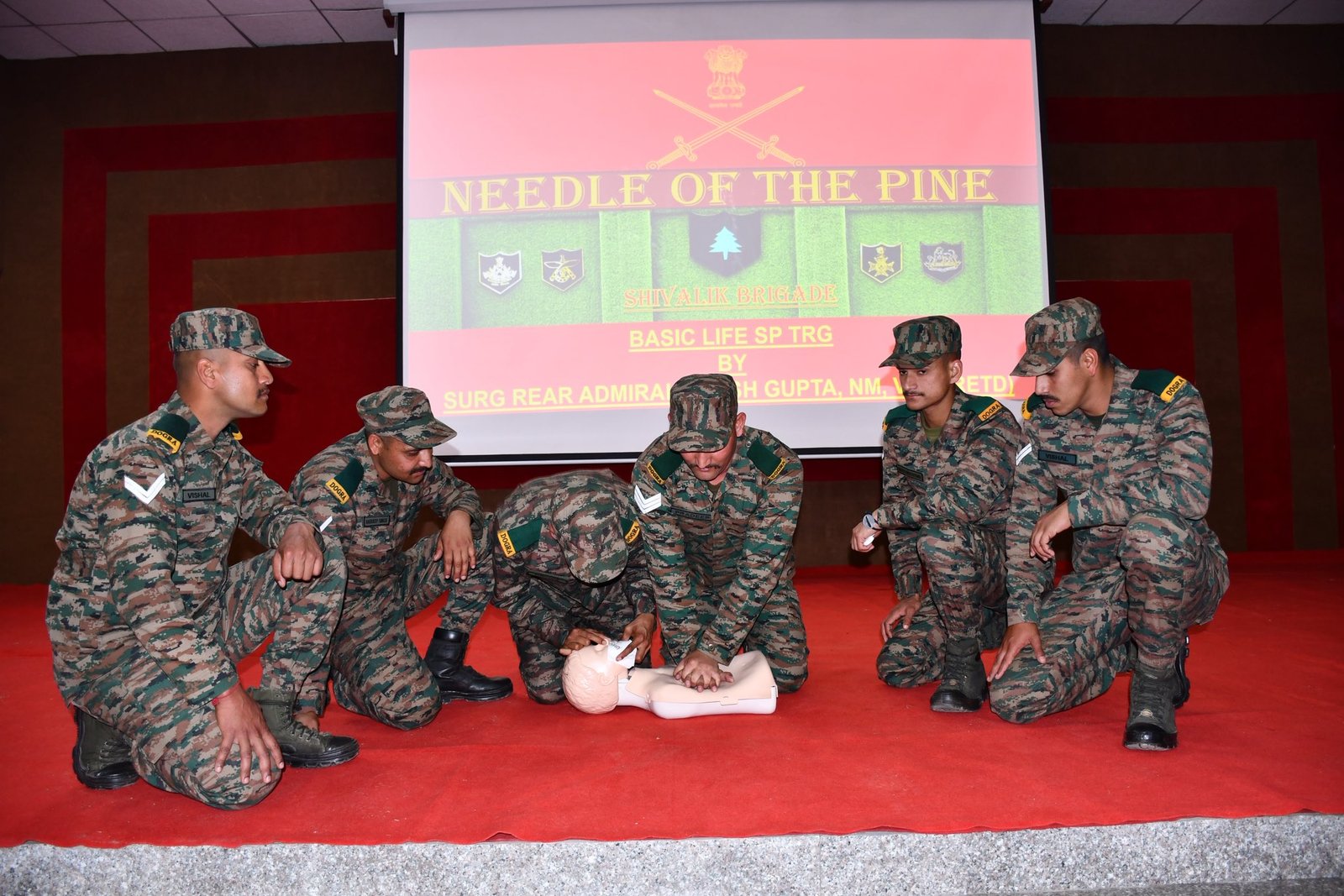
New Delhi: In a proactive step to enhance troop survivability on the modern battlefield, the Pine Division of the Indian Army’s Kharga Corps (II Corps) under Western Command has trained 1,000 soldiers in critical Basic Life Support (BLS) skills. The initiative, conducted in collaboration with Graphic Era Hospital, Dehradun, underscores the Army’s commitment to building a force of “first responders” capable of saving lives amid high-intensity conflict or disaster scenarios.
The programme was steered by Surgeon Rear Admiral (Prof.) Girish Gupta, NM, VSM (Retd.), a distinguished neonatologist and former senior Indian Navy medical officer with over 47 years of clinical, academic and operational experience. Leading a specialised team from Graphic Era Hospital, Rear Admiral Gupta oversaw intensive hands-on drills that transformed participating soldiers into confident, competent first responders. The training focused on core BLS competencies, including cardiopulmonary resuscitation (CPR), airway management, haemorrhage control and immediate trauma care – skills that can prove decisive in the critical “golden hour” following injury.
Western Command’s official announcement described the effort as a direct contribution to strengthening combat medical capabilities. “Every second counts. Every soldier a lifesaver,” the statement emphasised, reflecting a doctrinal shift towards empowering even frontline troops with life-saving medical proficiency. The hashtags #StrongAndCapable and #ImposersOfNationalWill accompanying the release highlight the broader ethos of operational readiness that defines the Kharga Corps, the Army’s premier strike formation headquartered in Ambala.
The Pine Division, a key component of the Kharga Corps, operates in a theatre where rapid response and self-reliance are paramount. Recent operational reviews by senior leadership have repeatedly commended the formation for its high battle readiness and integration of new technologies. In an era of multi-domain warfare, characterised by prolonged engagements, dispersed operations and elevated casualty risks from both conventional and hybrid threats, such medical training assumes strategic significance. By equipping soldiers to stabilise casualties until advanced care arrives, the Army not only reduces preventable deaths but also sustains combat effectiveness and morale.
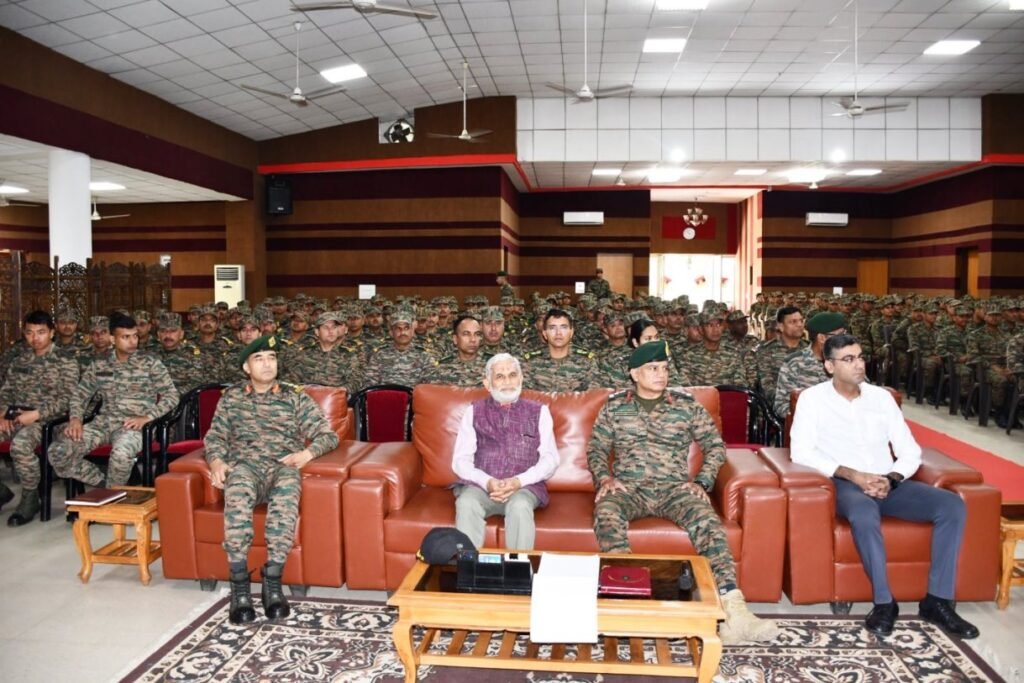
Rear Admiral Gupta brings unique credibility to the programme. A pioneer in neonatal and emergency care, he has previously conducted similar BLS and first-aid workshops for the Indian Military Academy and other military institutions, having trained more than 20,000 personnel across sectors. His involvement signals the growing synergy between the armed forces and premier civilian medical institutions in addressing capability gaps in combat casualty care.
This latest initiative aligns with the Indian Army’s sustained focus on human factors in operational readiness. As threats evolve along the western frontier and beyond, investments in individual soldier skills, medical, technological and tactical, remain central to maintaining deterrence and mission success. The Pine Division’s BLS certification drive is more than a training exercise; it is a tangible demonstration of the Army’s resolve to ensure that, in the heat of battle or the chaos of disaster, no second is wasted and no life is needlessly lost.

contact: drrajeshjauhri@gmail.com
Dr Rajesh Jauhri is a Journalist with an experience of over 25 years in Indian and foreign media, a Social Scientist, an Ac-complished Author, a Political & Strategic Analyst, a Marksman (Rifle & Pistol), an Orator, a Thinker and an Educationist. He holds a Ph.D. degree on “Impact of colonial heritage on Indian police”. He runs an NGO dedicated to the social and eco-nomic uplift of tribal communities in MP and two decades back, he established a school in a village of Indore district, providing education and moral values to children belonging to underprivileged and minority families. Has received multiple awards in various fields.