

In a stark escalation of rhetoric that has reverberated across world capitals, US President Donald Trump issued a blistering threat on social media late Monday, vowing to unleash ‘overwhelming force- twenty times harder’, should Iran persist in disrupting oil shipments through the Strait of Hormuz. The post, shared on X (formerly Twitter) and cross-posted to Truth Social, comes as the waterway, one of the world’s most vital energy arteries, remains effectively paralyzed by Iranian drone strikes and naval manoeuvres, thrusting the global economy into uncharted turmoil.
“If Iran does anything that disrupts oil flow through the Strait of Hormuz, we will respond with overwhelming force,” Trump wrote, framing the conflict as a test of American resolve. “This war will end decisively, but not before they learn the cost of playing with fire. Oil prices? A small price for freedom.” The message, which garnered over 5 million views within hours, underscores the deepening US-Iran confrontation, now in its third week, and highlights the precarious balance between military brinkmanship and economic catastrophe.
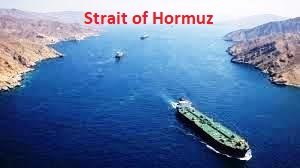
The ongoing war, which erupted on February 20 following Israeli airstrikes on Iranian nuclear facilities, allegedly backed by US intelligence, has rapidly spiralled into a multifaceted regional inferno. What began as targeted operations against Tehran’s proxy militias in Yemen and Lebanon has morphed into direct clashes, with Iranian Revolutionary Guard Corps (IRGC) vessels now patrolling the strait and launching precision drone attacks on commercial tankers. Iran insists these actions are defensive, aimed at countering ‘Zionist aggression’ but the result is unequivocal: for the past six days, oil and liquefied natural gas (LNG) exports through the 21-mile-wide chokepoint have ground to a near-halt. Tehran has not formally declared a blockade, mindful of the 1980s ‘Tanker War’ precedents, but the combination of explicit threats and sporadic strikes has deterred shipping giants from risking passage, effectively achieving the same outcome.
This de facto closure threatens to sever a lifeline that carries about 21% of global petroleum liquids trade roughly 21 million barrels per day and a fifth of the world’s LNG flows. Brent crude futures, already volatile, surged past $120 per barrel on Tuesday before retreating to $105 amid frantic diplomatic overtures, evoking memories of the 1979 oil crisis but amplified by today’s hyper-connected supply chains. Analysts warn that a prolonged shutdown could propel prices to $130 or higher, rivalling the 2008 peak and igniting inflationary pressures worldwide. “The strait isn’t just a waterway; it’s the aorta of the global economy,” said Dr. Aisha Rahman, energy economist at the International Energy Agency (IEA). “Iran’s ‘nuclear option’ here isn’t atomic, it’s asphyxiating the flow of black gold.”
Nowhere is the fallout more acute than in Asia, the region’s voracious energy consumers who rely heavily on Gulf imports funnelled through Hormuz. China, the world’s largest oil importer, sources approximately 40% of its crude and 30% of its LNG via the strait, making it acutely vulnerable to even short-term disruptions. Beijing’s state-run refiners are already rationing feedstock, with industrial output in petrochemical hubs like Guangdong dipping 12% week-on-week. Factories idling and truckers facing fuel surcharges could shave 0.5 percentage points off China’s GDP growth this quarter, exacerbating the slowdown from ongoing U.S. tariffs. “This isn’t just an energy crisis; it’s a manufacturing chokehold,” noted Li Wei, director of the China Energy Research Institute. In a bid to mitigate, China has chartered super tankers for longer African and Russian routes, but logistics costs have ballooned 300%, straining an economy already grappling with youth unemployment and property woes.
India, similarly exposed with over 50% of its crude imports traversing the strait, faces an even graver predicament. The South Asian powerhouse imports 85% of its oil needs, and the blockade has already triggered a 15% spike in diesel prices at the pump, fuelling protests in major cities like Mumbai and Delhi. Remittances from Gulf-based Indian workers, totalling $100 billion annually, hang in the balance as expatriate communities in the UAE and Saudi Arabia brace for evacuations amid escalating hostilities.
Moody’s Analytics predicts India could absorb the ‘maximum brunt’ if the impasse lasts beyond two weeks, with inflation potentially climbing to 8% and forcing the Reserve Bank to hike rates amid weakening rupee. “Fuel shortages aren’t imminent, but the psychological toll is,” said Prime Minister Narendra Modi’s economic advisor, who has urged stockpiling from alternative suppliers like the US and Brazil, moves that could take months to scale.
The ripple effects extend far beyond Asia. Japan and South Korea, both near-total oil importers, depend on the strait for 80% and 70% of their supplies, respectively, prompting emergency releases from strategic reserves and frantic diplomacy with Tehran. In Europe, where Russian energy dependencies have waned post-Ukraine, the crisis still portends higher heating costs and chemical industry shutdowns; Germany’s BASF has halted production at two plants due to feedstock scarcity. Even the US, a net exporter, isn’t immune: While domestic shale buffers shield consumers somewhat, refiners geared for heavy Gulf crudes face $10-billion in annual losses, and gasoline averages have climbed to $4.50 per gallon nationwide.
Trump’s post arrives at a pivotal juncture, as U.N. Secretary-General Antonio Guterres convenes an emergency session in Geneva today to broker a ceasefire. European allies, led by France and the UK, have urged de-escalation, warning that “no one, not even Beijing, is getting through unscathed.” Iran, for its part, has signalled openness to talks but conditioned them on an immediate halt to Israeli operations.
As tankers queue in the Arabian Sea and markets lurch, the world watches Hormuz with bated breath: Will Trump’s thunderous vow restore flow, or ignite the powder keg further?

contact: drrajeshjauhri@gmail.com
Dr Rajesh Jauhri is a Journalist with an experience of over 25 years in Indian and foreign media, a Social Scientist, an Ac-complished Author, a Political & Strategic Analyst, a Marksman (Rifle & Pistol), an Orator, a Thinker and an Educationist. He holds a Ph.D. degree on “Impact of colonial heritage on Indian police”. He runs an NGO dedicated to the social and eco-nomic uplift of tribal communities in MP and two decades back, he established a school in a village of Indore district, providing education and moral values to children belonging to underprivileged and minority families. Has received multiple awards in various fields.
An interesting read. The US seeks to exert its authority over all energy choke points – they consider these in their sphere of influence. Aims to exert de‑facto influence through naval presence, basing, and partnerships.
Thanks for your valuable comments Sir