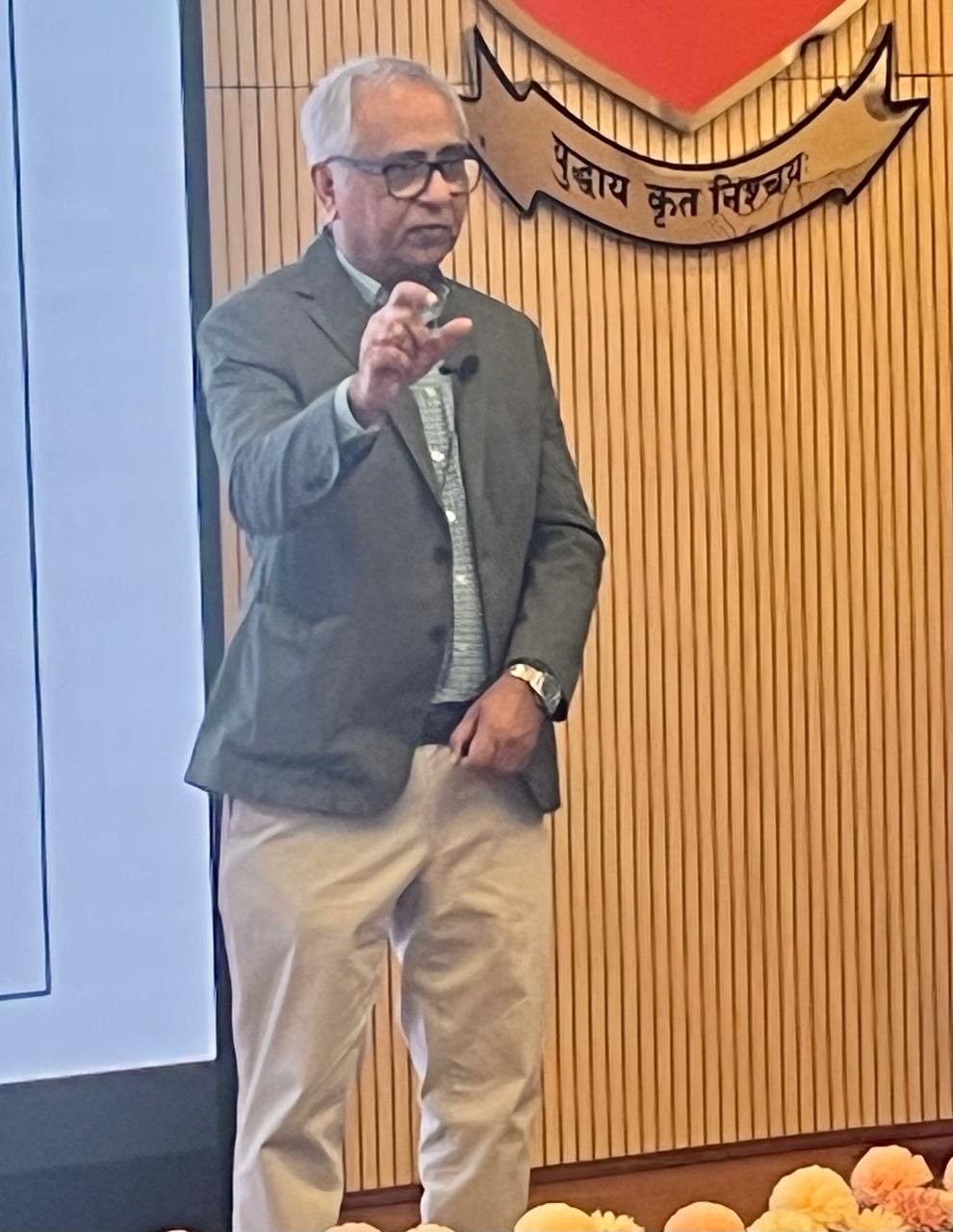
Maj Gen Harvijay Singh, Veteran, Chandigarh, March 10, 2026—- Author of this Article
Amid the mud-soaked fields of northern France, where the First World War’s brutal stalemate had turned battlefields into labyrinths of wire and despair, a 19-year-old from the hills of Uttarakhand etched his name into the annals of military courage. Today, on the 111st anniversary of his death, the story of Rifleman Gabar Singh Negi resonates as a testament to unyielding bravery, a saga that transcends empires and eras, reminding modern soldiers and civilians alike of the human spirit’s defiance against overwhelming odds.
In the spring of 1915, as Allied forces grappled with the entrenched German lines, the British Expeditionary Force launched Operation Neuve Chapelle. The objective was audacious: pierce the enemy defences in a narrow sector near the village of Neuve Chapelle to create a breakthrough for cavalry exploitation. Spearheading this assault was the 7th Indian (Meerut) Division, a formation drawn from the rugged terrains of British India, including hardy units like the Garhwal Rifles. These soldiers, many hailing from remote mountain villages, brought to the Western Front not just rifles but a warrior ethos forged in the high altitudes of the Himalayas.
On March 10, the spotlight fell on the 2nd Battalion of the 39th Garhwal Rifles, a precursor to today’s esteemed 2nd Battalion, The Garhwal Rifles. Tasked with advancing southwest of the village, the Garhwalis faced a nightmare from the outset. A preliminary artillery barrage, meant to soften the German positions, fell short in its fury, leaving enemy machine-gun nests and fortified trenches largely intact. What followed was hand-to-hand savagery: assault teams, armed with rudimentary bombs and grenades, plunged into the fray to claw their way through the barbed-wire gauntlet.
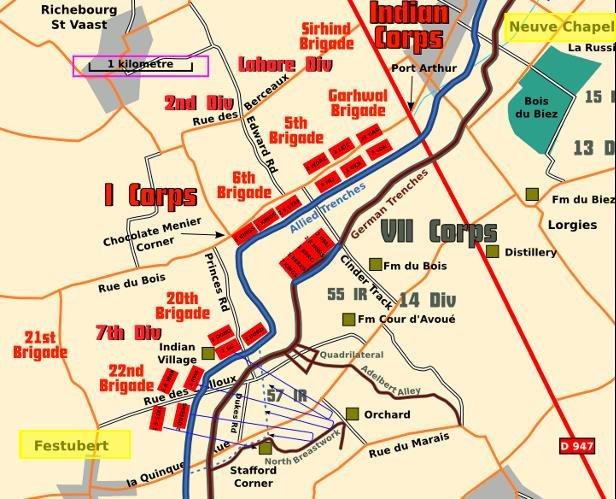
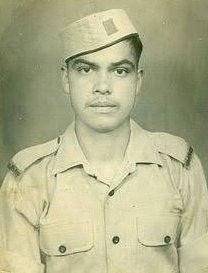
It was in this cauldron of chaos that Rifleman Negi, born on April 21, 1895, in the verdant village of Chamba in Tehri Garhwal, emerged as a beacon of resolve. Part of a bayonet assault party, the young rifleman, barely out of his teens and far from the snow-capped peaks he called home, pressed forward under a hail of bullets. When his commanding officer fell mortally wounded, Negi did not falter. Seizing the moment, he rallied his comrades and led the charge into the heart of the German main trench.
What happened next would become the stuff of regimental legend. Negi was the first to navigate the trench’s treacherous traverses, those zigzag barriers designed to channel attackers into kill zones. With bombs at the ready and bayonet fixed, he methodically cleared each section, forcing the dazed defenders to retreat or surrender. Eyewitness accounts from surviving Garhwalis later described a man who ‘knew no fear,’ his audacious leadership igniting a fire in his squad that turned potential rout into hard-won ground. Even as German fire riddled the parapets, Negi urged his men onward, his voice cutting through the din like a rallying cry from the Garhwal hills.
Tragically, heroism exacted its toll. Struck by a fatal head wound while perched on the trench wall, Negi collapsed, his life ebbing away on the very soil he had helped conquer. Yet in those final moments, he had secured a foothold that allowed his battalion to press the attack, contributing to the day’s limited but symbolic gains. For this “bravery beyond the call of duty, “As the official citation would later proclaim, King George V awarded Negi the Victoria Cross, the British Empire’s highest gallantry honour, in a posthumous recognition announced months later.
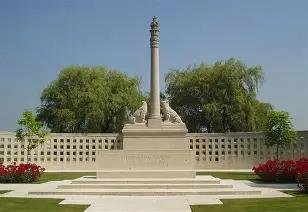
The 2/39th Garhwal Rifles, in turn, earned the prestigious Battle Honour ‘Neuve Chapelle,’ a badge of collective grit that the regiment still carries with pride today. Negi’s sacrifice was not forgotten on foreign fields; his name is immortalized on the Neuve-Chapelle Indian Memorial, a poignant archway in France that honours over 4,800 Indian troops with no known graves from the Western Front. Closer to the imperial heart, it graces the Dome of Remembrance at the India Gate Memorial Gates in London, unveiled in 2002 as a tribute to the subcontinent’s forgotten warriors.
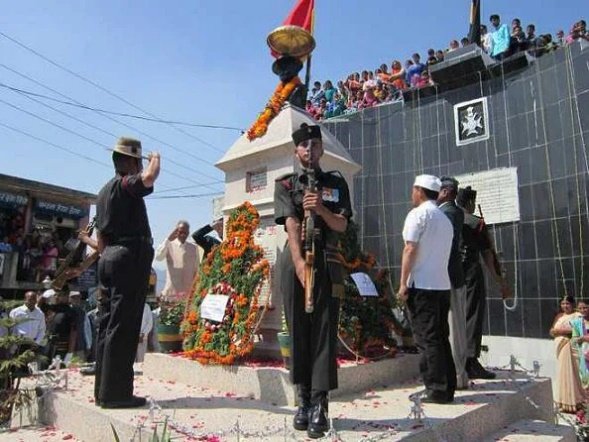
Back in India, Negi’s legacy pulses with life through traditions that bridge past and present. Since 1971, his descendants and the local community in Chamba Tehri Garhwal have hosted the annual Gabar Singh Negi Mela, a vibrant fair blending solemn remembrance with joyous celebration. The Garhwal Rifles, true to their roots, have marched in every year since its inception, transforming the event into a recruitment showcase. Army stalls brim with displays of modern weaponry and fitness challenges, while regimental bands fill the air with martial tunes. Throngs of villagers, especially eager youths dreaming of donning the olive green, flock to the grounds, ensuring that stories like Negi’s echo in the next generation.
In an age where the shadows of colonial history often cloud such narratives, Negi’s tale invites reflection: Should the valor of a 19-year-old pahadi lad, who left his family’s modest fields to face the guns of Europe, be reduced to a footnote of empire? Or does it stand as an eternal emblem of the Indian soldier’s dauntless spirit, one that continues to inspire the world’s fourth-largest army? As the Garhwal Rifles prepare for their next muster, and as global conflicts remind us of war’s timeless costs, Gabar Singh Negi’s charge at Neuve Chapelle whispers a resounding answer: True courage knows no borders, only the unbreakable bond of duty.
About the Author
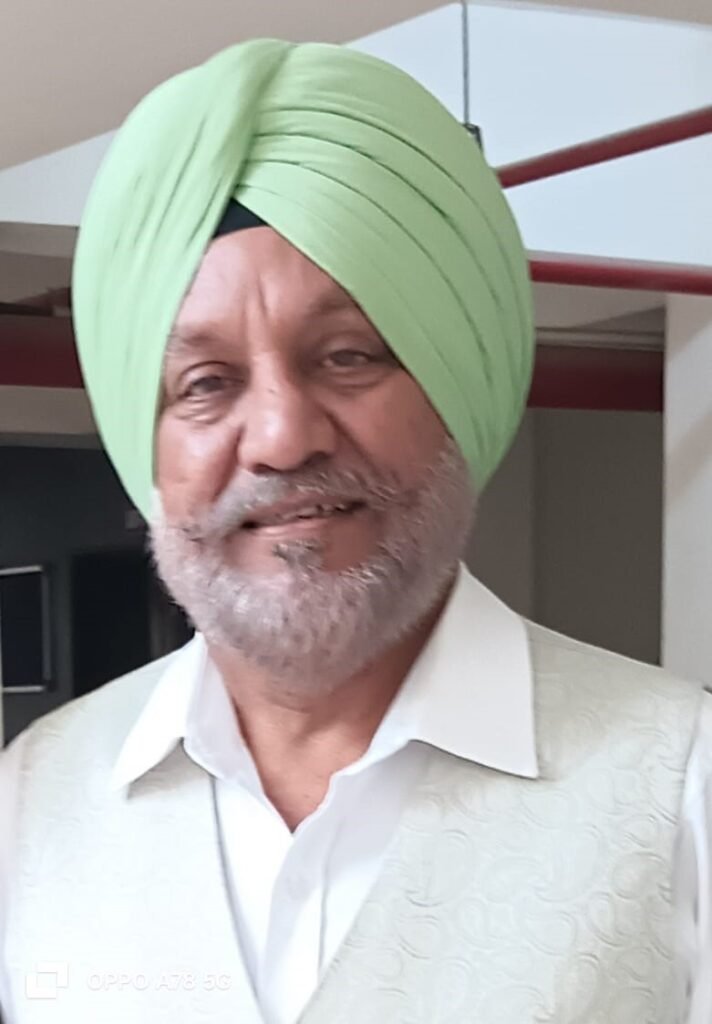
MAJOR GENERAL HARVIJAY SINGH, SENA MEDAL, (RETD)
CORPS OF SIGNALS
Major General Harvijay Singh is a third-generation officer, his two sons are also army officers.
He holds the degree of BTech and Master’s Degree in Management Sciences.
He is Member and Historian of the Punjab Military Literature Society, Chandigarh.
He has written books on Indo Pak Wars: 1948, 1965, 1971 – Battles That Made History, Indo Pak War 1947-48 (for Part D) and Gallant Soldiers: Short Stories of Big Deeds. He has also written Monographs on Grey Zone Warfare and Lessons Learnt from the Ukraine War. He is a regular contributor to Magazines on Military Strategy and Technology and a speaker on current Global Military events.
He is the winner of ARTRAC Scholar Warrior Badge for writing on Contemporary Military Thinking and Strategy.

contact: drrajeshjauhri@gmail.com
Dr Rajesh Jauhri is a Journalist with an experience of over 25 years in Indian and foreign media, a Social Scientist, an Ac-complished Author, a Political & Strategic Analyst, a Marksman (Rifle & Pistol), an Orator, a Thinker and an Educationist. He holds a Ph.D. degree on “Impact of colonial heritage on Indian police”. He runs an NGO dedicated to the social and eco-nomic uplift of tribal communities in MP and two decades back, he established a school in a village of Indore district, providing education and moral values to children belonging to underprivileged and minority families. Has received multiple awards in various fields.