
New Delhi: In a stark escalation of tensions surrounding the Special Intensive Revision (SIR) of electoral rolls ahead of the West Bengal Assembly elections, seven judicial officers, including three women, were held hostage for nearly nine hours by a protesting mob in Malda district on April 1, 2026. The incident, which unfolded in the Kaliachak-II block area under the Mothabari Assembly constituency, has drawn sharp condemnation from the Supreme Court, which described it as a ‘deplorable’ and ‘calculated’ challenge to judicial authority and the electoral process.
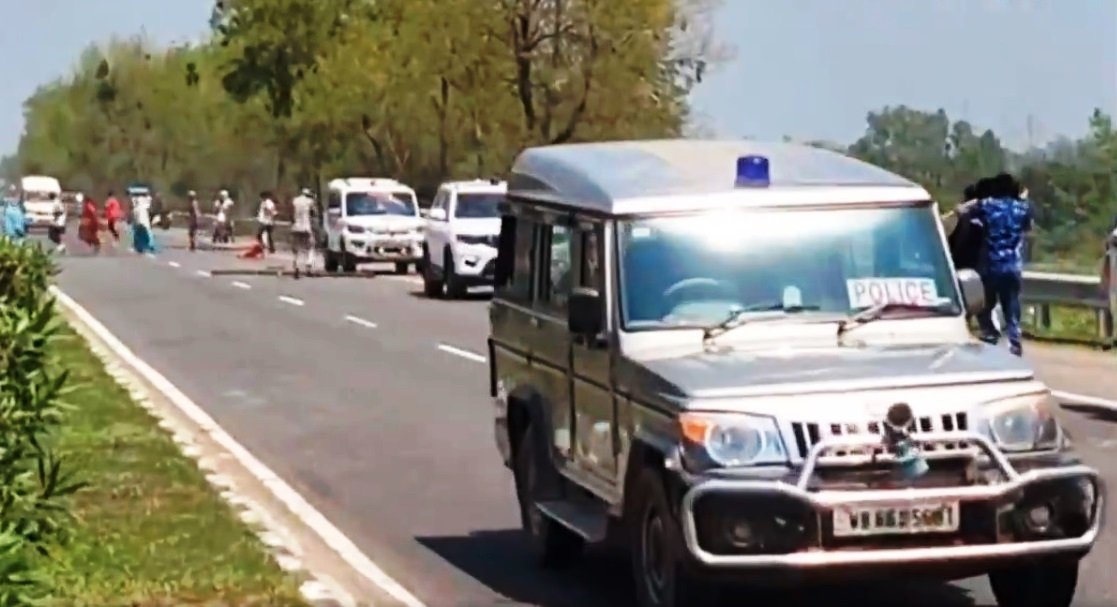
The officers, deputed on the directions of the Supreme Court to adjudicate claims and objections arising from the SIR exercise, were gheraoed inside the Block Development Officer’s office in a Muslim-majority area of Sujapur/Kaliachak. Protesters, angered by the deletion of numerous names from the voter lists, surrounded the premises, preventing the officials from leaving. Reports indicate the officers were denied food and water during the ordeal, while one vehicle was vandalised during the eventual rescue operation conducted by police around midnight.
Additional Director General of Police (North Bengal) K. Jayaraman confirmed that 35 individuals have been arrested so far in connection with the incident, with 19 cases registered. The alleged main instigator, advocate Mofakkarul Islam, described by police as the mastermind behind the agitation, was detained at Bagdogra Airport near Siliguri while attempting to flee. He is being brought to Malda for further questioning. Police stated that Islam had previously been linked to cases in the Kaliachak area and is accused of instigating locals through provocative speeches. The Election Commission of India has transferred the investigation of the case to the National Investigation Agency (NIA).
The Supreme Court took suo motu cognisance of the episode on 2 April, issuing show-cause notices to West Bengal’s Chief Secretary, Home Secretary, Director General of Police, and other senior officials. A bench headed by Chief Justice Surya Kant expressed strong displeasure over the apparent inaction despite prior alerts that the protest was pre-planned and intended to intimidate the officers. The court observed that the failure to act promptly amounted to an “abdication of duty” and raised serious questions about the breakdown of law and order in the state.
In a firm directive, the apex court ordered the deployment of Central Armed Police Forces (CAPF) to safeguard judicial officers involved in the SIR process across sensitive areas. It also directed the Election Commission to ensure their protection, emphasising that no one should be allowed to obstruct or threaten officials performing duties mandated by the court.
The SIR exercise, aimed at cleaning up electoral rolls by verifying and adjudicating doubtful or deleted entries, has emerged as a flashpoint in poll-bound West Bengal. Hundreds of judicial officers have been mobilised following earlier Supreme Court orders to handle the large volume of claims and objections. In Malda alone, a significant number of voters, particularly in certain booths, were flagged for verification, triggering widespread protests that spilled over into road blockades on National Highway 12 and other routes.
Senior police officials have initiated inquiries into the reported delay in the rescue operation and are expected to submit a detailed report. Meanwhile, the arrests and NIA probe signal a serious effort to uncover whether the incident was part of a larger, coordinated attempt to disrupt the voter list revision process.
Legal and political observers view the Supreme Court’s intervention as a critical step to uphold the integrity of the electoral machinery and the independence of the judiciary. The court has scheduled further hearing on the matter for April 6, where state officials will be required to explain the lapses and the measures taken to prevent recurrence.
As West Bengal heads into Assembly polls later this month, the Malda incident underscores the deep sensitivities surrounding voter list revisions in a politically charged and demographically complex region. It also highlights the challenges of conducting transparent electoral exercises in areas prone to mobilisation along community lines.
For now, the deployment of central forces and the central agency probe aim to restore confidence in the process. The Supreme Court’s message has been unambiguous: any attempt to intimidate judicial officers or derail constitutionally mandated electoral work will not be tolerated. The coming days will test the state administration’s ability to balance public grievances with the rule of law, as the SIR adjudication continues under heightened security.

contact: drrajeshjauhri@gmail.com
Dr Rajesh Jauhri is a Journalist with an experience of over 25 years in Indian and foreign media, a Social Scientist, an Ac-complished Author, a Political & Strategic Analyst, a Marksman (Rifle & Pistol), an Orator, a Thinker and an Educationist. He holds a Ph.D. degree on “Impact of colonial heritage on Indian police”. He runs an NGO dedicated to the social and eco-nomic uplift of tribal communities in MP and two decades back, he established a school in a village of Indore district, providing education and moral values to children belonging to underprivileged and minority families. Has received multiple awards in various fields.