

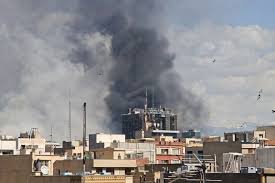
New Delhi, March 2, 2026: As the U.S.-Israeli “Operation Epic Fury” enters its fourth day with relentless airstrikes decapitating Iran’s leadership and military infrastructure, a viral X post from a pro-regime account has reignited global anxiety over Tehran’s retaliatory intentions.
The post, shared Monday morning by @MojtabaSpoof (a self-described “Breaking War News” account with over 1 million views in hours), declares: “100 soldiers of Israel have been Eliminated. We will carry out 1,500 more missile attacks on Israel. We will wipe Israel out.” Accompanied by a video and flooded with replies featuring Iranian flags, “I Stand With Iran” graphics, and dark memes celebrating potential destruction of the Jewish state, the message echoes classic Islamic Revolutionary Guard Corps (IRGC) rhetoric but arrives at a moment when Iran’s actual capabilities appear severely degraded.
In my view it is not more than Information Warfare. So its my advice that read the full article if you are really unbiased.
Context: Rhetoric vs. Reality on the Battlefield
U.S. Secretary of War Pete Hegseth and Gen. Dan Caine detailed in Sunday’s Pentagon briefing that American and Israeli forces have already destroyed or damaged hundreds of Iranian ballistic missile launchers, production facilities, naval assets, and command nodes. Independent assessments from the Institute for the Study of War and Critical Threats Project confirm Iranian missile barrages against Israel dropped sharply from dozens of volleys on Feb. 28–March 1 to just four reported barrages in the subsequent 24 hours. At least nine Israelis have been killed in strikes so far, mostly civilians in Beit Shemesh, while Iranian casualties inside the country exceed 500 according to the Iranian Red Crescent.
The claim of “100 soldiers eliminated” has not been verified by any Israeli, U.S., or independent source. Israeli officials reported no such losses, and Pentagon briefings mentioned only four confirmed U.S. deaths (three in combat, one in a Kuwaiti friendly-fire incident involving F-15s). The “1,500 more missiles” figure appears borrowed from pre-war Iranian propaganda and is militarily implausible: Iran’s pre-strike inventory of long-range ballistic missiles was estimated at 3,000–4,000, with many now destroyed or expended.
What Could Happen in the Next 7–30 Days: Four Plausible Scenarios
1. Degraded but Spectacular Retaliation (Most Likely Baseline)**
Iran still possesses dispersed mobile launchers, underground facilities, and shorter-range rockets that are harder to eliminate from the air. Expect 2–4 additional large-scale barrages in the coming week, possibly timed for maximum psychological impact (nighttime or during Israeli holidays). Most will be intercepted by Israel’s multi-layered defenses (Iron Dome, David’s Sling, Arrow) augmented by U.S. Navy Aegis ships. Some leakage is inevitable, risking dozens more Israeli civilian deaths and straining public morale. Hezbollah may simultaneously fire 200–500 rockets daily from Lebanon, prompting Israeli ground operations limited to southern Lebanon rather than full invasion.
2. Proxy Surge and Regional Spillover (High Probability)**
With its central command crippled, Tehran will lean harder on its “Axis of Resistance.”
– Iraqi militias have already claimed drone attacks on U.S. bases in Erbil and threatened the U.S. Embassy in Baghdad.
– Yemen’s Houthis could resume Red Sea shipping attacks.
– Hezbollah, already exchanging fire, may attempt to open a second front in earnest.
Gulf states (UAE, Saudi Arabia, Kuwait, Qatar) have already been hit by stray or deliberate Iranian missiles and drones. Further strikes could force these Sunni states to openly join the U.S.-Israeli effort or demand an immediate ceasefire, fracturing Arab unity.
3. Regime Survival Crisis Inside Iran (Watch Closely)**
The confirmed death of Supreme Leader Ayatollah Ali Khamenei has created a leadership vacuum. Hardliners around the IRGC may push for ever-more desperate attacks to prove strength, while reformist or pragmatic factions could quietly seek back-channel negotiations via Oman or Qatar. Street protests — already simmering before the strikes — could explode if electricity, fuel, and internet remain crippled. A rapid collapse is unlikely in days, but sustained pressure could produce a fractured regime within 2–4 weeks, complicating any ceasefire.
4. Major Escalation or Miscalculation (Lower but Dangerous Probability)**
If Iran succeeds in hitting a high-value target — a major Israeli city center, U.S. aircraft carrier, or critical Gulf oil terminal — the response could be overwhelming. President Trump has repeatedly said the operation continues “until all objectives are achieved” and has not ruled out additional waves or even limited special forces raids (though both Hegseth and Caine ruled out large-scale ground invasion). A direct Iranian attempt to close the Strait of Hormuz would spike global oil prices above $150/barrel within hours and draw in the entire U.S. Fifth Fleet.
Expert Consensus: Firepower vs. Willpower
Military analysts across U.S., Israeli, and European think tanks largely agree: Iran retains the ‘Will’ to fight but is rapidly losing the ‘Means’. Its missile force — the cornerstone of its deterrence — has been attrited faster than expected. Air defenses are largely offline, allowing U.S. B-2s and Israeli F-35s near-total freedom of movement. The “wipe Israel out” rhetoric, while galvanizing domestic and diaspora support, serves more as morale propaganda than realistic strategy. Israel’s population is sheltering effectively; its economy, though disrupted, remains functional.
That said, prolonged conflict carries severe risks:
– Humanitarian catastrophe inside Iran (already hundreds dead, power blackouts widespread).
– Global economic shock (oil markets jittery, stock indices down sharply).
– Nuclear wildcard: Any strike on Fordow or Natanz could release radiation or push surviving Iranian scientists toward a crash weaponization program.
Outlook for the Coming Weeks
The most probable near-term trajectory is continued high-intensity air and missile exchanges for another 10–21 days, followed by a sharp decline in Iranian capacity. U.S. and Israeli officials privately signal they aim to degrade Iran’s missile and nuclear programs by 70–80% before pausing. A face-saving diplomatic off-ramp — perhaps brokered by China or Russia — could emerge if Tehran signals willingness to return to nuclear talks and halt proxy attacks.
Until then, the gap between Tehran’s social-media bravado (“We will wipe Israel out”) and battlefield reality will likely widen. The coming days will test whether Iran’s remaining forces can deliver another painful blow or whether Operation Epic Fury achieves its stated goals of eliminating the missile threat, crippling the navy, and ensuring Iran never acquires nuclear weapons — all without the quagmire of another endless Middle East war.
This remains a fast-moving situation. Casualty figures, strike assessments, and diplomatic moves over the next 72 hours will determine whether the conflict peaks quickly or spirals into a wider regional firestorm.

contact: drrajeshjauhri@gmail.com
Dr Rajesh Jauhri is a Journalist with an experience of over 25 years in Indian and foreign media, a Social Scientist, an Ac-complished Author, a Political & Strategic Analyst, a Marksman (Rifle & Pistol), an Orator, a Thinker and an Educationist. He holds a Ph.D. degree on “Impact of colonial heritage on Indian police”. He runs an NGO dedicated to the social and eco-nomic uplift of tribal communities in MP and two decades back, he established a school in a village of Indore district, providing education and moral values to children belonging to underprivileged and minority families. Has received multiple awards in various fields.

A good analysis. Thank you.
While Iran has suffered many casualties including over 150 children in a primary school – I hope the world takes account of this in a precision warfare era.
For America and Israel even a single casualty is one too many. I think they have already taken more than what they were expecting. Internal pressures are likely to effect the progress of the war.
While the Iranian capability is depleting fast so is the very expensive AD capability of Israel.
The closure of the strait of Hormous is something which will carry the impact worldwide as will closure of many oil refineries – this impact will be felt by and by. The war’s impact is already world wide.
Americas adventure of regime changes by violence be it in Venezuela or Iran benefits mostly America and is at the cost of the rest of the world. Next in line could be Greenland, Canada….
Will the world remain as silent spectators, well at their own peril.
Thanks Sir for your valuable comments