

New Delhi: In the intricate chessboard of Central Asian geopolitics, where alliances shift with the precision of a fighter jet’s evasive manoeuvre, New Delhi has executed what analysts are describing as a textbook case of adaptive power projection. India’s quiet withdrawal from Tajikistan’s Ayni Airbase in late 2025, long hailed as the Indian Air Force’s forward outpost for monitoring threats from Pakistan and Afghanistan, has been reframed not as a retreat, but as a calculated repositioning. Far from diminishing India’s strategic depth, recent developments suggest it has catalysed a more potent presence directly on Afghanistan’s soil, courtesy of evolving ties with the Taliban administration.
The Ayni facility, developed by India since the early 2000s with significant investments in runway upgrades, fuel depots, and infrastructure, provided rare operational leverage. Situated near the Wakhan Corridor, it enabled surveillance and potential strike capabilities that kept Islamabad perpetually vigilant, with Indian Su-30 MKI platforms and rotary-wing assets reportedly maintaining a deterrent posture against cross-border destabilisation. However, the bilateral lease lapsed around 2022, and full operational wind-down concluded by October 2025, amid broader regional dynamics involving Russian and Chinese influence on Dushanbe. Tajikistan’s decision not to renew reflected evolving priorities in a post-Taliban Afghanistan landscape, where India’s original utility for Northern Alliance support had waned.
Diplomatic sources and regional observers note that Pakistan, which viewed the Indian presence as a persistent thorn, given its proximity to Peshawar and PoK, actively lobbied key Gulf and Eurasian partners, including Turkey and Qatar, to exert pressure on Tajikistan. The whole exercise of Pakistan was based on motivating them on religious grounds and it must be accepted that they got success in their attempt. Islamabad’s overtures reportedly framed the base as an extraneous external footprint disrupting Central Asian equilibrium. The effort appeared successful in the short term: Tajikistan conveyed its intent to reclaim full control, prompting India’s orderly exit and a momentary sense of relief in Rawalpindi.
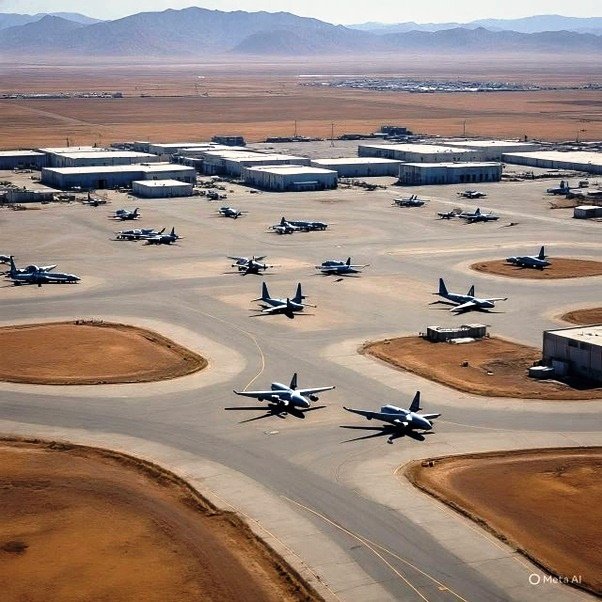
Yet, this manoeuvre has unravelled into what defence strategists term a classic self-goal. Almost immediately following the Ayni closure, the Taliban leadership extended an unprecedented overture to India: access to the iconic Bagram Airbase, Afghanistan’s premier military airfield with its 3,000+ metre runways, hardened shelters, and proven capacity for heavy-lift operations. Bagram, historically a Soviet and later US hub, sits squarely in a position of immense tactical value, mere hours from key Pakistani installations and offering direct oversight of supply lines, nuclear-related movements, and border flashpoints.
Indian response was swift and pragmatic. Equipment and assets previously stationed at Ayni are understood to be in the process of relocation and integration at Bagram, under a framework of enhanced bilateral cooperation. This is not mere tenancy; it aligns with India’s broader diplomatic reset with Kabul, including embassy-level engagements and firm backing for Afghan sovereignty against external claims on its facilities. In parallel, New Delhi has committed to financing up to seven major developmental initiatives in Afghanistan on a non-reimbursable basis, infrastructure, energy, and connectivity projects designed to foster long-term stability.
Among these, one stands out for its hydrological implications: support for a dam project on the Kunar River (a critical tributary feeding into the Kabul and ultimately Indus systems). With waters flowing downstream into Pakistan, this initiative, framed by both Kabul and New Delhi as sustainable water management, introduces a new variable in the Indus basin equation. India’s parallel emphasis on efficient utilisation of its own upper riparian rights has already heightened Islamabad’s concerns over flow predictability and storage capacity.
Compounding the calculus, Pakistan faces renewed scrutiny in multilateral financial forums. While not formally relisted, diplomatic manoeuvres, reportedly influenced by Afghan stakeholders frustrated by cross-border frictions, have amplified calls for stricter oversight on terror financing compliance, potentially stalling upcoming multilateral lending tranches from institutions like the World Bank. This echoes earlier grey-list episodes but arrives at a moment of acute economic vulnerability for Islamabad.
From a defence analytical perspective, the implications are profound. India’s fighter and support assets, once constrained by Tajik geography and lease dependencies, now occupy a platform of superior proximity and autonomy. Bagram’s location enables real-time domain awareness and rapid response options that eclipse Ayni’s reach, effectively placing pressure points “closer to the chest” of any adversarial calculus. This pivot underscores New Delhi’s diplomatic agility: transforming a lease expiry into a sovereignty-respecting partnership that sidesteps great-power rivalries while advancing core security interests.
For Pakistan’s leadership, including military and civilian principals, the sequence represents a textbook illustration of unintended consequences. What began as an effort to neutralise a distant threat has precipitated a closer, more resilient Indian operational envelope, coupled with hydrological and economic headwinds. Regional stability hinges on de-escalation, yet the current trajectory highlights the perils of zero-sum proxy play in an era of fluid alignments.
As Central Asia enters a phase of intensified multipolarity, with Russia, China, and the US all asserting interests around Bagram, India’s move exemplifies forward-leaning realism. It reinforces deterrence without overextension, bolsters Afghan agency, and recalibrates the subcontinental balance with enduring strategic dividends. For international observers, this episode reaffirms that in modern great-power competition, the most effective victories are those achieved through quiet adaptation rather than overt confrontation. The coming months will reveal whether this redeployment solidifies into a durable pillar of Indian posture or invites fresh contestation, but the initial contours suggest a net enhancement of New Delhi’s regional heft?

contact: drrajeshjauhri@gmail.com
Dr Rajesh Jauhri is a Journalist with an experience of over 25 years in Indian and foreign media, a Social Scientist, an Ac-complished Author, a Political & Strategic Analyst, a Marksman (Rifle & Pistol), an Orator, a Thinker and an Educationist. He holds a Ph.D. degree on “Impact of colonial heritage on Indian police”. He runs an NGO dedicated to the social and eco-nomic uplift of tribal communities in MP and two decades back, he established a school in a village of Indore district, providing education and moral values to children belonging to underprivileged and minority families. Has received multiple awards in various fields.
I feel the article is engaging and insightful, clearly explaining India’s strategic shift in Central Asia. It presents the Ayni withdrawal as a smart move and highlights the significance of Bagram well. Overall, it’s a simple yet thoughtful and informative read.
Mam, Thanks for your valuable comments