New Delhi: In a significant move to fortify its operational readiness along sensitive borders, the Indian Army has announced a comprehensive reshuffle of top-tier leadership positions, set to take effect from April 1, 2026. The changes, which reposition several lieutenant generals with extensive combat and administrative experience, underscore the Army’s commitment to placing battle-hardened officers at the helm of its critical commands during an era of accelerated military modernization.
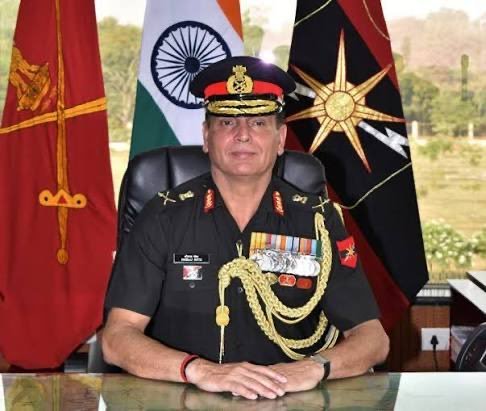
The reshuffle, approved by the Appointments Committee of the Cabinet, highlights the strategic depth of the Indian Army’s officer cadre. At the forefront is Lieutenant General Dhiraj Seth, a distinguished veteran of the Armoured Corps renowned for his elite command roles in high-stakes operations. Lt Gen Seth will assume the pivotal role of Vice Chief of the Army Staff in New Delhi, serving as the second-in-command to the Chief of Army Staff, General Upendra Dwivedi. His appointment is expected to bring a wealth of tactical expertise to the Army’s central command structure, particularly in overseeing procurement and doctrinal reforms.
In a key lateral shift, the incumbent Vice Chief, Lieutenant General Pushpendra Pal Singh, will transition to the helm of the Western Command, headquartered in Chandimandir and responsible for the volatile Line of Control (LoC) and International Border with Pakistan. Lt Gen Singh, who has previously held key staff positions in operational theatres, brings a proven track record in counter-insurgency and border stabilization efforts. His move to the Western front is seen as a deliberate enhancement of defensive postures amid ongoing regional tensions.
Equally critical is the reassignment of Lieutenant General VM Bhuvana Krishnan, the current Quartermaster General, to the Eastern Command in Kolkata. This command oversees the Line of Actual Control (LAC) with China, a sector that has witnessed heightened military activity in recent years. Lt Gen Krishnan’s logistics and supply chain acumen, honed during his tenure managing the Army’s vast resource ecosystem, positions him ideally to streamline sustainment operations in the challenging Himalayan terrain, where infrastructure development remains a priority under the Army’s modernization agenda.
Rounding out the major appointments, Lieutenant General Sandeep Jain will take charge of the Southern Command in Pune, which guards India’s southwestern maritime flanks and supports amphibious and expeditionary capabilities. Lt Gen Jain’s background in mechanized warfare and joint exercises with international partners is anticipated to invigorate training and interoperability initiatives in this strategically vital region.
Defence analysts view these transitions as a masterstroke in leadership alignment, ensuring that each command is led by officers with domain-specific expertise tailored to its geopolitical challenges. “This reshuffle is not merely administrative; it’s a proactive step to synchronize seasoned commanders with the demands of theatre-specific threats, from hybrid warfare on the west to high-altitude confrontations in the east,” said a retired Army officer speaking on condition of anonymity. The changes align seamlessly with broader reforms, including the induction of advanced weaponry, AI-driven surveillance systems, and integrated battle groups, as outlined in the Army’s Vision 2030 blueprint.
The Indian Army, with over 1.2 million active personnel, continues to evolve in response to a dynamic security environment. Official sources indicate that the full list of appointments, including principal staff officers and corps commanders, will be notified shortly, with the emphasis on merit-based elevations to maintain operational continuity.
As the nation marks the 75th year of its independence with a focus on self-reliance in defence (Atmanirbhar Bharat), such leadership infusions signal unwavering resolve to safeguard sovereignty. Further details on the transition ceremonies and interim arrangements are awaited from Army Headquarters.
contact: drrajeshjauhri@gmail.com
Dr Rajesh Jauhri is a Journalist with an experience of over 25 years in Indian and foreign media, a Social Scientist, an Ac-complished Author, a Political & Strategic Analyst, a Marksman (Rifle & Pistol), an Orator, a Thinker and an Educationist. He holds a Ph.D. degree on “Impact of colonial heritage on Indian police”. He runs an NGO dedicated to the social and eco-nomic uplift of tribal communities in MP and two decades back, he established a school in a village of Indore district, providing education and moral values to children belonging to underprivileged and minority families. Has received multiple awards in various fields.