“As warfare expands from the physical to the synthetic and cognitive realms, the Indian Armed Forces need to transition from net-centric operations toward Intelligent Warfare and move beyond Multi-Domain Operations (MDO) to All Realm All Domain Operations (ARADO)”[i]
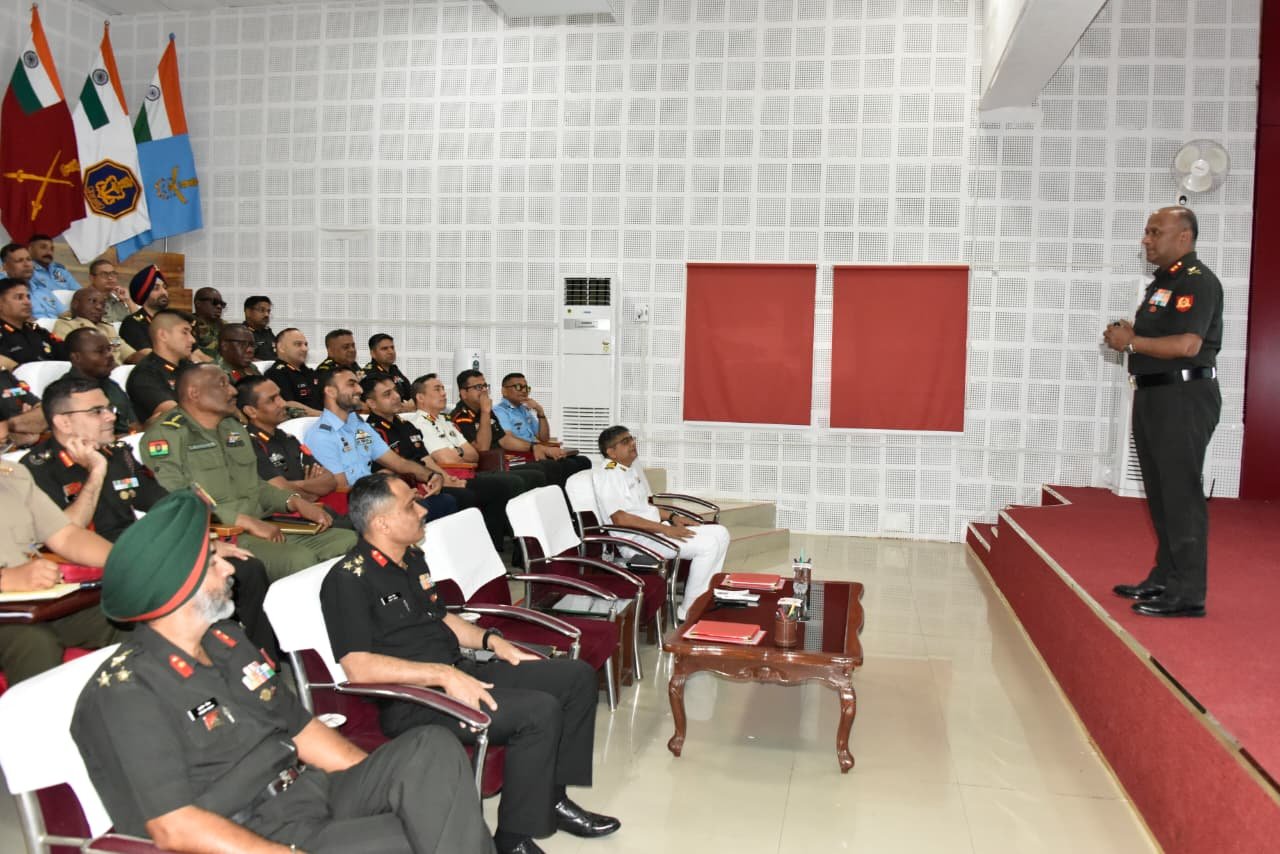
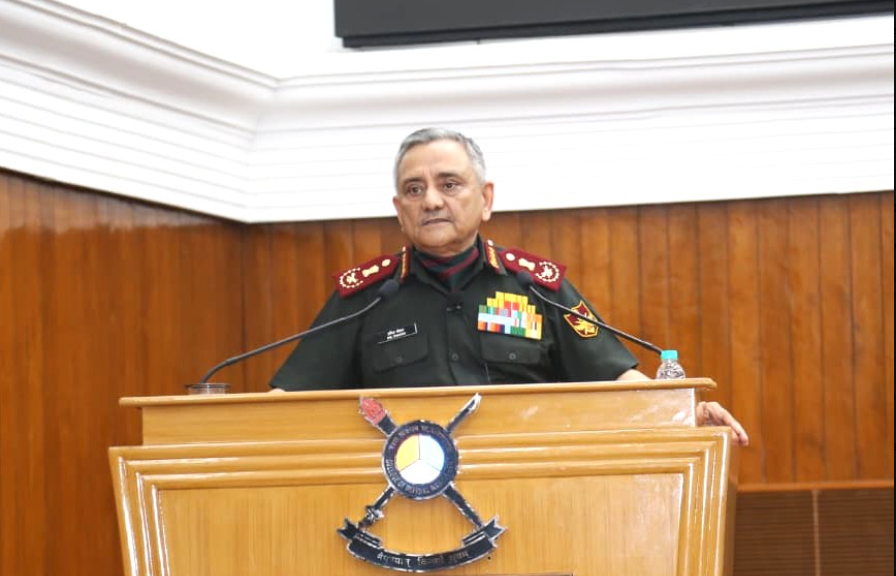
The strategic architecture of the global security environment has entered a period of profound ontological and epistemological transformation. The Westphalia demarcation lines that historically separated binary states of peace from armed conflict have dissolved, superseded by a continuum of perpetual, multi-spectral contestation. In recognition of this shifting paradigm, the highest echelons of the Indian defence establishment have initiated a radical doctrinal pivot. As articulated by the Chief of Defence Staff (CDS), General Anil Chauhan, during his seminal address at the College of Defence Management (CDM) in Secunderabad on February 24, 2026, the Indian Armed Forces are mandated to execute a structural and philosophical transition from legacy net-centric operations toward the paradigm of Intelligent Warfare.[ii] Furthermore, this transition requires moving beyond the contemporary heuristic of Multi-Domain Operations (MDO) to embrace a far more encompassing theoretical framework designated as All Realm All Domain Operations (ARADO). This doctrinal evolution is an existential necessity forged in the crucible of recent, highly disruptive geopolitical crises, which have functioned as empirical stress-tests of modern military theory. From the systemic supply-chain vulnerabilities exposed by the COVID-19 pandemic to the gruelling industrial attrition and rapid technological innovations witnessed in the on-going Russia-Ukraine war[iii], and culminating in the Indian Armed Forces own decisive operational pivot during Operation Sindoor in May 2025, the character of armed conflict has irrefutably altered.[iv] The contemporary battle space is no longer confined to the physical geography of land, sea, air, and space. It has relentlessly expanded into the synthetic and cognitive realms, demanding a force structure capable of projecting power, maintaining anti-fragility and achieving escalation dominance across a hyper-complex spectrum of warfare. The institutional Launchpad for this new vision was the inauguration of the annual seminar themed Multi-Domain Integrated Technologically-Empowered Resilient Armed Forces (MITRA).[v] Held on February 24-25, 2026, with the Indian School of Business (ISB) acting as the knowledge partner, the seminar sought to align the exigencies of modern conflict with India’s unique operational realities.The CDM provided the intellectual staging ground for the CDS to outline the contours of the Third Revolution in Military Affairs. Central to this revolution is the development of robust non-nuclear strategic deterrence architecture, ensuring that the Indian state retains the capacity to secure victory at every conceivable rung of the escalation ladder. Strategic Hub for Intellectual Engagement on Latest Developments analyses the theoretical underpinnings of the ARADO concept, the mechanics of Intelligent Warfare, and the vital strategic importance of maintaining escalation dominance in the contemporary era. To fully comprehend the strategic calculus driving the adoption of the ARADO framework, it is imperative to analyse the systemic perturbations that have redefined international security dynamics since the dawn of the current decade.
The Pandemic
The COVID-19 pandemic rapidly morphed into a geopolitical inflection point that expanded the parameters of national security.[vi] For decades, security paradigms were predominantly focused on kinetic military capabilities and counter-insurgency operations.[vii] The pandemic, however, exposed the extreme fragility of hyper-globalized dependencies, highlighting the ease with which economic architectures could be weaponized via asymmetric statecraft. For the Indian defence establishment, the pandemic underscored the reality that national security could no longer be measured solely by deployed kinetic mass. Resilience the systemic capacity of a state to absorb massive shocks, adapt organically, and maintain operational continuity became a paramount strategic virtue. Young Practitioners recognized that future conflicts would likely involve sub-threshold, non-kinetic attacks on critical civilian infrastructure and economic lifelines. The pandemic effectively catalysed the understanding that future contestations would be waged simultaneously across all elements of Comprehensive National Power (CNP).[viii]
The Russia-Ukraine war
If the pandemic reshaped the strategic understanding of national resilience, the Russia-Ukraine war provided a granular empirical laboratory for the tactical realities of 21st-century combat.[ix] Prior to 2022, prevailing Western military dogma largely assumed future wars between advanced states would be entirely dominated by precision-guided munitions and rapid manoeuvre.[x] The conflict violently dismantled this assumption, heralding the unexpected return of industrial-scale attrition warfare overlaid with hyper-advanced technology. Foremost among the derived lessons is the reality of the completely transparent battlefield. The ubiquitous deployment of unscrewed aerial systems (UAS) ranging from loitering munitions to commercial first-person-view (FPV) drones nullified the traditional fog of war, ensuring that any concentration of physical mass was immediately detected and targeted by precision fires.[xi] The Armed Forces of the Russian Federation (AFRF) demonstrated a profound capability to institutionalize innovation, adapting to complex electronic warfare (EW) environments to counter Ukrainian UAS capabilities.[xii]
Table 1: (An Analysis by Strategic Hub for Intellectual Engagement on Latest Developments)
|
Tactical Paradigm |
Legacy Assumption (Pre-2022) |
Reality Observed in Ukraine (Post-2022) |
Strategic Implication for Indian Forces |
|
Battlefield Visibility |
Fog of War allows for concealed massing of forces. |
Transparent battlefield via ubiquitous drone coverage. |
Dispersed operations are mandatory; massing physical forces invites immediate destruction. |
|
Pacing of Conflict |
Swift, decisive maneuver warfare culminating in rapid victory. |
Return of prolonged, industrial-scale attrition warfare. |
National defense industrial base must be scaled for massive, long-term ammunition and drone production. |
|
Role of Uncrewed Systems |
Primarily for high-altitude ISR or targeted strikes. |
Tactical swarm integration, FPV kamikaze drones disrupting armor. |
Every infantry unit requires organic, integrated drone and counter-drone capabilities. |
|
Electronic Warfare (EW) |
Specialized support function to disrupt communications. |
Primary axis of tactical survival; constant jamming of drone links. |
Transition from net-centric reliance to autonomous, AI-driven terminal guidance required. |
Crucially, the war exposed the inherent vulnerabilities of net-centric operations. In a heavily contested EW environment, command-and-control datalinks were frequently severed.[xiii] This operational bottleneck birthed the necessity for terminal guidance utilizing machine learning. Drones equipped with optical lock-on capabilities could autonomously track and engage targets based on visual signatures, negating RF jamming. The realization that geographic mass could be systematically degraded by dispersed, AI-enabled swarms underscored the CDS’s assertion that technology has overtaken geography in warfare.[xiv] During his inaugural address at the CDM in February 2026, General Anil Chauhan explicitly identified the current era as the dawn of the Third Revolution in Military Affairs (RMA). Historically, RMAs are paradigm-shifting events triggered by the integration of novel technologies with innovative operational concepts, fundamentally altering the character of war.[xv] The First RMA was characterized by mechanization and radio communications, moving combat to mobile maneuver. The Second RMA was defined by precision-guided munitions, stealth technology, and net-centric warfare. The Third RMA, according to the Indian doctrinal perspective, is defined by the concept of Convergence Warfare.[xvi] From a theoretical standpoint, Convergence Warfare acts as a grand synthesis; it integrates the physical manoeuvrability principles of the First RMA with the advanced networked operations of the Second RMA, creating a unified, sophisticated approach to multi-spectral conflict.[xvii] The Anatomy says Convergence Warfare transcends mere joint operations; it represents absolute systemic synthesis. It fuses contact and non-contact combat, kinetic and non-kinetic capabilities, integrating traditional physical domains with synthetic and cognitive domains across all levels of conflict. In Convergence Warfare, disparate capabilities are fused simultaneously to create compounding, non-linear effects against an adversary’s entire systemic architecture.[xviii] This paradigm recognizes that state and non-state actors engage in continuous, sub-threshold gray-zone operations designed to achieve strategic objectives without triggering conventional military retaliation.[xix] An algorithm manipulating social media feeds, a targeted cyber-attack on a municipal power grid and a precision drone strike are synchronized chords in a single strategic symphony.[xx] This convergence is driven by the rapid maturation of artificial intelligence, robotics, data analytics, and quantum computing.
From Net-Centric Vulnerabilities to Intelligent Warfare
For the past two decades, advanced militaries strived to achieve a fully net-centric force, predicated on the assumption that robustly networked forces drastically improve situational awareness and decision-making superiority.[xxi] However, the rapidly expanding parameters of modern conflict have exposed the inherent epistemological limitations of this model, prompting the CDS to call for an immediate transition to Intelligent Warfare. The primary vulnerability of net-centric architecture is its reliance on uninterrupted, high-bandwidth data transmission. As simulated in highly classified global wargames, near-peer adversaries possess formidable EW capabilities designed specifically to blind and sever these networks.[xxii] A severed network results in systemic, paralyzing failure. In addition, the proliferation of advanced sensors has resulted in an overwhelming deluge of raw data. In a purely net-centric model, the volume and velocity of this data far exceed baseline human cognitive bandwidth. The result is severe cognitive overload, analytical bottlenecking, and decision paralysis a phenomenon exacerbated by adversary information operations. Intelligent Warfare focuses on the autonomous and semi-autonomous processing, analysis, and weaponization of data directly at the tactical edge.[xxiii] Artificial intelligence and extreme automation are load-bearing elements of the combat architecture. As AI systems evolve from passive tools to autonomous decision-makers, a new era of agentic AI is emerging, capable of independent reasoning and action within predefined ethical bounds.[xxiv] Intelligent Warfare dictates that raw sensor data is analyzed by edge-computing algorithms in real-time, filtering out battlefield noise and presenting human commanders with highly refined Decision Support Systems (DSS). This transition fundamentally alters the traditional kill chain, evolving it into a highly compressed sensor-to-algorithmic-shooter matrix, slashing reaction times from minutes to milliseconds.
Table 2: Operational Realities
|
Operational Characteristic |
Net-Centric Warfare (Legacy) |
Intelligent Warfare (Future-Ready) |
|
Data Processing Location |
Centralized headquarters and distant server farms. |
Distributed at the tactical edge (on the drone, vehicle, or soldier). |
|
Response to Network Denial (EW) |
Systemic paralysis; loss of command and control. |
Autonomous continuation of mission parameters based on localized AI. |
|
Role of Human Operator |
Processor of raw data and sole decision-maker. |
Supervisor of AI teaming (human-on-the-loop) approves algorithmic solutions. |
|
Kill Chain Dynamic |
Sensor -Human Analyst -Human Commander -Shooter. |
Sensor -Algorithmic Analysis -Human Approval – Algorithmic Shooter. |
While Multi-Domain Operations (MDO) focuses heavily on the tactical integration of capabilities across land, maritime, air, space, and cyberspace domains, it fails to encompass the totality of the contemporary conflict spectrum. General Chauhan’s articulation of ARADO represents a critical ontological leap beyond the constraints of MDO.
The Architecture of All Realm All Domain Operations (ARADO)
While Multi-Domain Operations (MDO) focuses heavily on the tactical integration of capabilities across land, maritime, air, space, and cyberspace domains, it fails to encompass the totality of the contemporary conflict spectrum. General Chauhan’s articulation of ARADO represents a critical ontological leap beyond the constraints of MDO. The core philosophical distinction between MDO and ARADO lies in the conceptual expansion from operational domains to foundational realms. The ARADO doctrine posits that warfare is waged simultaneously across three distinct, deeply interconnected realms. The Physical Realm is the traditional sphere of geography, kinetic energy, ballistics, and physical mass, encompassing the land, sea, air, and space domains. The Synthetic Realm represents entirely artificial environments created by advanced technology, rising to the level of a major component of the Earth system a techno sphere complementing the physical world.[xxv] The synthetic realm includes algorithmic battlegrounds, diffusion-based models for text-to-image generation, the deployment of digital twins of critical national infrastructure for predictive modelling, and the opaque space of autonomous machine-to-machine combat.[xxvi] The Cognitive Realm Recognized as the ultimate centre of gravity, the cognitive realm represents the human mind.[xxvii] Warfare here utilizes both persuasive and manipulative influence operations. Crucially, manipulative operations employ subconscious and covert techniques to subvert the autonomous decision-making process by exploiting human cognitive and social heuristics.[xxviii] A primary tactic is the fire hose of falsehood flooding communication channels with rapid, high-volume, contradictory messages to exploit cognitive limits, overwhelm verification efforts, and degrade confidence in established realities.[xxix] The transition to ARADO acknowledges that destroying an enemy’s armoured column in the physical realm is futile if their synthetic algorithms can instantly route a replacement, or if their manipulative neuro-cognitive operations paralyze the political will of the state’s leadership.
Operation Sindoor
For the Indian Armed Forces, the definitive empirical validation of Convergence Warfare and the ARADO doctrine occurred during the execution of Operation Sindoor in May 2025. Catalyzed by a state-sponsored terror attack in Pahalgam on April 22, 2025, the Indian government executed a meticulously planned retaliatory campaign.[xxx] Characterized as the subcontinent’s first true non-contact war, Operation Sindoor utilized precision missile strikes, advanced uncrewed systems, and layered air defence networks to project devastating kinetic power without physical troop incursions.[xxxi] The operation heavily utilized Strategic Non-Nuclear Weapons (SNNWs) such as precision-guided conventional missiles, offensive cyber capabilities, and hypersonic delivery vehicles designed to achieve strategic goals and alter escalation dynamics while remaining strictly below the nuclear threshold. While the physical destruction was immense, Operation Sindoor’s true strategic brilliance lay in its mastery of the cognitive realm. New Delhi unleashed a highly sophisticated gendered narrative to justify its kinetic actions. Deliberately named Sindoor referencing the vermilion powder worn by married Hindu women it framed the retaliation for the Pahalgam massacre as a righteous act of avenging widows.[xxxii] The official military briefings were conspicuously fronted by two female officers, diametrically challenging and exposing the adversary’s hyper-masculine, deeply patriarchal military ethos. This cognitive campaign successfully denied the adversary any sympathy on the global stage, inducing severe strategic paralysis. The most profound theoretical outcome of Operation Sindoor is the validation of a robust non-nuclear strategic deterrence framework. The Academic discourse of deterrence historically relies on the dichotomy formulated by Thomas Schelling and Lawrence Freedman: deterrence by punishment (the threat of a harsh retaliatory response) versus deterrence by denial (preventing the implementation of a hostile plan by demonstrating the futility of aggression).[xxxiii] India’s integration of SNNWs signals a shift toward a highly credible posture of deterrence by punishment at the sub-nuclear level, circumventing the adversary’s reliance on tactical nuclear ambiguity.[xxxiv] For decades, Pakistan’s strategic posture relied on Full Spectrum Deterrence to shield its proxy operations.[xxxv] India’s previous response, the Cold Start doctrine, relied on the mobilization of massive strike unitsa structurally flawed concept that proved too slow to achieve strategic surprise.[xxxvi] Operation Sindoor validated the evolution from Cold Start to the agile Cold Strike posture. Cold Strike shifts the focus from seizing territory to paralyzing enemy response mechanisms through swift cyber, air, land, sea, and electronic warfare strikes. This dynamic response strategy is operationalized by Rudra Brigades ready-in-place, highly modular, multi-domain formations equipped with heavy firepower and drone swarms. These formations compress warning times, expand conventional response options, and fundamentally alter the logic of limited war in South Asia. General Chauhan’s mandate to ensure the ability to win at every level of escalation forms the core tenet of modern escalation dominance. However, deterrence theorists caution that the aggressive introduction of SNNWs into the Third Nuclear Age deterrence equation severely heightens the risks of inadvertent escalation and crisis instability.[xxxvii] Because SNNWs blur the lines between conventional and nuclear strikes, they undermine deterrence based on force survivability and compress decision-making timelines.[xxxviii] To maintain escalation dominance safely, India must balance its punitive strike capabilities with rigorous, disciplined crisis management interoperability. To successfully operationalize ARADO and Intelligent Warfare, the Indian Armed Forces have formally embraced the MITRA framework (Multi-Domain Integrated Technologically-Empowered Resilient Armed Forces), the MITRA vision represents the organizational adaptation phase required to fully realize a Revolution in Military Affairs. At last the MITRA framework aligns these military objectives with the broader geopolitical goal of total self-reliance. True Intelligent Warfare capability can only be born from indigenous technological mastery.
Table 3: Institutionalizing the Future Force
|
MITRA Pillar |
Conceptual Definition |
Practical Application and Reform Requirements |
|
Multi-Domain in Vision |
Expanding cognitive perspectives across physical, synthetic, and cognitive realms. |
Overhauling Professional Military Education (PME) to focus on algorithmic warfare and the exploitation of cognitive heuristics. |
|
Integrated in Action |
Fostering frictionless cooperation between branches and domains. |
Institutionalizing jointness through unified theater commands and the deployment of Rudra Brigades. |
|
Technology-Empowered in Execution |
Utilizing advanced, indigenous technology for autonomous operations. |
Integration of the Military Quantum Mission Policy Framework. Aggressive indigenization of agentic AI and SNNWs. |
|
Resilient in Purpose |
Maintaining systemic anti-fragility to manage prolonged contestations. |
Hardening the technosphere against cyber-attacks and securing massive manufacturing bases capable of sustaining wars of attrition. |
Conclusion
The systemic shocks of the early 2020s, validated through the empirical tactical laboratories of the Russia-Ukraine war and perfected in the decisive application of non-contact force during Operation Sindoor, illuminate an undeniable strategic reality: the character of warfare has permanently expanded beyond the physical domain. The Third Revolution in Military Affairs constitutes the immediate operational environment. The mandate delivered by CDS General Anil Chauhan serves as an urgent call for an intellectual and structural revolution within the Indian defense establishment. Transitioning decisively from vulnerable net-centric operations to autonomous Intelligent Warfare empowered by agentic AI and edge computing ensures that the military retains lethal efficacy and decision superiority. By evolving beyond the heuristics of MDO to fully embrace the ARADO theoretical framework, the Armed Forces acknowledge that the cognitive heuristics of the populace and the synthetic architecture of the techno sphere are co-equal battlegrounds alongside land, sea, air, and space. The validation of a robust non-nuclear strategic deterrence mechanism the Cold Strike capacity to inflict paralyzing conventional damage utilizing Strategic Non-Nuclear Weapons (SNNWs) and highly mobile Rudra Brigades has shattered the historical impunity of state-sponsored proxy warfare. While the introduction of SNNWs necessitates advanced crisis management to prevent inadvertent escalation, the demonstrated ability to guarantee escalation dominance secures India’s strategic autonomy and unequivocally cements its posture as a decisive, modern great power.
[i] https://www.pib.gov.in/PressReleasePage.aspx?PRID=2232669®=3&lang=1
[iii] https://asiapacificdefencereporter.com/lessons-from-the-russia-ukraine-frontline/
[iv] https://basicint.org/operation-sindoor-establishes-indias-new-response-doctrine-towards-pakistan/
[v] https://x.com/HQ_IDS_India/status/2026527223172448281?s=20
[vi] https://www.vifindia.org/article/2020/april/10/rethinking-national-security-in-an-age-of-pandemics
[vii] https://idsa.in/system/files/opaper/op_42_indian-army-vivek-chadha.pdf
[viii] https://ndc.nic.in/writereaddata/media/Documents/a82683af-9e20-4790-b405-e64434c0ae48.pdf
[x] https://www.cia.gov/library/abbottabad-compound/4F/4FE6BEDB616C0FD2603CA0D307DEE670_MODERN_WAR.pdf
[xiii]https://www.csis.org/analysis/russia-ukraine-drone-war-innovation-frontlines-and-beyond
[xv] https://idsa.in/publisher/journal-of-defence-studies/rma-and-indias-military-transformation
[xix] https://takshashila.org.in/content/publications/20251014-Deciphering-the-Grey-Zone.html
[xx] https://www.jhuapl.edu/sites/default/files/2022-12/DefeatingCoerciveIOs.pdf
[xxiii] https://www.belfercenter.org/replicator-autonomous-weapons-taiwan
[xxiv] https://www.rand.org/content/dam/rand/pubs/research_reports/RRA3200/RRA3295-1/RAND_RRA3295-1.pdf
[xxv] https://setr.stanford.edu/sites/default/files/2025-01/SETR2025_web-240128.pdf
[xxvi] https://www.orfonline.org/public/uploads/posts/pdf/20240212113627.pdf
[xxvii] https://csd.eu/blog/blogpost/2025/07/03/seizing-the-edge-in-cognitive-warfare/
[xxix] https://www.rand.org/pubs/perspectives/PE198.html
[xxx] https://www.pib.gov.in/PressReleasePage.aspx?PRID=2128748®=3&lang=2
[xxxi] https://icct.nl/publication/operation-sindoor-turning-point-india-addressing-terrorism-kashmir
[xxxv] https://dras.in/deterrence-by-design-pakistans-playbook-of-bluff-and-influence/
[xxxvi] https://www.pib.gov.in/PressReleasePage.aspx?PRID=2214965®=3&lang=2

Punit Shyam Gore (MA Defence and Strategic Studies) is an alumnus of the School of Internal Security, Defence & Strategic Studies of the Rashtriya Raksha University, Gandhinagar (an institution of national importance) under the Ministry of Home Affairs, Government of India.