
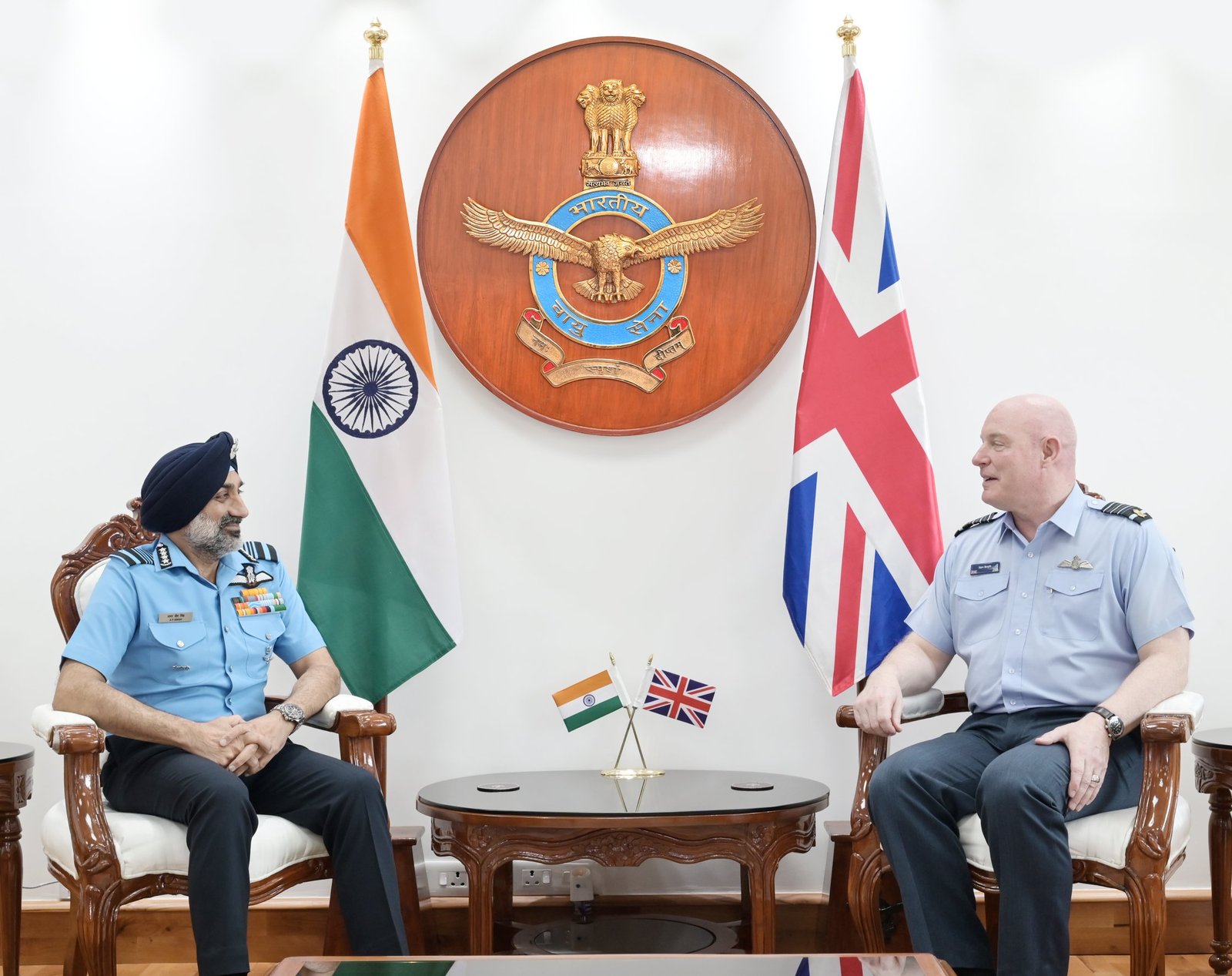
In a significant step toward strengthening bilateral defence ties, Air Chief Marshal Sir Harv Smyth, Chief of the Air Staff of the Royal Air Force, called on Air Chief Marshal AP Singh during his official visit to India. The meeting, confirmed by the Indian Air Force, underscores a renewed push to enhance operational synergy between the two air forces.
At the heart of the discussions were issues central to modern air warfare: operational cooperation, interoperability, and the broader architecture of bilateral air power collaboration. While defence engagement between India and the United Kingdom is not new, the timing of this high-level interaction reflects a shifting geopolitical landscape, where air power is increasingly central to deterrence and rapid response.
The emphasis on interoperability is particularly notable. In contemporary military doctrine, interoperability goes beyond joint exercises, it involves harmonising communication systems, operational procedures, and even strategic outlooks. For India and the UK, this suggests a long-term vision of coordinated action in areas of mutual interest, including the Indo-Pacific.
India and the UK have steadily expanded defence cooperation over the past decade, with air forces playing a prominent role. Joint exercises such as Indradhanush have provided a platform for both sides to test capabilities and learn from each other’s operational doctrines.
The visit by Sir Harv Smyth signals an intent to build on these foundations. Analysts note that the RAF’s experience in expeditionary operations and NATO-led missions complements the Indian Air Force’s growing focus on multi-domain operations and regional security.
Although the official statement did not explicitly reference regional dynamics, the meeting carries implications for the Indo-Pacific, a region where both countries have articulated strategic interests. The UK’s increasing engagement in the region, reflected in deployments and partnerships, aligns with India’s role as a key security provider.
Closer air force cooperation could translate into more frequent joint exercises, coordinated deployments, and potential collaboration in emerging domains such as cyber and space-based surveillance.
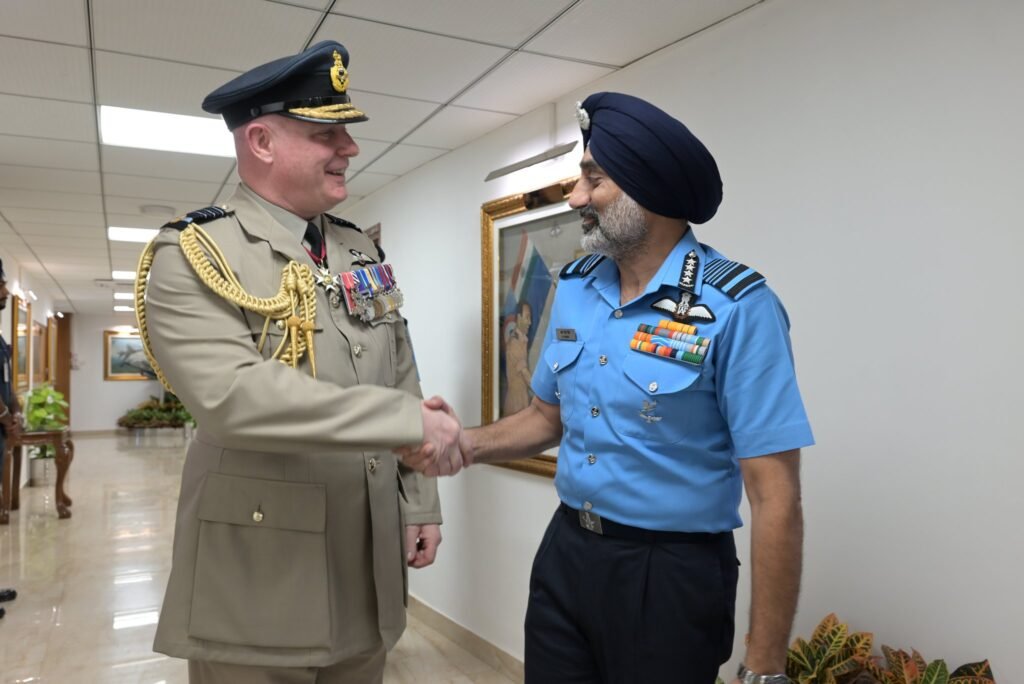
Another dimension of the engagement lies in technology and capability development. Both air forces operate advanced platforms and are investing in next-generation systems, including unmanned aerial vehicles and network-centric warfare capabilities.
While no specific agreements were announced, defence experts suggest that such high-level interactions often lay the groundwork for future collaboration in training, maintenance practices, and possibly even joint development initiatives.
The meeting between the two Air Chiefs is as much symbolic as it is substantive. It reflects a shared recognition that air power cooperation is a critical pillar of broader defence relations.
For India, deepening ties with established air forces like the RAF enhances its global military engagement and operational exposure. For the UK, strengthening defence links with India aligns with its post-Brexit strategy of expanding partnerships beyond Europe.
As global security challenges become more complex and interconnected, partnerships like that between the Indian Air Force and the Royal Air Force are likely to gain increasing importance. The discussions between Air Chief Marshal Sir Harv Smyth and Air Chief Marshal AP Singh mark another step in that direction, signalling intent, alignment, and a shared commitment to advancing air power cooperation in a rapidly evolving strategic environment.
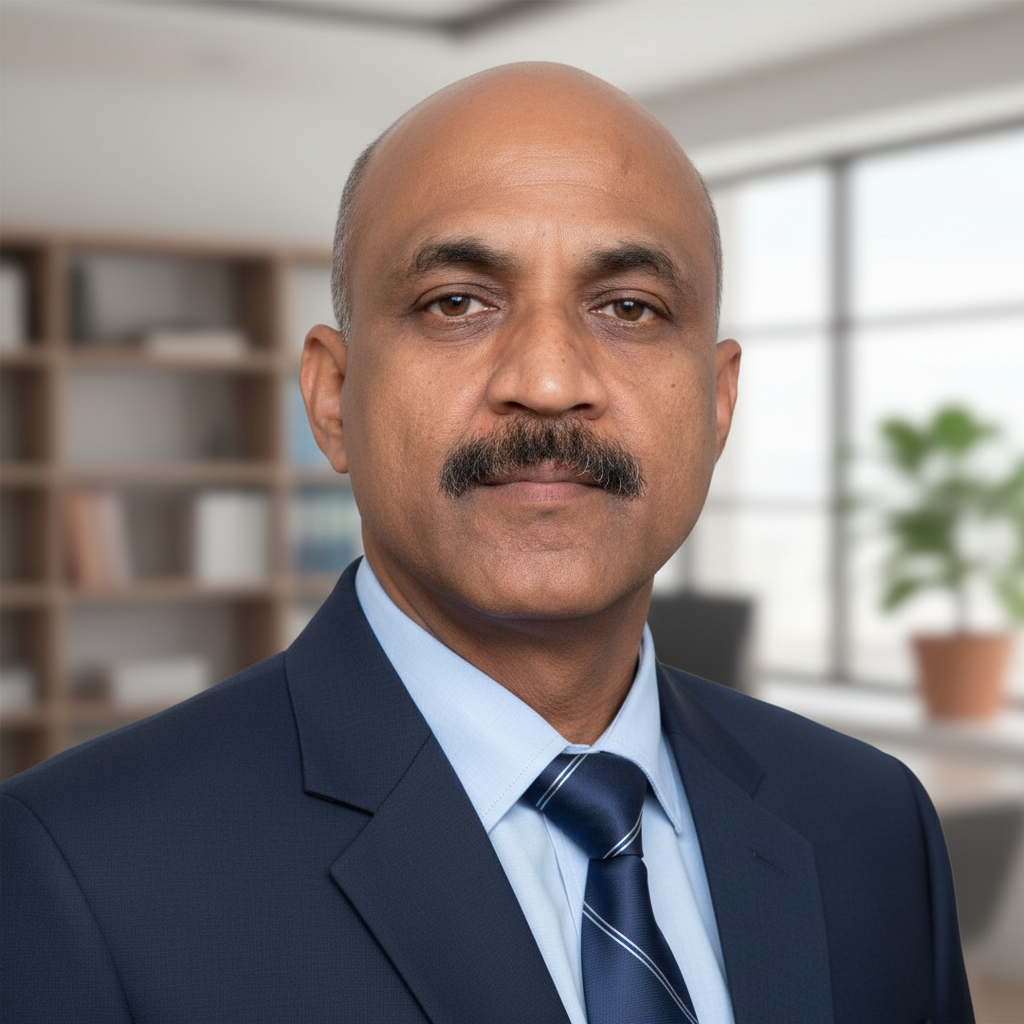
contact: drrajeshjauhri@gmail.com
Dr Rajesh Jauhri is a Journalist with an experience of over 25 years in Indian and foreign media, a Social Scientist, an Ac-complished Author, a Political & Strategic Analyst, a Marksman (Rifle & Pistol), an Orator, a Thinker and an Educationist. He holds a Ph.D. degree on “Impact of colonial heritage on Indian police”. He runs an NGO dedicated to the social and eco-nomic uplift of tribal communities in MP and two decades back, he established a school in a village of Indore district, providing education and moral values to children belonging to underprivileged and minority families. Has received multiple awards in various fields.