


Kolkata: Indian authorities have detained seven foreign nationals accused of providing drone and weapons training to militant groups operating across the border in Myanmar, in a case that has raised fresh concerns about regional security and transnational networks exploiting porous frontiers.
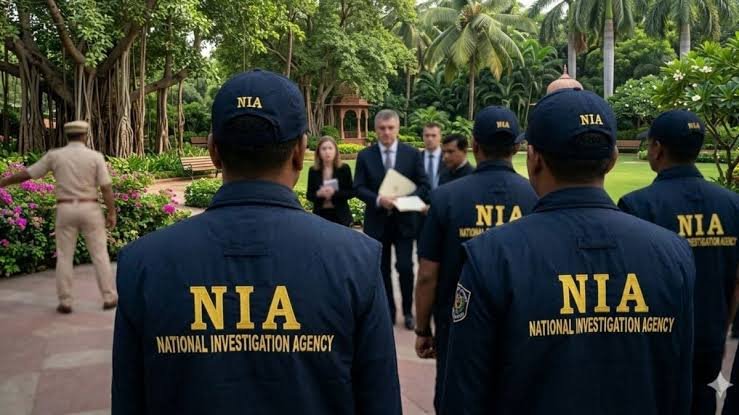
According to India’s premier counterterrorism agency, the National Investigation Agency (NIA), the individuals, one American citizen and six Ukrainian nationals, were arrested on March 13 in coordinated operations across Kolkata, Delhi, and Lucknow. A special court has granted the agency 11 days of custody, extending their remand until March 27, citing national security considerations.
Investigators allege that the group entered India on tourist visas but deviated from declared travel plans. Without obtaining mandatory permits, they reportedly traveled to the northeastern state of Mizoram, which shares a sensitive and largely porous border with Myanmar. From there, authorities claim, the suspects crossed into Myanmar’s conflict-hit Chin State.
The NIA contends that the group provided training to ethnic armed organizations engaged in Myanmar’s ongoing civil conflict. The training allegedly included drone assembly, operational tactics, electronic jamming techniques, and weapons handling. Investigators further claim that the drones used in the training were sourced from Europe and routed through India, suggesting a complex supply chain that may involve multiple jurisdictions.
The arrests have triggered diplomatic ripples. The government of Ukraine has formally protested, demanding immediate consular access to its detained nationals and calling for their release. Meanwhile, officials from the United States have acknowledged awareness of the situation but have not publicly commented on the specifics of the allegations.
Security analysts say the case underscores growing concerns about the misuse of civilian drone technology in conflict zones and the vulnerabilities along India’s northeastern borders. The region has long been affected by insurgent movements, some of which maintain historical and logistical ties with groups across the Myanmar frontier.
“This incident highlights the convergence of emerging technologies and longstanding insurgent networks,” said a regional security expert familiar with Northeast India. “It raises important questions about monitoring foreign nationals, regulating dual-use technologies like drones, and strengthening border enforcement.”
The situation in Myanmar, which has been mired in conflict since the military coup of 2021, has created a volatile environment along India’s eastern frontier. Refugee flows, cross-border insurgent activity, and limited state control in parts of Chin State have compounded the challenges for Indian security agencies.
The NIA has not ruled out further arrests as the investigation continues. Authorities are also examining whether the suspects were acting independently or as part of a larger, coordinated network.
As the case unfolds, it is likely to test diplomatic channels while sharpening focus on the intersection of technology, insurgency, and international mobility in one of Asia’s most sensitive border regions.

contact: drrajeshjauhri@gmail.com
Dr Rajesh Jauhri is a Journalist with an experience of over 25 years in Indian and foreign media, a Social Scientist, an Ac-complished Author, a Political & Strategic Analyst, a Marksman (Rifle & Pistol), an Orator, a Thinker and an Educationist. He holds a Ph.D. degree on “Impact of colonial heritage on Indian police”. He runs an NGO dedicated to the social and eco-nomic uplift of tribal communities in MP and two decades back, he established a school in a village of Indore district, providing education and moral values to children belonging to underprivileged and minority families. Has received multiple awards in various fields.