
Writer Dr Rajesh Jauhri is a Senior Defence Journalist having an experience of nearly two and a half decades.
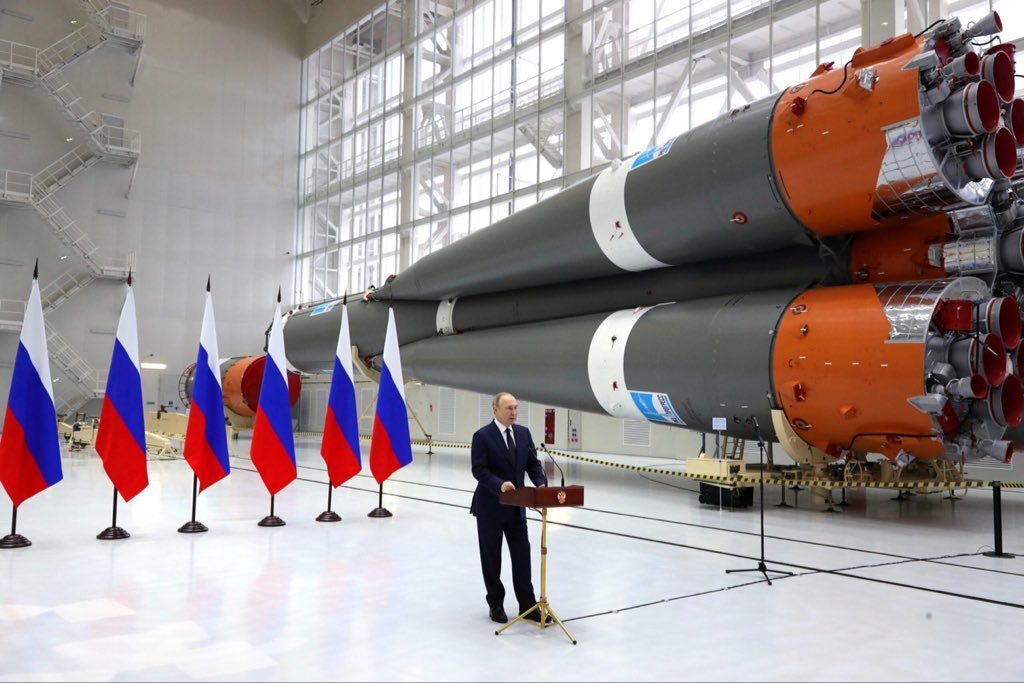
In the volatile arena of international relations, where information warfare often blurs the line between fact and fabrication, a recent claim has circulated with alarming speed: that Russian President Vladimir Putin has declared war on the United States via his official X (formerly Twitter) account. This assertion, if true, would mark an unprecedented escalation, potentially igniting a direct confrontation between two nuclear superpowers amid ongoing conflicts in Ukraine and the Middle East. However, a thorough examination of available evidence reveals this to be a baseless rumor, likely amplified by misinformation networks or satirical misinterpretations.
This article dissects the origins of the claim, contextualizes it within the current geopolitical landscape, and explores the hypothetical strategic implications—including pros and cons—of such a declaration, drawing on principles of realist theory and historical precedents in great-power rivalry.
Origins and Verification of the Claim
The rumor appears to stem from unverified social media posts and parody accounts mimicking Putin’s persona. A comprehensive search of official Kremlin channels, including the English-language account @KremlinRussia_E, yields no evidence of any such announcement. Putin himself does not maintain a personal X handle; official communications are disseminated through state apparatuses like the Kremlin press service or TASS news agency. Semantic and keyword searches across X platforms for phrases like “Putin declares war on United States” since March 1, 2026, return only speculative user-generated content, often from non-authoritative sources, such as memes, hypothetical scenarios, or outright fabrications. For instance, one post from a low-follower account falsely attributed a “targets locked” message to Putin, accompanied by unrelated imagery, but this bears all the hallmarks of digital disinformation.Web-based investigations into major news outlets, including Reuters, CNN, BBC, and Russian state media like RIA Novosti, similarly uncover no corroboration. Instead, the dominant narrative in early March 2026 revolves around the U.S.-Israeli military campaign against Iran, initiated on February 28, 2026, which resulted in the targeted killing of Supreme Leader Ayatollah Ali Khamenei.
Russia has vocally condemned these actions as “unprovoked aggression” and warned of potential nuclear proliferation in the region, with figures like Deputy Security Council Chairman Dmitry Medvedev invoking the specter of World War III if the U.S. persists in “regime change” policies. Yet, Moscow’s response has been restrained: diplomatic calls for de-escalation, offers to mediate with Gulf states, and no mobilization of forces against the U.S. This aligns with Russia’s strategic posture, bogged down in a protracted war in Ukraine since 2022, facing economic sanctions, and prioritizing alliances with China and North Korea over direct NATO confrontation.The rumor’s proliferation may be attributed to several factors: the fog of war in the Iran conflict, where U.S. President Donald Trump’s unscripted reference to “war” in his announcement fueled global anxiety; echo chambers on social media that amplify unvetted claims; and deliberate information operations by state or non-state actors seeking to sow discord. Historical parallels abound, such as the 2018 “Syrian missile strike” hoaxes or Cold War-era false alarms, underscoring how digital platforms can accelerate panic in an era of hybrid warfare.
Geopolitical Context:
A World on the BrinkTo understand why such a rumor gains traction, one must situate it within the broader strategic environment. The U.S.-Iran war, launched under the pretext of preempting Iranian nuclear ambitions and retaliatory strikes, has reshaped Middle Eastern dynamics. Russia’s condemnation, while sharp, reflects its weakened position: depleted by the Ukraine quagmire, where over four years of conflict have strained military resources and domestic stability. Putin’s regime has pivoted toward opportunistic diplomacy, positioning Russia as a counterweight to U.S. hegemony without overcommitting. For instance, Foreign Minister Sergei Lavrov’s statements emphasize a “return to diplomatic tracks,” echoing Moscow’s playbook in past crises like the 2015 Iran nuclear deal negotiations.Meanwhile, U.S. actions under Trump, bypassing Congressional authorization for military force, highlight a unilateralist approach that echoes the 2003 Iraq invasion but with higher stakes given nuclear thresholds. The involvement of allies like Israel and tacit support from Sunni Arab states (e.g., Saudi Arabia) complicates Russia’s alliances with Iran and Syria. North Korea’s potential alignment with Iran, as speculated in some analyses, could form a loose “axis of resistance,” but this remains fragmented. In Ukraine, peace talks involving the U.S., Russia, and Ukraine have stalled, with Moscow demanding territorial concessions. A fabricated Russia-U.S. war declaration fits neatly into narratives of impending global catastrophe, distracting from these real flashpoints.From a strategic studies perspective, this moment evokes Kenneth Waltz’s neorealism: states act in an anarchic system to maximize survival, balancing power through alliances rather than direct clashes. Russia’s restraint suggests a calculation that escalation with the U.S. would invite NATO intervention, economic collapse, and internal unrest—outcomes antithetical to Putin’s survivalist regime.
Hypothetical Strategic Implications: Pros and Cons of a Russia-U.S. War
DeclarationWhile the claim is unfounded, analyzing a hypothetical declaration provides valuable insights into great-power strategy. Such an act would likely involve formal Duma approval or a presidential decree, invoking Article 51 of the UN Charter for self-defense, though no credible U.S. threat to Russia exists. We evaluate pros and cons from Russian, U.S., and global viewpoints, grounded in game theory and deterrence models.
From Russia’s Perspective–
Pros: – Domestic Consolidation: A declaration could rally nationalist sentiment, diverting attention from Ukraine failures and economic woes (e.g., inflation from sanctions). Historical precedents like the 2014 Crimea annexation show how external threats bolster regime legitimacy.- Alliance Strengthening: It might solidify ties with China, Iran, and North Korea, creating a multipolar bloc to counter NATO. In a prisoner’s dilemma framework, this could deter further U.S. adventurism in Eurasia.- **Resource Leverage:** Russia could weaponize energy exports, spiking global oil prices (as seen post-2022 Ukraine invasion) to fund military efforts and weaken Western economies.
Cons:- Military Overstretch: Already committed in Ukraine, Russia lacks the conventional forces for a transatlantic conflict. Nuclear escalation risks mutual assured destruction, per Thomas Schelling’s brinkmanship theory.-
Economic Isolation:
Full sanctions would cripple Russia’s GDP, already strained at 3-5% annual contraction. Loss of neutral trade partners like India could prove fatal.- Internal Instability: Public opposition to war, amplified by casualties, might spark unrest akin to the 1917 Bolshevik Revolution.
From the U.S. Perspective Pros:- Unified Response: A declaration would galvanize NATO allies, justifying increased defense spending and potentially resolving Ukraine swiftly through overwhelming support.- ‘Technological Edge:’ U.S. superiority in cyber, space, and precision strikes could neutralize Russian threats without full invasion, per offset strategies.-
Global Leadership Reaffirmation:
Victory would reinforce U.S. hegemony, deterring China from Taiwan ambitions. Nuclear Risks. Escalation ladders could lead to tactical nuclear use in Europe, with catastrophic humanitarian costs, estimated millions dead in initial exchanges.
Alliance Strain: European allies, wary of energy disruptions, might fracture, as seen in debates over Nord Stream sabotage.- ‘Domestic Division:’ War fatigue from Iraq/Afghanistan could fuel isolationism, undermining bipartisan support.
Global Implications
A short conflict might accelerate multipolarity, forcing reforms in institutions like the UN Security Council while Widespread disruption in supply chain collapses, refugee crises, and environmental fallout from nuclear scenarios would dwarf COVID-19 impacts. Economic models predict a 10-20% global GDP drop, exacerbating inequality. In sum, the cons overwhelmingly outweigh the pros, aligning with John Mearsheimer’s offensive realism: states expand until checked, but nuclear parity enforces caution.
Vigilance in an Age of Disinformation
The rumored Russia-U.S. war declaration is a mirage, but it underscores the fragility of our information ecosystem and the perils of miscalculation in a multipolar world. As scholars of strategic studies, we must advocate for transparency, robust verification, and diplomatic off-ramps. The real threats escalation in Iran, stalemate in Ukraine, demand collective restraint. Should rhetoric harden, the world edges closer to Thucydides’ trap, where rising and declining powers clash inevitably. Yet history shows agency: dialogue, not declarations, preserves peace. Policymakers would do well to heed this lesson before shadows become substance.

contact: drrajeshjauhri@gmail.com
Dr Rajesh Jauhri is a Journalist with an experience of over 25 years in Indian and foreign media, a Social Scientist, an Ac-complished Author, a Political & Strategic Analyst, a Marksman (Rifle & Pistol), an Orator, a Thinker and an Educationist. He holds a Ph.D. degree on “Impact of colonial heritage on Indian police”. He runs an NGO dedicated to the social and eco-nomic uplift of tribal communities in MP and two decades back, he established a school in a village of Indore district, providing education and moral values to children belonging to underprivileged and minority families. Has received multiple awards in various fields.