

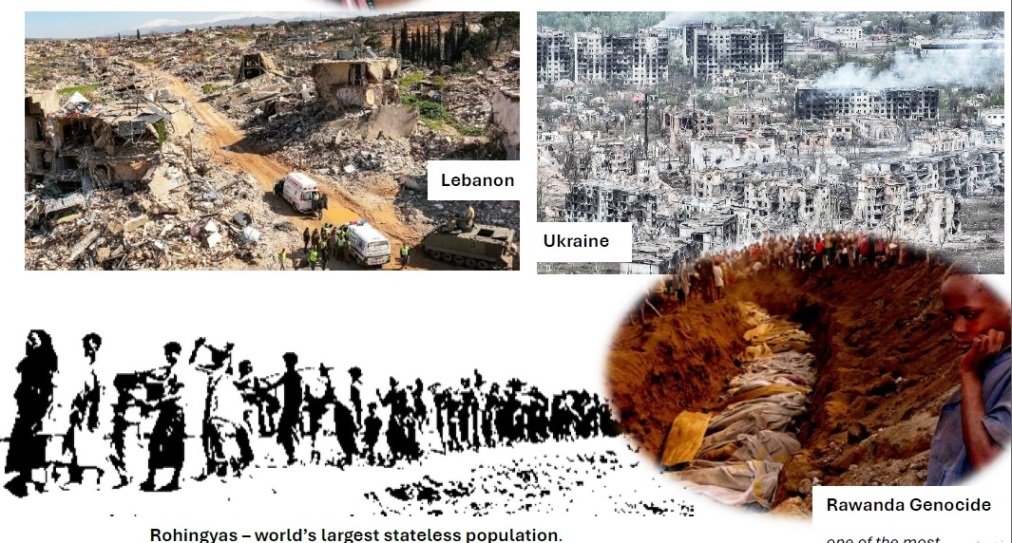
In an era where advanced technology promises precision, contemporary conflicts reveal a disturbing trend: the deliberate dismantling of civilian life-support systems rather than traditional engagement with armed adversaries. From the ongoing war in Ukraine to operations in the Middle East, the targeting of residential areas, schools, hospitals, energy infrastructure, and cultural heritage sites has become alarmingly systematic. This represents not mere collateral damage, but a calculated philosophy of societal attrition aimed at breaking a population’s will to endure.
Keywords: modern warfare ethics, civilian targeting, societal attrition, eliminationist strategy, child casualties in conflict, AI targeting systems, Ukraine Russia war, Gaza conflict analysis, defence strategy critique
Recent strikes in Ukraine, including those on 2 and 6 July 2026 that claimed dozens of civilian lives, underscore a pattern of hitting power grids, high-rises, and essential services, with the UN reporting over 16,000 civilian deaths. Similarly, the reported American strike on a primary school in Minab, Iran, during Op Epic Fury on 28 February 2026, killing around 180 young girls, highlights the perils of AI-driven targeting systems operating at unprecedented tempo. Such systems, capable of generating thousands of decisions hourly, prioritise speed over validation, turning visible civilian landmarks into de facto targets.
In Gaza, the scale of child casualties, exceeding 20,000 according to UN inquiries, raises profound ethical and strategic questions. Children symbolise a society’s future; their systematic endangerment signals an eliminationist logic that seeks to erase generational continuity. This mirrors historical precedents, from the Holocaust to the Rwandan genocide, where entire populations were framed as existential threats through dehumanising narratives. Yet history consistently demonstrates that such approaches yield only radicalisation, prolonged insurgencies, regional destabilisation, and enduring insecurity for the aggressor, as seen in Afghanistan, Lebanon, and beyond.
Defence planners worldwide must recognise that true victory lies not in the rubble of civilian ecosystems but in upholding principles that preserve long-term stability. Mass harm to non-combatants breeds diaspora-driven internationalisation of conflict and generational hatred, undermining the very security sought. As military professionals, we are duty-bound to advocate for strategies rooted in discrimination and proportionality, cornerstones of just warfare. The illusion of elimination through brutality offers no sustainable peace; it merely sows seeds for perpetual strife.
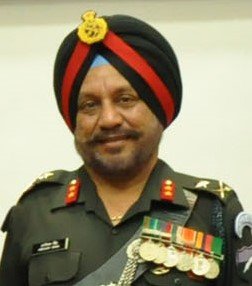
Major General Harvijay Singh is a third-generation officer, his two sons are also army officers.
He holds degree of B.Tech. and Master’s Degree in Management Sciences. He is a Certified Ethical Hacker and Cyber Forensic Investigator.
He is Member and Historian of the Punjab Military Literature Society, Chandigarh.
He has written books on Indo Pak Wars: 1948, 1965, 1971 – ‘Battles That Made History’, ‘Indo Pak War 1947-48’ (for Part D) and ‘Gallant Soldiers: Short Stories of Big Deeds’. He has also written Monographs on Grey Zone Warfare and Lessons Learnt from the Ukraine War. He is a regular contributor to Magazines on Military Strategy and Technology and a speaker on current Global Military events.
He is the winner of ARTRAC Scholar Warrior Badge for writing on Contemporary Military Thinking and Strategy.