Our New Delhi Correspondent
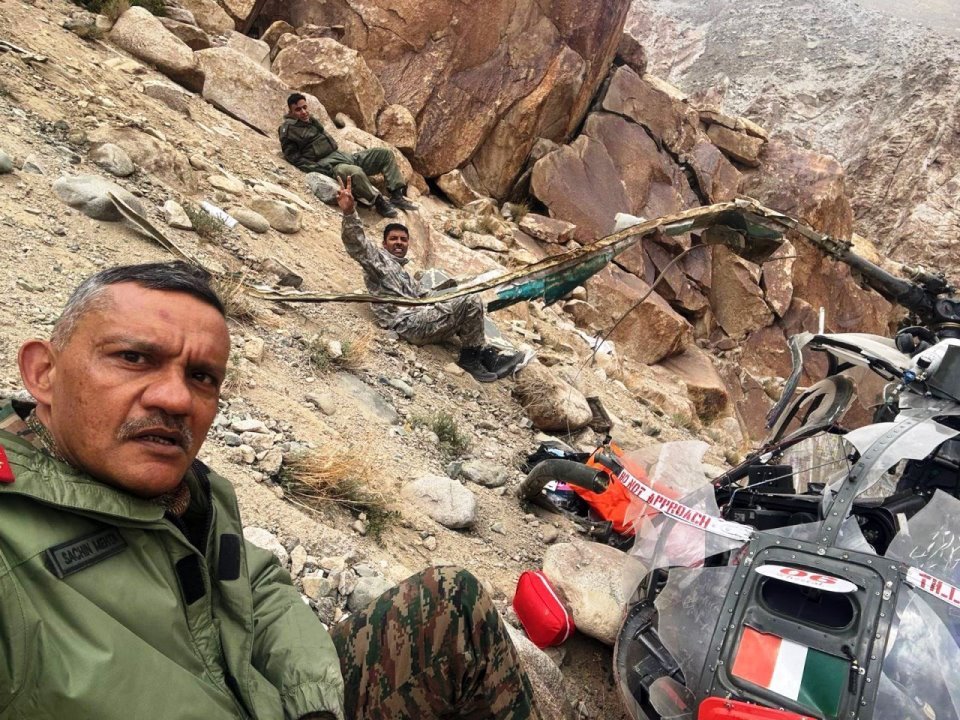
In a remarkable display of resilience, three senior Indian Army officers, including Major General Sachin Mehta, General Officer Commanding of the 3 Infantry Division, escaped unhurt after their Cheetah helicopter crashed in the rugged mountainous terrain of the Tangste region near Leh, Ladakh. The incident, which occurred in one of the world’s most challenging operational environments, has once again spotlighted the risks associated with the Indian Army’s ageing rotary-wing fleet.
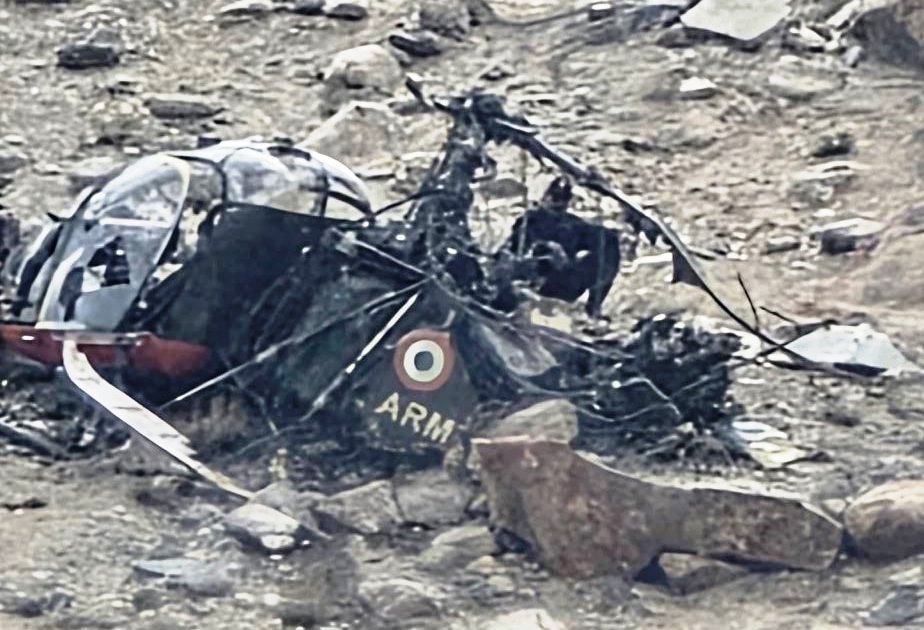
The single-engine Cheetah helicopter was being piloted by a Lieutenant Colonel and a Major when it went down. Eyewitnesses and rescue teams who examined the wreckage described the safe outcome as nothing short of a miracle, given the treacherous high-altitude terrain and the extent of damage to the aircraft. Remarkably, the officers emerged from the ordeal calm and composed, reportedly displaying the composure typical of seasoned Indian Army personnel. Sources close to the matter indicated that the officers were back to their duties shortly after necessary medical checks, embodying the ‘True Mettle’ of India’s military leadership.
The Cheetah, a licensed variant of the French Alouette II, has been the backbone of the Army’s high-altitude operations for decades. However, its continued service has drawn increasing scrutiny. Defence analysts point out that despite operating in some of the most demanding conditions along the Line of Actual Control, the platform’s vintage design and maintenance challenges pose significant safety risks to aircrew and passengers alike.
The Indian Army has been attempting to replace the Cheetah fleet for over 21 years. Successive procurement programmes have faced delays due to bureaucratic hurdles, offset complications, and shifting priorities. The crash comes as a stark reminder of what many describe as one of the more persistent shortcomings in India’s defence acquisition process.
In response to growing concerns, the Army has reiterated its commitment to fleet modernisation. Officials have confirmed that induction of the indigenous Light Utility Helicopter (LUH), developed by Hindustan Aeronautics Limited, is expected to commence within the next one to two years. The Army requires approximately 250 LUHs to replace both the Cheetah and Chetak fleets operating in high-altitude and forward areas.
While the immediate focus remains on investigating the cause of the Tangste crash, likely a combination of technical, environmental, or human factors, the incident underscores a larger strategic imperative. As India asserts itself as a major global power, bridging the gap between operational requirements and timely capability induction remains critical.
Defence Chronicle will continue to track developments in this case and the broader helicopter modernisation programme.

contact: drrajeshjauhri@gmail.com
Dr Rajesh Jauhri is a Journalist with an experience of over 25 years in Indian and foreign media, a Social Scientist, an Ac-complished Author, a Political & Strategic Analyst, a Marksman (Rifle & Pistol), an Orator, a Thinker and an Educationist. He holds a Ph.D. degree on “Impact of colonial heritage on Indian police”. He runs an NGO dedicated to the social and eco-nomic uplift of tribal communities in MP and two decades back, he established a school in a village of Indore district, providing education and moral values to children belonging to underprivileged and minority families. Has received multiple awards in various fields.