

The enlargement of BRICS from a small grouping of evolving economies into a bigger geopolitical coalition of the Global South marks a noteworthy transformation in international politics. What began as an economic concept identifying rapidly growing economies, has gradually evolved into a major political and strategic platform seeking to influence global governance, financial systems, trade structures, and the broader balance of power in the international system. But as BRICS grows in size and influence, it also faces increasing internal contradictions. The recent disagreements within the grouping over the West Asian crisis, particularly the differences between Iran and the United Arab Emirates, demonstrate the challenges of managing a coalition that now includes strategic competitors, rival regional ambitions, and differing geopolitical priorities. For India, which currently chairs BRICS in 2026, this transformation presents both an opportunity and a serious diplomatic test.
Origin and Evolution of BRICS
The origin of BRICS lies in the changing economic realities of the early twenty-first century. In 2001, economist Jim O’Neill of Goldman Sachs coined the term “BRIC” to describe four rapidly emerging economies of Brazil, Russia, India, and China, which he believed would play a defining role in shaping the future global economy. Initially, the term was purely economic in nature, but global political developments soon gave it geo-political significance. The leaders of the four countries first met informally in 2006 on the side-lines of the United Nations General Assembly, and the first official BRIC Summit was held in 2009 in Yekaterinburg, Russia. The grouping enlarged in 2010 when South Africa joined, transforming BRIC into BRICS and extending its reach into the African continent. Thus, the informal forum for economic coordination amongst emerging economies gradually transformed into a broader strategic platform seeking a more balanced international order, greater voice for the Global South and reforms in global institutions that were largely shaped by Western powers in the post-Second World War era.
BRICS has progressively increased its institutional and political profile. One of its prime achievements has been the establishment of the New Development Bank in 2014, headquartered in Shanghai. The bank symbolised the desire of emerging economies to reduce dependence on Western-controlled financial structures and build alternative mechanisms better aligned with the priorities of the developing world. It was conceived as an alternative development financing institution that could support infrastructure, connectivity, and sustainable development projects without the political conditionalities often associated with Western-led financial institutions.
With the shifting of the global power balance, BRICS emerged as a central advocate for a multipolar world order. Its member states repeatedly called for reforms in the United Nations Security Council, more equitable representation in global financial institutions and greater consideration for the developmental concerns of the Global South. Over time, BRICS strongly advocated issues such as local currency trade, alternative payment mechanisms, digital financial systems, climate financing, technology cooperation and the reduction of dependence on the US dollar in international trade. Although the grouping has not created a common currency, its effort towards financial diversification reflects growing dissatisfaction amongst many countries with the existing global economic order.
The Rise of BRICS+
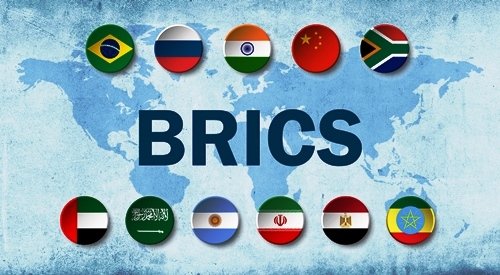
BRICS transformed dramatically during the 2023 Johannesburg Summit, when the grouping decided to expand its membership. Egypt, Ethiopia, Iran, the United Arab Emirates and Indonesia became part of the expanded BRICS framework and Saudi Arabia also participated in several BRICS-related engagements. BRICS was thus no longer a coalition of large emerging economies; it became a much broader geopolitical platform representing a major section of the Global South. Collectively, the grouping currently represents nearly half of the world’s population and a substantial share of global GDP on a purchasing power parity basis. It includes major energy producers and consumers, manufacturing giants, strategic transit states, resource-rich economies and important regional powers.
However, the growth that enhanced BRICS’ global influence also led to deep internal complexities. Unlike formal alliances built around shared security objectives, BRICS includes countries with sharply divergent geopolitical interests and competing regional agendas. India and China continue to face unresolved border tensions. Iran and the UAE have longstanding regional rivalries and differing strategic alignments. Russia’s confrontation with the West creates another layer of geopolitical friction within the grouping. As a result, BRICS today represents both the promise and the contradictions of a multipolar world.
The Core Fault Lines Emerging within BRICS
The recent BRICS Foreign Ministers’ Meeting held on 14–15 May 2026 at Bharat Mandapam in New Delhi, under India’s 2026 BRICS chairmanship, revealed that the organisation is now confronting contradictions that were less visible when it consisted of only five members. Previously, despite differences, the grouping functioned largely around shared economic interests and a common desire for greater space for emerging economies in global governance. The expanded BRICS, however, now includes countries with directly competing geopolitical visions and security concerns.
One major divide is over the prospective character of BRICS itself. China and Russia increasingly view BRICS as a strategic counterpoise to Western influence and US led institutions. Their emphasis is on hastening de-dollarisation, consolidating alternative financial systems and building a geopolitical coalition capable of challenging Western dominance. India, Brazil, and several other members, however, remain cautious about turning BRICS into an overtly anti-Western bloc. India seeks strategic autonomy rather than alignment politics and continues to maintain strong partnerships with the United States, Europe, Japan, and other Western powers.
The inclusion of Iran has presented another layer of complexity. Iran seeks stronger political backing within BRICS against Western sanctions and against US and Israeli actions in West Asia. The UAE, Egypt, and some other members are far more guarded because of their deep economic and strategic ties with Western countries. As seen during the recent foreign ministers’ discussions, disagreements over the language concerning the West Asian conflict prevented the emergence of a unified position. This echoed not merely a disagreement over wording, but a deeper divergence regarding the political direction BRICS should take in future crises.
Another vital fault line concerns China’s emergent influence within the grouping. While China remains the leading economic power in BRICS and a major driver of its expansion, some members remain wary of excessive Chinese dominance. India views BRICS as a platform for multipolarity rather than a forum for Chinese geopolitical leadership.
Economic asymmetry also remains a challenge. China’s economy is considerably larger than the collective economic strength of several other BRICS members, creating concerns regarding unequal influence over trade, finance, and institutional decision-making. Also, members differ sharply in political systems, economic structures, regional priorities, and foreign policy orientations. Maintaining solidity in such a diverse grouping will become increasingly difficult as geopolitical crises intensify.
Emergent Internal Divisions at the Recent BRICS Conference
These incongruities became unmistakeably visible during the recent BRICS foreign ministers’ meeting, with disagreements over the ongoing West Asian crisis. Iran pushed for tougher language condemning the United States and Israel, while UAE opposed the confrontational wording. Egypt and a few other members also reportedly preferred caution, given their strategic and economic engagement with Western powers. The inability to arrive at a unified joint statement highlighted the growing challenge of maintaining consensus within an expanded BRICS framework.
The conference also exposed larger strategic divergences within the grouping. China and Russia pushed for stronger discussions on de-dollarisation mechanisms, alternative financial arrangements and reducing dependence on Western-controlled institutions. India, while supportive of financial diversification, remained cautious about any framework that could transform BRICS into a rigid anti-Western geopolitical bloc. Brazil too retained a relatively balanced position, emphasising economic cooperation rather than confrontation.
The discussions also highlighted differing approaches towards global crises. While some members sought stronger political positioning against Western policies, others preferred maintaining BRICS as a supple platform focused on development, trade, connectivity and Global South cooperation. These differences indicate that BRICS is increasingly evolving into a geopolitical arena where competing regional interests, strategic anxieties and differing visions of world order intersect.
India’s Strategic Balancing Challenge
For India, these developments create an intensely delicate diplomatic situation as it has been carefully balancing its relationships across competing geopolitical camps. The United Arab Emirates has emerged as one of India’s most important strategic and economic partners in West Asia. The bilateral relationship encompasses trade, investment, energy cooperation, maritime security and extensive people-to-people ties through the Indian diaspora in the Gulf. Similarly, Iran too remains strategically significant for India because of its geographical position and connectivity potential. Projects such as Chabahar Port provide India with access to Afghanistan and Central Asia while bypassing Pakistan. Iran is also important for India’s long-term energy security calculations.
India needs to be supple and agile in its approach. Supporting one side openly risks alienating the other, while excessive neutrality could limit India’s ability to shape outcomes within BRICS itself. This challenge is even more significant because India simultaneously maintains close strategic partnerships with the United States and Western powers through arrangements such as the QUAD, while also upholding established defence and energy ties with Russia. India’s foreign policy has conventionally relied on strategic autonomy and attuned balancing, but sustaining this approach is increasingly difficult as geopolitical rivalries intensify across regions.
IMEC and the Connectivity Dimension
The stresses in West Asia also have direct repercussions for India’s economic and connectivity ambitions. The India-Middle East-Europe Economic Corridor (IMEC), announced during the G20 Summit in New Delhi, was envisioned as a transformative connectivity enterprise linking India with Europe through the Gulf region. The corridor was expected to enhance trade flows, strengthen logistics networks, and provide a strategic alternative to China’s Belt and Road Initiative. However, ongoing instability in West Asia impends the viability of such projects. Mounting regional tensions create uncertainty regarding maritime security, energy infrastructure, shipping costs, and long-term political stability. Any prolonged conflict in the region could delay India’s broader ambition to emerge as a major transcontinental trade and logistics hub.
Energy Security and the Strait of Hormuz
Energy security remains another critical apprehension. A large portion of India’s crude oil, LNG, and LPG imports passes through the Strait of Hormuz. Any interruption in Gulf shipping routes would directly affect fuel prices, inflation, industrial production costs, and economic growth. India seeks stability because its economic growth trajectory is deeply connected to uninterrupted energy flows and maritime trade.
Another consequence of protracted instability in West Asia could increase Russia’s leverage over India’s energy security. Since the outbreak of the Ukraine conflict, Russia is already a major supplier of discounted crude oil to India. If Gulf energy supplies become less reliable, India may become even more dependent on Russian energy exports. This would strengthen Moscow’s bargaining position while simultaneously complicating India’s broader geopolitical balancing strategy.
BRICS and the Future of Multipolarity
The growth of BRICS reflects a larger makeover taking place in the international system. The world is gradually moving away from a predominantly unipolar world towards a more fragmented and competitive multipolar structure. However, the current situation also validates that multipolarity does not automatically produce stability. As new centres of power emerge, international institutions progressively become arenas for strategic competition, regional rivalries, and competing political visions. BRICS today symbolises both the aspirations and the challenges of this emerging order.
Despite its internal contradictions, BRICS is unlikely to decline in the foreseeable future. In fact, its significance may only grow because the conditions that gave rise to BRICS remain robust across much of the Global South. Many developing countries see BRICS as an important platform through which emerging powers can collectively negotiate for greater influence in global affairs. Though, the future efficacy of BRICS will depend on whether it can remain a flexible coalition focused on pragmatic collaboration rather than becoming trapped in ideological or geopolitical confrontation. If the grouping evolves into a rigid anti-Western bloc, internal divisions are likely to expand because several members maintain extensive economic and strategic ties with the West. On the other hand, if BRICS focusses on hands-on cooperation in areas such as development finance, technology, energy security, supply chains, digital connectivity, climate adaptation and South-South trade, it could emerge as one of the defining institutions of the multipolar era.
India’s role will be central to this balance, as it is perhaps the only major BRICS member that simultaneously enjoys working relationships with the West, Russia, the Gulf states, Iran and the broader Global South. This places India in a unique position to moderate competing agendas within the grouping. India’s objective during its BRICS presidency should therefore be to prevent excessive polarisation and to keep the organisation focused on developmental cooperation rather than ideological confrontation.
India’s Diplomatic Test Ahead
For India, the test ahead is both delicate and significant. As chair of BRICS in 2026, New Delhi will be tasked with preserving cohesion within an increasingly diverse grouping discernible by competing geopolitical interests, regional rivalries and differing strategic priorities. The success of this balancing act will not only influence the future course of BRICS but could also shape the wider evolution of the Global South at a time of mounting global uncertainty. In many ways, the present moment represents a defining phase not merely for BRICS, but for the emerging architecture of a multipolar world order itself.
The recent BRICS foreign ministers’ meeting in New Delhi emphasised these underlying contradictions. The meeting concluded without a joint statement after member states failed to bridge differences over the ongoing West Asia crisis. The primary disagreement reportedly emerged between United Arab Emirates and Iran, with the UAE seeking stronger criticism of Iran’s actions while Tehran pushed for explicit condemnation of the United States and Israel. The eventual Chair’s Statement merely acknowledged “differing views,” underscoring the increasing difficulty of attaining consensus within an expanded BRICS. The chapter exposed a deeper structural dilemma within BRICS, while the grouping remains united in advocating multipolarity and reform of global governance institutions; it struggles to articulate a coherent geopolitical position on contentious international crises.
For India, the outcome reinforced the significance of strategic balancing amid intensifying regional and global rivalries. The carefully calibrated language in the statement reflected India’s apprehensions over instability in the Strait of Hormuz and Red Sea shipping routes that are vital to its energy security and trade flows. By eschewing overt alignment with either Iran or the Gulf states, India sought to preserve its strategic autonomy while projecting itself as a stabilising middle power capable of engaging all sides.

Brigadier (Retd) Preet Pal Singh, AVSM, VSM is an Army veteran with over 35 years of distinguished service. After retirement, he served as a Senior Research Fellow at a leading national think tank focused on defence and strategic affairs. He currently holds a senior corporate leadership role overseeing security architecture and risk management, while also contributing regularly to defence discourse as a speaker and writer.