
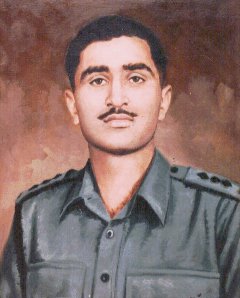
In the celebrated pantheon of India’s military heroes, few names resonate with the same melange of gallantry and acceptance as Captain Gurbachan Singh Salaria, Param Vir Chakra. His life was short, his service intense and his sacrifice eternal, not only for India but also for the international community he defended under the banner of the United Nations. Born on 29 November 1935 in Shakargarh, Punjab (now in Pakistan), Salaria grew up in a family seeped in martial tradition. Following Partition, his family moved to Gurdaspur district in Punjab, but the turmoil of his early years did not dim his fortitude to serve in the Armed Forces. He was amongst the initial batches at the newly established National Defence Academy (NDA), Khadakwasla. Commissioned into the First Gorkha Rifles, his choice of regiment reflected both personal courage and the indomitable fighting spirit for which the Gorkhas are renowned.
India and the Congo Crisis
By 1961, India had emerged as one of the largest contributors to United Nations peacekeeping missions, reflecting its commitment to a newly decolonised world order. The Congo crisis was among the most volatile of these missions. After independence from Belgium in 1960, the Democratic Republic of Congo (then Congo-Leopoldville) was engulfed in political turmoil and secessionist violence, particularly in the mineral-rich Katanga province. Moïse Tshombe declared the secession of Katanga, backed by foreign mercenaries. Third Battalion the First Gorkha Rifles, as part of Indian Brigade in the United Nations Operation in Congo (ONUC), bore the encumbrance of stabilising a fragile peace. For many Indian soldiers, including Captain Salaria, this was not just an overseas mission but an extension of India’s moral voice in world affairs, to stand firmly for peace, order and self-determination.
The Final Battle at Élisabethville
To restore order, the United Nations launched Operation Unokat on 5 December 1961, with India’s 3/1 Gorkha Rifles under Brigadier KAS Raja tasked to clear Katangese roadblocks near Elisabethville (now Lubumbashi). In the advance, Captain Gurbachan Singh Salaria, commanding a platoon, confronted nearly 90 Katangese troops with armoured cars; when firepower proved insufficient, he led a bayonet and khukri charge that killed over 40 enemies, destroyed armoured vehicles and threw the adversary into panic. Mortally wounded but unyielding, Salaria ensured his flank was secured and the UN advance succeeded.
The odds during the operation were blatantly against the Gorkhas. Facing a well-entrenched adversary with larger numbers and automatic weapons, Salaria and his troops did not choose to hesitate. Leading from the front, he ordered the Gorkhas to charge. True to their legendary character, the Gorkhas unsheathed their khukris and stormed the enemy positions with battle chilling “Ayo Gorkhali” war cries. In close-quarters combat, the Katangese were no match to the indomitable Gorkhas. Salaria’s boldness and courage turned the tide. He was grievously wounded while pressing forward and succumbed to his injuries. His men, inspired by his leadership, completed the rout. His supreme sacrifice on foreign soil became a defining moment in both Indian and UN peacekeeping history.
Gratitude and Legacy
For his unparalleled courage, Captain Salaria was posthumously awarded the Param Vir Chakra, the nation’s highest gallantry award. To this day, he remains the only UN peacekeeper ever to receive the highest gallantry honour, making him a unique figure at the crossroads of Indian military history and global peacekeeping. Other major troop-contributing countries such as Pakistan, Bangladesh and Nepal have honoured fallen peacekeepers with medals, but none have awarded their very highest wartime decorations for UN service. Pakistan has lost over 150 soldiers in UN operations and its peacekeepers have received national gallantry awards (like Sitara-e-Jurat, Tamgha-e-Jurat). But no Nishan-e-Haider (Pakistan’s highest gallantry award) has ever been awarded for UN peacekeeping. Bangladesh is currently one of the largest troop contributors to UN missions. Many peacekeepers have been decorated at home with gallantry or service medals. However, Bir Sreshtho, the highest Bangladeshi award for valour, has never been given for UN duty. Thousands of Nepali soldiers have also served in UN missions and several have fallen in action. Their top award, Param Vir Chakra (Nepal’s version), has not been awarded for UN service; it is given for national defence. Other Troop-Contributing Nations (like Ghana, Nigeria, Ethiopia, Jordan, etc) honour their peacekeepers, but none have conferred their highest wartime gallantry award specifically for UN peacekeeping. At the UN level, the Dag Hammarskjöld Medal exists as a collective honour, but it is commemorative rather than a gallantry award.
Capt Salaria’s khukri-led charge has since entered military lore as a classic case study in courage under fire, often cited in Indian military academies as an example of decisive leadership against overwhelming odds. For the troops of various Gorkha Regiments and especially for 3/1 GR, Capt Salaria’s khukri charge continues to inspire generations of soldiers – officers and men alike.
The lessons of Unokat — courage under fire, small-team initiative and promptness to act robustly when peace itself was threatened, became a doctrinal template that later guided UN Peacekeepers in later missions.
Remembrance in India
Salaria’s name is etched in India’s collective military memory. From Salaria Square at National Defence Academy to recalling his supreme sacrifice at 14 Gorkha Training Centre, Subathu, his alma mater, Rashtriya Military School, Chail, have landmarks like “Salaria Auditorium” in his honour. In his native Gurdaspur district, institutions and stadiums bear his name. The Indian Army, government and media continue to highlight his bravery, reminding citizens that true sacrifice transcends borders.
Commemoration Abroad: The Unwritten Chapter
In the Democratic Republic of Congo, however, Captain Salaria’s commemoration is conspicuously missing. There are no permanent statues, plaques or roads named in his honour. It is possible that informal remembrance exists within UN circles or among local military veterans, but no definitive monument stands to his name in Katanga. This omission reflects the often-overlooked contributions of international peacekeepers whose sacrifices, though overwhelming, occasionally fade in the host nation’s collective memory.
Captain Gurbachan Singh Salaria’s supreme sacrifice belongs to both India and the world. He epitomises India’s continuing obligation to peacekeeping, the unyielding bravery of the Gorkhas and the selflessness of Indian soldiers who fight far from home reflecting its civilisational and cultural values and commitment to global peace and security.
Param Vir Chakra (Posthumous)
Beyond his battlefield heroics, Salaria’s story carries quieter, equally inspiring facets. He was just 26 when he laid down his life – youthful, determined and unflinching in duty. His family carried forward the martial tradition, with several relatives serving in the armed forces. The United Nations itself acknowledged his bravery, citing him as an example of peacekeepers going beyond the call of duty. For his comrades, his memory is not simply of a gallantry citation but of a leader who embodied the Gorkha ethos, “Better to die than be a coward.”
In a time when peacekeeping is fraught with complexity, his life remains a reminder that courage, conviction, and sacrifice are universal values. His legacy calls not just for remembrance in India but also for wider international recognition, particularly in the lands where he fell. In celebrating Captain Salaria, we celebrate the idea that true heroism transcends geography. His action in a faraway land continues to cut deep into history not as a weapon of war, but as a symbol of peace defended with honour.
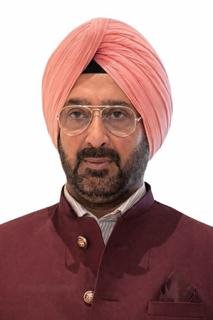
Brigadier (Retd) Preet Pal Singh, AVSM, VSM is an Army veteran with over 35 years of distinguished service. After retirement, he served as a Senior Research Fellow at a leading national think tank focused on defence and strategic affairs. He currently holds a senior corporate leadership role overseeing security architecture and risk management, while also contributing regularly to defence discourse as a speaker and writer.