

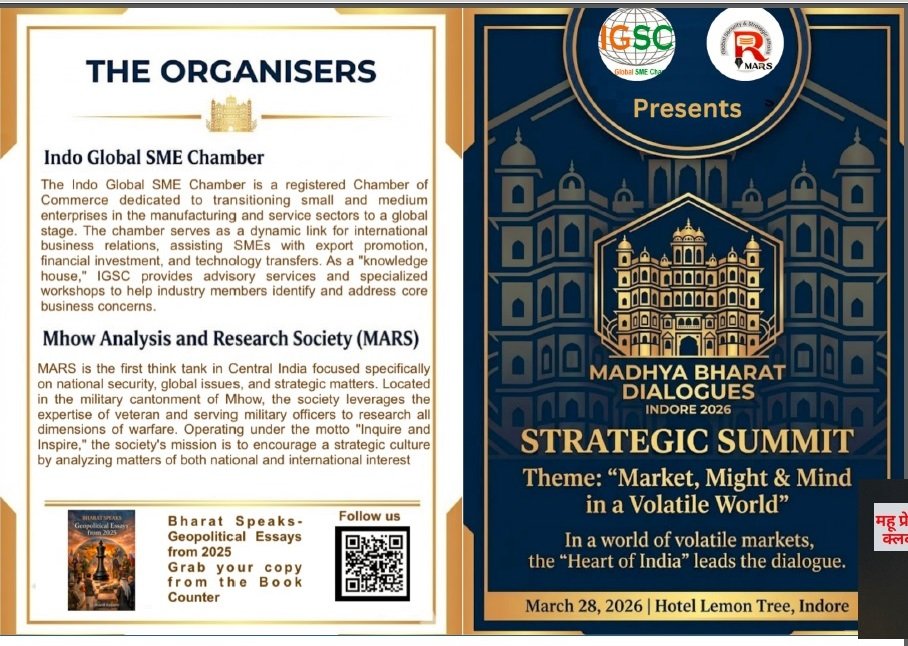
Indore, India: The inaugural Madhya Bharat Dialogues, hosted by the Indo-Global SME Chamber (IGSC) in partnership with the Mhow Analysis and Research Society (MARS), concluded here on 28 March with a clear message: Central India’s agricultural and industrial heartland is no longer a passive participant in national security but an active strategic asset in an era of hybrid and cognitive threats.
Held at Hotel Lemon Tree, the closed-door summit brought together approximately 100 carefully selected industry leaders, retired military veterans, and academics to examine Central India’s evolving role through the interconnected lenses of Market, Might, and Mind. While economic resilience formed the opening theme, the discussions quickly pivoted to the complex interplay between food security, critical infrastructure protection, and multi-domain warfare.
In his inaugural address, Arun Raste, Managing Director and CEO of the National Commodity & Derivatives Exchange (NCDEX), framed Madhya Bharat’s agricultural base as a geopolitical lever. “The new geopolitics of food requires us to see our agricultural heartland as a strategic asset in global supply chains,” he said, underscoring how climate shifts, supply-chain disruptions, and great-power competition have elevated India’s central region from a domestic breadbasket to a potential pillar of Global South food security.
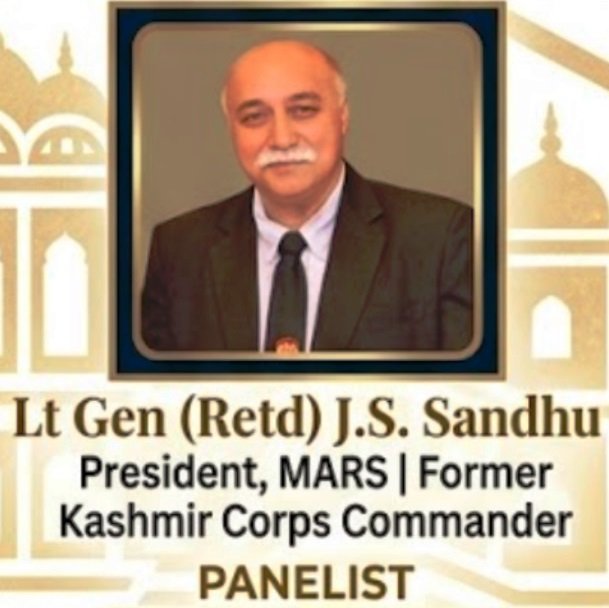
The centrepiece of the event was a high-level Fireside Chat with Lt Gen (Retd) JS Sandhu, President of MARS. Gen Sandhu introduced the concept of a “Strategic Seal” for India’s economic heartland, arguing that contemporary national security can no longer be confined to physical borders. “Modern security extends far beyond physical borders into the realms of hybrid and cognitive warfare,” he warned, a theme that resonated throughout the subsequent plenary.
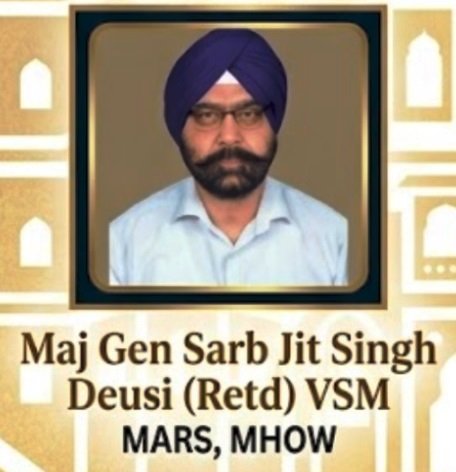
The plenary session titled “Hybrid Frontlines” offered a layered analysis of 21st century conflict. Maj Gen Sarbjit Singh Deusi, dissected the kinetic layer, illustrating how traditional military manoeuvres are now synchronised with rapid technological change and shifting geopolitical fault lines. Milind Dharmadhikari, a recognised authority on protecting India’s critical infrastructure, detailed the technological layer, highlighting the acute vulnerabilities of regional economic systems to state and non-state cyber operations. Closing the session, Himanshu Soni, widely known online as Unofficialhimanshu, addressed the narrative layer, cautioning that weaponised digital information can trigger kinetic consequences. “Information Integrity is now a cornerstone of national security,” he emphasised.
Complementing the security-focused deliberations was the official launch of Bharat Speaks: Geopolitical Essays for 2025 by Dr Bharat Kulkarni. Describing the volume as “a roadmap for Indore and Madhya Bharat’s journey into global shifts,” Dr Kulkarni positioned the book as a timely contribution to strategic thought from the heart of Central India.
In a gesture that blended policy substance with environmental commitment, the IGSC announced that, instead of conventional mementos, trees had been planted in the names of all distinguished speakers, one set in the Sundarbans Tiger Habitat and another in the Kashmir Valley’s Hangul Habitat.
Defence and strategic analysts present at the summit described the event as a significant milestone. By convening military veterans, cyber specialists, and narrative strategists under one roof, the Madhya Bharat Dialogues have signalled that India’s central region intends to shape, rather than merely observe, the contours of hybrid warfare doctrine, economic resilience planning, and narrative security in the Indo-Pacific century.
With its emphasis on the “Strategic Seal,” the integration of kinetic, technological, and cognitive domains, and a forward-looking economic vision, the 2026 edition has laid the intellectual groundwork for what organisers hope will become an annual platform of consequence for both Indian and international strategic communities.
contact: drrajeshjauhri@gmail.com
Dr Rajesh Jauhri is a Journalist with an experience of over 25 years in Indian and foreign media, a Social Scientist, an Ac-complished Author, a Political & Strategic Analyst, a Marksman (Rifle & Pistol), an Orator, a Thinker and an Educationist. He holds a Ph.D. degree on “Impact of colonial heritage on Indian police”. He runs an NGO dedicated to the social and eco-nomic uplift of tribal communities in MP and two decades back, he established a school in a village of Indore district, providing education and moral values to children belonging to underprivileged and minority families. Has received multiple awards in various fields.