
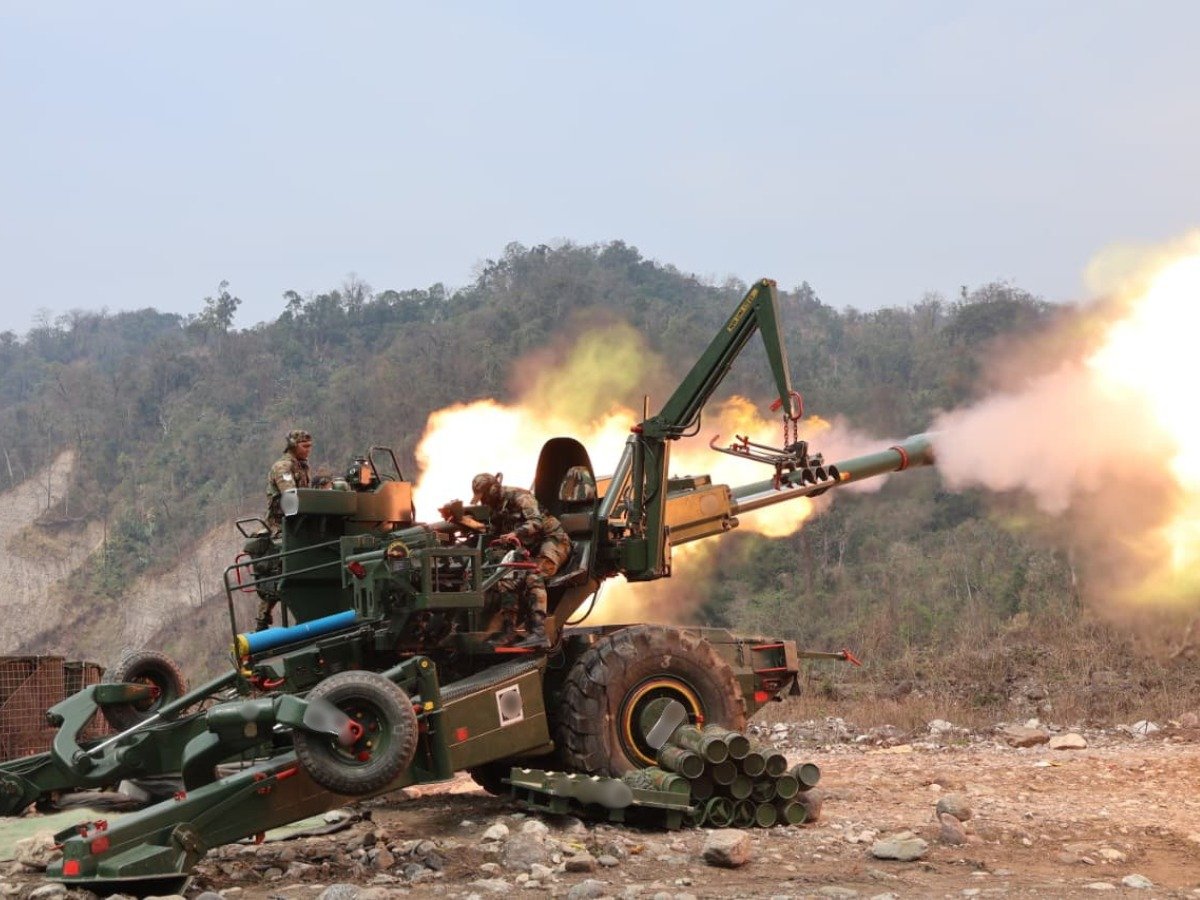
Itanagar/New Delhi: Indian Army’s Spear Gunners, operating under the Spear Corps, successfully completed a week-long high-intensity training exercise named Exercise Poorvi Garjan in the challenging terrain of Arunachal Pradesh. The drill focused on seamless integration of aviation assets, Remotely Piloted Aircraft Systems (RPAS), Counter-Unmanned Aerial Systems (Counter-UAS), and a range of indigenously developed next-generation equipment.
Conducted in the strategically sensitive Eastern Himalayan region, “Exercise Poorvi Garjan” underscored Indian Army’s push toward multi-domain operations and enhanced combat readiness along the northern borders. The exercise involved troops executing coordinated maneuvers that combined ground firepower with aerial support, drone surveillance, and advanced countermeasures against aerial threats.According to details shared by the Spear Corps, the training emphasized real-time integration of these modern systems to improve situational awareness, operational synergy, and resilience in high-altitude and mountainous environments. Elements of combat freefall training were also reportedly incorporated, testing precision, endurance, and the ability of personnel to operate under demanding conditions.
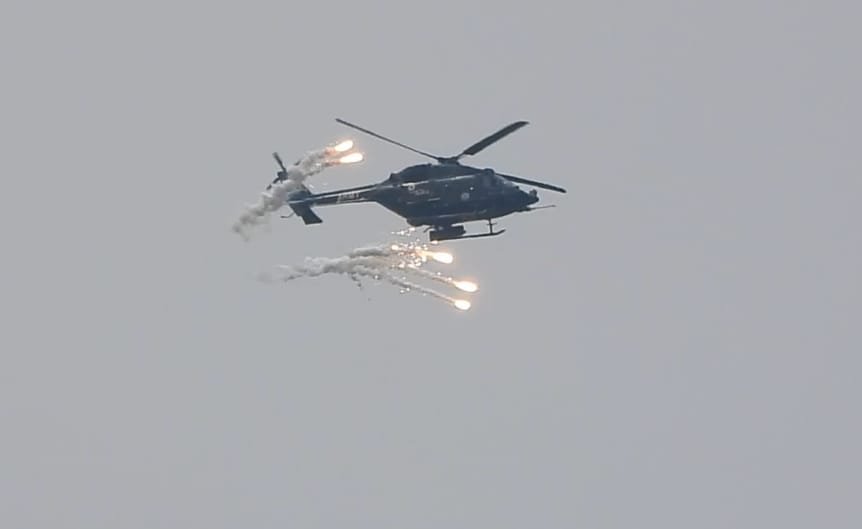
Strategic Context in the Eastern Sector. The Spear Corps, part of Army’s Eastern Command and headquartered in Dimapur in the state of Nagaland, is responsible for defending critical stretches of the India-China border in Arunachal Pradesh. The corps has historically played a key role in operations along the Line of Actual Control (LAC), where rugged terrain, extreme weather, and logistical challenges demand specialized high-altitude warfare capabilities.Exercise Poorvi Garjan comes amid ongoing efforts by the Indian Army to modernize its forces with “Atmanirbhar Bharat” (self-reliant India) initiatives. The inclusion of indigenous RPAS, Counter-UAS technologies, and new-generation equipment highlights the growing reliance on homegrown defence solutions to counter evolving threats, including drone swarms and electronic warfare.Defence analysts note that such exercises are crucial for validating joint tactics involving aviation, unmanned systems, and conventional artillery and infantry units. They help refine doctrines for integrated battle groups and ensure troops remain prepared for potential contingencies in one of the world’s most demanding operational theatres.Focus on Indigenisation and Technological Edge. Successful integration of indigenous platforms during the exercise reflects broader trends in India’s defence modernisation. RPAS and Counter-UAS systems have become force multipliers in contemporary conflicts, providing persistent surveillance, target acquisition, and rapid response options while minimising risk to personnel. By conducting the drill in Arunachal Pradesh’s difficult mountainous landscape, the Spear Gunners validated not just equipment performance but also the human element, logistics, command and control, and interoperability in contested environments.
A senior Army official, speaking on the exercise (as reported in local media coverage), emphasised that the objective was to “strengthen combat readiness, situational awareness, and operational resilience” while familiarising troops with the latest systems.
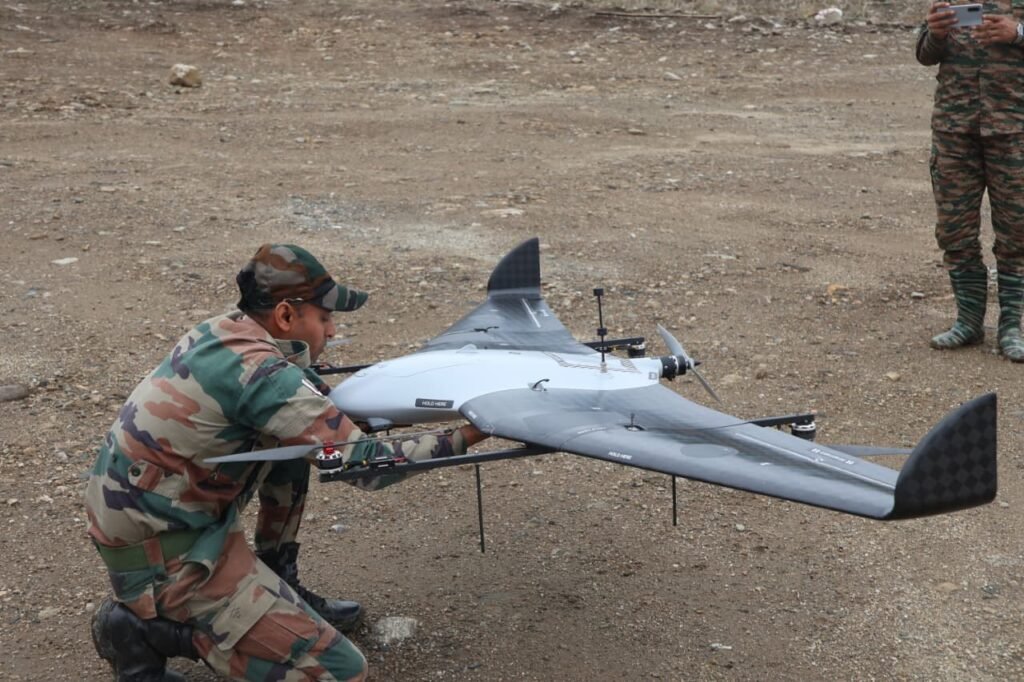
Significance for Regional Security Exercise Poorvi Garjan sends a clear message of deterrence and preparedness. Arunachal Pradesh, with its strategic location and unresolved boundary issues, remains a priority sector for the Indian military. Regular training of this nature ensures that forces deployed in the Eastern theatre maintain a high state of alertness and technological superiority. Indian Army has conducted several similar exercises in recent years across the northern and eastern frontiers, progressively incorporating advanced technologies and joint-service elements. Exercise Poorvi Garjan adds to this pattern, demonstrating steady progress in the Army’s ability to orchestrate complex, technology-driven operations. As India continues to bolster its border infrastructure and defence capabilities, exercises like Poorvi Garjan serve as both training platforms and signals of resolve. They reinforce the commitment to safeguarding territorial integrity while adapting to the changing character of warfare in the 21st century.
The Spear Corps or the Indian Army have not yet released detailed official photographs or further specifics of the exercise, but the announcement has been widely noted across defence circles for its emphasis on indigenisation and multi-domain integration.This exercise once again highlights how the Indian Army is evolving, blending tradition, terrain mastery, and cutting-edge technology to meet future challenges head-on in the Eastern Himalayas.

contact: drrajeshjauhri@gmail.com
Dr Rajesh Jauhri is a Journalist with an experience of over 25 years in Indian and foreign media, a Social Scientist, an Ac-complished Author, a Political & Strategic Analyst, a Marksman (Rifle & Pistol), an Orator, a Thinker and an Educationist. He holds a Ph.D. degree on “Impact of colonial heritage on Indian police”. He runs an NGO dedicated to the social and eco-nomic uplift of tribal communities in MP and two decades back, he established a school in a village of Indore district, providing education and moral values to children belonging to underprivileged and minority families. Has received multiple awards in various fields.